
Can Bacteria Grow in Slow Cooker
It’s a common worry: can bacteria grow in slow cooker meals? The answer is yes, if not handled properly. While slow cookers are designed to cook food safely at low temperatures, improper use, like thawing meat inside or operating on too low a setting for too long, can create a “danger zone” where harmful bacteria multiply. Following simple guidelines for preparation, cooking, and storage ensures your slow-cooked dishes are delicious and safe.
Can Bacteria Grow in Slow Cooker?
There’s something incredibly comforting about a slow cooker. You toss in your ingredients, set it, and forget it, returning hours later to a delicious, home-cooked meal that practically made itself. It’s a kitchen superhero for busy weeknights and weekend gatherings alike, transforming tough cuts of meat into tender masterpieces and infusing dishes with rich, deep flavors. The convenience is undeniable, making it a beloved appliance in countless homes.
However, with great convenience comes great responsibility, especially when it comes to food safety. A common question that pops up among home cooks is: “Can bacteria grow in slow cooker meals?” It’s a valid concern, as we’re dealing with food cooked at lower temperatures for extended periods. While slow cookers are designed with safety in mind, it’s true that if not used correctly, they *can* create an environment where harmful bacteria might thrive.
Understanding how bacteria behave and how your slow cooker works is key to ensuring every meal you prepare is not just tasty, but also perfectly safe to eat. We’re going to dive deep into the science behind slow cooking, common pitfalls, and, most importantly, provide you with practical, easy-to-follow tips to prevent any bacterial mischief in your culinary creations. Let’s make sure your slow cooker remains a source of joy, not worry!
Key Takeaways
- Understanding the Danger Zone: Bacteria multiply rapidly between 40°F (4°C) and 140°F (60°C). Your slow cooker must heat food quickly and maintain temperatures above this zone.
- Start with Safe Ingredients: Always use fully thawed meat and fresh, refrigerated ingredients to prevent a prolonged stay in the danger zone.
- Choose the Right Setting: Cook on “LOW” or “HIGH” as specified in your recipe. Ensure your slow cooker reaches at least 140°F (60°C) within 4 hours, and then 160°F (71°C) for most meats.
- Resist Lifting the Lid: Every time you lift the lid, the internal temperature can drop by 10-15°F, extending cooking time and increasing the risk of bacterial growth.
- Proper Filling is Key: Fill your slow cooker at least half full, but no more than two-thirds full, for optimal heat distribution and safe cooking.
- Prompt Storage of Leftovers: Cool leftovers quickly (within 2 hours) and refrigerate them in shallow containers to prevent bacterial multiplication after cooking.
- Use a Food Thermometer: The most reliable way to ensure food safety is to check the internal temperature with a food thermometer before serving.
Quick Answers to Common Questions
Can I put frozen chicken directly into a slow cooker?
No, it is not safe to put frozen chicken directly into a slow cooker. The prolonged time it takes for the frozen meat to thaw and reach a safe cooking temperature in the slow cooker can allow harmful bacteria to multiply to dangerous levels.
What is the “danger zone” for food temperatures?
The “danger zone” for food temperatures is between 40°F (4°C) and 140°F (60°C). This is the temperature range where harmful bacteria can multiply most rapidly.
How long can food safely stay on the “Warm” setting of a slow cooker?
Food can safely stay on the “Warm” setting for a maximum of 1-2 hours after cooking. Beyond that, the temperature might drop into the danger zone, promoting bacterial growth.
How full should I fill my slow cooker for optimal safety and cooking?
You should fill your slow cooker at least half full, but no more than two-thirds full. This ensures even heating and prevents both undercooking and overcooking.
How quickly should I cool slow cooker leftovers?
Leftovers should be cooled quickly, within two hours of cooking. Divide them into shallow containers and refrigerate them promptly to prevent bacterial growth.
📑 Table of Contents
Understanding the Danger Zone: Where Bacteria Thrive
To fully grasp why food safety in a slow cooker is so important, we first need to understand the “danger zone.” This isn’t just a catchy phrase; it’s a critical concept in food handling that every home cook should know.
What is the “Danger Zone”?
The “Danger Zone” refers to the temperature range between 40°F (4°C) and 140°F (60°C). In this range, bacteria that cause foodborne illnesses, such as *Salmonella*, *E. coli*, and *Listeria*, multiply most rapidly. In fact, their numbers can double every 20 minutes! This means that food left in this temperature range for too long can quickly become unsafe to eat, even if it looks and smells perfectly fine. You can’t see or taste these harmful bacteria.
How Bacteria Thrive
Bacteria need specific conditions to multiply: food, moisture, warmth, and time. Slow cookers, by their very nature, cook food slowly using moist heat. If the food spends too much time in the danger zone at the beginning of the cooking process, or if it doesn’t reach a high enough temperature, or if it cools too slowly after cooking, bacteria have ample opportunity to grow. This is why addressing the question, “can bacteria grow in slow cooker?” involves understanding how to minimize their chances.
Why Slow Cookers Can Be Tricky (and How to Avoid Pitfalls)

Visual guide about can bacteria grow slow cooker
While the slow cooker is a fantastic tool, certain habits can inadvertently create an inviting environment for bacteria. Being aware of these common mistakes is the first step toward safe slow cooking.
The Thawing Trap
One of the most common mistakes is putting frozen meat directly into a slow cooker. This is a big no-no. When you place frozen meat into a slow cooker, it takes a significantly longer time for the food to reach a safe internal temperature. This prolonged period in the danger zone allows bacteria to multiply extensively before the heat can kill them off.
Always thaw meat completely in the refrigerator, under cold running water, or in the microwave before adding it to your slow cooker. Planning ahead is crucial here!
Low and Slow… But Not Too Low
The very essence of slow cooking is “low and slow.” However, “low” has its limits. Some older or less efficient slow cooker models might not heat food quickly enough, or their “low” setting might hover too long in the danger zone before reaching a safe temperature. Modern slow cookers are designed to get food above 140°F (60°C) relatively quickly, often within 2-4 hours, even on a low setting. But if your slow cooker takes longer than that, you could be setting the stage for bacterial growth.
Ensure your slow cooker is functioning properly and reaching safe temperatures. If you’re unsure, a simple kitchen thermometer can help you test its performance.
The Lid Lifting Lure
It’s tempting to peek! Who doesn’t want to check on their delicious meal in progress? But every time you lift the lid, you release accumulated heat. This can cause the internal temperature of your food to drop by 10-15°F (5-8°C), and it can take up to an additional 30 minutes to an hour for the temperature to recover. Repeated lid lifting significantly extends the time your food spends in the danger zone, making it a prime opportunity for bacteria to multiply.
Resist the urge! Trust the process and keep the lid on until the cooking time is complete.
Over or Under Filling Issues
The amount of food you put into your slow cooker also plays a role in how efficiently it heats up. An underfilled slow cooker might cook too quickly or unevenly, while an overfilled one might struggle to reach a safe temperature throughout, especially in the center.
Aim to fill your slow cooker at least half full but no more than two-thirds full. This allows for optimal heat distribution and ensures even, safe cooking.
Best Practices for Safe Slow Cooking
Visual guide about can bacteria grow slow cooker
Now that we know where the risks lie, let’s focus on the solutions. Following these best practices will ensure your slow cooker consistently delivers safe, delicious meals.
Always Start with Safe Ingredients
* **Thaw Properly:** As mentioned, always use fully thawed meat. This is perhaps the single most important step to prevent bacteria from growing.
* **Handle with Care:** Wash your hands thoroughly before and after handling raw meat. Use separate cutting boards and utensils for raw meat and other ingredients to prevent cross-contamination.
* **Fresh and Refrigerated:** Use fresh or properly stored refrigerated ingredients. Don’t use ingredients that have been left out at room temperature for an extended period.
The Importance of Temperature Settings
* **High vs. Low:** Both “High” and “Low” settings are safe for cooking meat and poultry in a slow cooker. The difference is the time it takes to reach a safe internal temperature. Cooking on “High” generally takes half the time of cooking on “Low.” For example, if a recipe calls for 8 hours on Low, it might take 4 hours on High.
* **Reaching 140°F Quickly:** The key is that the food must reach 140°F (60°C) within 2-4 hours, regardless of the setting. Most modern slow cookers achieve this.
* **Safe Internal Temperatures:** Always cook food to the correct internal temperature. For poultry, it’s 165°F (74°C). For ground meats, it’s 160°F (71°C). For beef, pork, lamb, and veal (roasts, steaks, chops), it’s 145°F (63°C) with a 3-minute rest. Use a reliable food thermometer!
Keep that Lid On!
Seriously, resist the temptation. Every time you lift the lid, you extend the cooking time and create a window for bacteria to linger in the danger zone. Most slow cooker recipes are designed to be “hands-off” for a reason.
Don’t Overfill or Underfill
Stick to the guidelines: half to two-thirds full. This ensures proper heat circulation and even cooking, which are critical for food safety. If you have too little food, it might dry out or cook too fast. If you have too much, it might not cook thoroughly or reach a safe temperature in the center.
Using a Food Thermometer
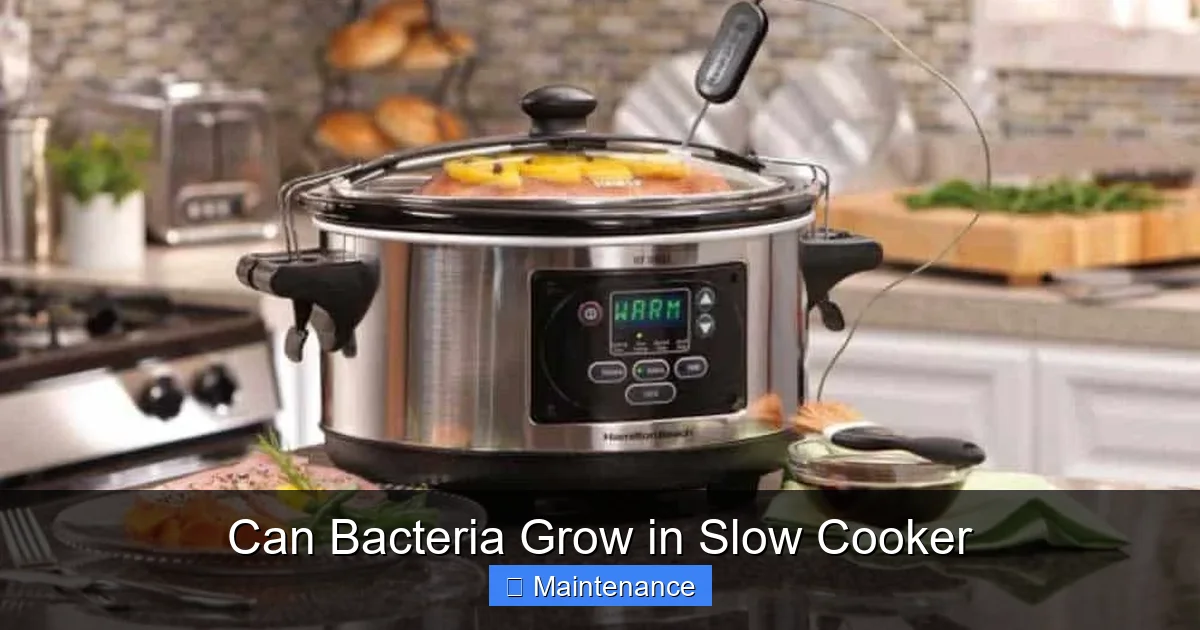
This is your best friend for food safety. An instant-read food thermometer takes the guesswork out of cooking. Insert it into the thickest part of the food, away from bone, to verify it has reached the minimum safe internal temperature. This is the ultimate answer to “can bacteria grow in slow cooker?” – if the temperature is right, they can’t survive.
Reheating and Storing Slow Cooker Leftovers Safely
Visual guide about can bacteria grow slow cooker
Cooking is only half the battle. How you handle leftovers is just as crucial for preventing bacterial growth.
Cooling Down Quickly
After your delicious meal is cooked, the clock starts ticking for cooling. Food should not be left at room temperature for more than two hours. To cool food rapidly:
* **Divide into Small Portions:** Transfer food into shallow containers, no more than 2 inches deep. This allows for faster cooling.
* **Don’t Refrigerate Hot Food in Large Containers:** Putting a large, hot pot of chili directly into the fridge can raise the temperature of the entire refrigerator, putting other foods at risk, and it will take a very long time for the center of the chili to cool down.
* **Ice Bath (Optional):** For very large quantities, you can place your containers in an ice bath before refrigerating.
Proper Storage
* **Refrigerate Promptly:** Once cooled (within 2 hours), refrigerate food at 40°F (4°C) or below.
* **Airtight Containers:** Store leftovers in clean, airtight containers to protect them from contaminants and preserve freshness.
* **Use Within 3-4 Days:** Most leftovers are safe to eat for 3-4 days when properly refrigerated. If you don’t plan to eat them within that time, freeze them.
Reheating Safely
When reheating slow cooker leftovers, always ensure they reach an internal temperature of 165°F (74°C). Reheat thoroughly, whether on the stovetop, in the microwave, or in the oven. Do not just warm them up; they need to be piping hot throughout.
Common Myths and Misconceptions About Slow Cookers
There are several myths circulating that can lead to unsafe practices. Let’s clear them up.
Myth: All Bacteria Die at Slow Cooker Temps
While the high temperatures reached during the cooking process will kill most harmful bacteria, some bacteria produce heat-resistant toxins. If food spends too much time in the danger zone before reaching a safe temperature, these toxins can still be present even after cooking. This is why starting with thawed ingredients and ensuring rapid heating is so important.
Myth: Leaving Food on “Warm” is Always Safe
The “Warm” setting on a slow cooker is designed to keep *hot* food hot (above 140°F/60°C) for a short period after cooking. It is *not* meant for cooking food or for keeping it warm indefinitely. If your slow cooker’s “Warm” setting drops below 140°F, or if you leave food on “Warm” for many hours, bacteria can start to multiply.
Use the “Warm” setting for a maximum of 1-2 hours after cooking. After that, either serve or properly store leftovers.
Myth: A Simmering Cooker Means No Bacteria
Just because you see bubbles or steam doesn’t automatically mean the entire contents of your slow cooker are at a safe temperature. The only way to be certain is to use a food thermometer to check the internal temperature, especially for thicker ingredients and in the center of the dish.
Conclusion: Enjoy Your Slow Cooker, Safely!
The slow cooker is an incredibly valuable appliance that brings delicious, convenient meals to your table. The concern about “can bacteria grow in slow cooker” is valid, but easily addressed with a few simple, consistent safety practices. By understanding the danger zone, properly preparing your ingredients, using the correct settings, resisting the urge to lift the lid, and handling leftovers with care, you can ensure that every meal is not only flavorful but also perfectly safe for you and your loved ones.
So go ahead, embrace the joy of slow cooking! With these tips in your culinary toolkit, you can confidently prepare hearty stews, tender roasts, and comforting chilis, knowing that you’re serving up safety with every delicious spoonful. Happy slow cooking!
Frequently Asked Questions
Is it safe to leave my slow cooker on all day while I’m at work?
Yes, it is generally safe to leave your slow cooker on all day while you’re at work, provided you start with thawed ingredients, use a reliable slow cooker model, and set it to the appropriate temperature (High or Low) as per the recipe. Modern slow cookers are designed for extended, unattended cooking, ensuring food reaches safe temperatures.
Why is lifting the lid of the slow cooker a problem for food safety?
Lifting the lid releases heat, causing the internal temperature of the food to drop significantly (around 10-15°F). This prolongs the time it takes for the food to reach or maintain safe cooking temperatures, potentially allowing bacteria more opportunity to grow in the danger zone.
Can I add fresh vegetables like carrots and potatoes at the same time as raw meat?
Yes, you can safely add fresh vegetables like carrots and potatoes at the same time as raw meat to a slow cooker. Just ensure all ingredients are clean, prepared properly, and that the meat is fully thawed. The slow cooking process will cook all ingredients thoroughly together.
How do I know if my slow cooker is cooking at a safe temperature?
The best way to know if your slow cooker is cooking at a safe temperature is to use a food thermometer. After the recommended cooking time, insert the thermometer into the thickest part of the food to ensure it has reached the minimum safe internal temperature (e.g., 165°F for poultry, 160°F for ground meat).
What’s the difference between a slow cooker and a Crock-Pot?
Crock-Pot is a specific brand of slow cooker, similar to how “Kleenex” is a brand of facial tissue. All Crock-Pots are slow cookers, but not all slow cookers are Crock-Pots. Both operate on the same principle of cooking food slowly at low temperatures.
Is it safe to put warm leftovers back into the slow cooker to keep them warm?
No, it’s not recommended to put already cooked and cooled leftovers back into the slow cooker’s “Warm” setting to reheat or keep warm. The “Warm” setting is for holding hot food that has just finished cooking. Reheating leftovers requires them to reach 165°F (74°C), which the “Warm” setting is unlikely to achieve quickly or consistently, risking bacterial growth.
Jennifer D. Simon has spent the last 26 years studying and practicing nutrition science. She has used a larger part of this time in improving people’s livelihoods. She has done so by coming up with unquestionable ideas on how to tackle food problems in her community. Read More