Why Does Chuck Roast Dry Out in a Slow Cooker
A common culinary frustration is when your chuck roast dries out in a slow cooker, turning tough instead of tender. This usually happens due to overcooking, not enough liquid, or inconsistent heat. Understanding these factors and implementing simple strategies like proper liquid levels and monitoring cook times will help you achieve perfectly succulent slow cooker chuck roast every time.
Why Does Chuck Roast Dry Out in a Slow Cooker
Have you ever looked forward to a comforting, fall-apart chuck roast, only to find it disappointingly dry and tough after hours in the slow cooker? You’re not alone! It’s a common kitchen frustration that can turn a simple meal into a culinary head-scratcher. Many people think a slow cooker is foolproof, especially for tough cuts like chuck roast. However, even this reliable appliance has its nuances.
This comprehensive guide will unravel the mystery of why your chuck roast might be drying out in a slow cooker. We’ll explore the main culprits, from common cooking mistakes to simple adjustments you can make. By the end, you’ll have all the practical tips and know-how to ensure your slow cooker chuck roast is consistently tender, juicy, and packed with flavor every single time. Get ready to transform your slow cooker results and say goodbye to dry, chewy roasts for good!
Key Takeaways
- Overcooking is the #1 Culprit: Despite popular belief, a slow cooker can overcook meat, causing your chuck roast to dry out by squeezing out moisture.
- Liquid is Essential, But Don’t Drown It: Adequate braising liquid creates steam and prevents scorching, but too much can dilute flavor. Aim for liquid covering about one-third to half of the roast.
- “Low and Slow” is Literal: Cooking on the “Low” setting for a longer duration typically yields more tender, less dry results than the “High” setting, allowing collagen to break down gradually.
- Resist the Urge to Peek: Lifting the slow cooker lid releases heat and steam, significantly extending cooking time and increasing the risk of your chuck roast drying out.
- Start with the Right Cut and Marbling: Choose a well-marbled chuck roast (like chuck eye or blade roast) for more internal fat, which contributes to moisture and flavor as it renders.
- Rest Your Roast for Juiciness: Even if cooked perfectly, slicing a chuck roast immediately after removing it from the slow cooker can release juices, making it seem dry. Always allow it to rest.
- A Thermometer is Your Friend: While “fork-tender” is the goal, an internal temperature of 195-205°F (90-96°C) indicates that collagen has broken down, ensuring tenderness without dryness.
Understanding Chuck Roast: A Cut Above (When Cooked Right)
Before we dive into why chuck roast dries out, let’s briefly understand what makes this cut special. Chuck roast comes from the shoulder of the cow. It’s a hardworking muscle, which means it contains a good amount of connective tissue, especially collagen. When cooked quickly, this collagen makes the meat tough and chewy.
However, when cooked “low and slow” – precisely what a slow cooker is designed for – the magic happens. The long, gentle heat slowly breaks down that tough collagen into gelatin. Gelatin is a wonderfully tender, mouth-coating substance that gives slow-cooked chuck roast its signature melt-in-your-mouth texture and rich flavor. The key is to achieve this breakdown without simultaneously evaporating all the meat’s natural moisture.
Top Reasons Your Chuck Roast Dries Out in a Slow Cooker
Knowing the “why” is the first step to preventing a dry chuck roast. Here are the most common reasons your slow cooker might be letting you down.
Overcooking is the Enemy (Yes, Even in a Slow Cooker!)
This is probably the most surprising and frequent reason your chuck roast dries out in a slow cooker. Many people assume you can’t overcook meat in a slow cooker because it’s “low heat.” But you absolutely can! While low heat helps break down collagen, prolonged exposure to heat, even low heat, will eventually squeeze out all the moisture from the muscle fibers.
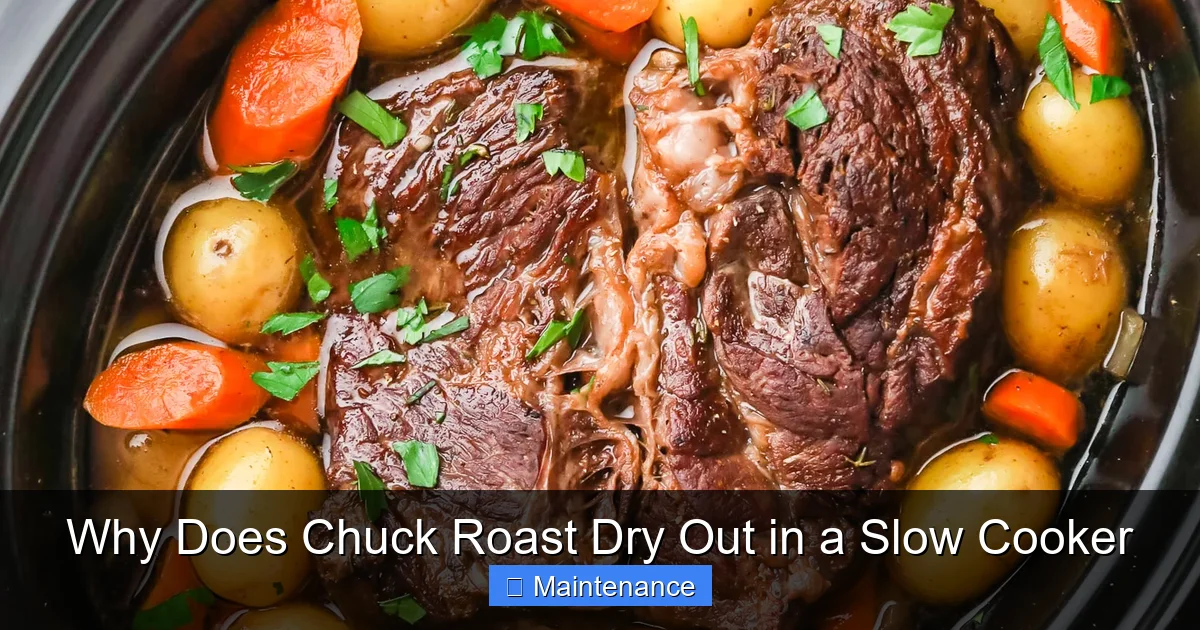
Visual guide about how to Chuck Roast Dry Out in a Slow Cooker
Image source: herwholesomekitchen.com
- Temperature vs. Time: There’s a sweet spot where collagen breaks down but moisture remains. If you push past this point, the muscle fibers contract too much, expelling their internal liquids, leaving you with a dry, stringy roast.
- The “High” Setting Trap: Using the “High” setting for too long can significantly accelerate this drying process. While it reduces cooking time, it also gives less opportunity for the collagen to slowly convert without losing too much moisture.
- No Two Roasts are Exactly Alike: A 3-pound chuck roast will cook differently than a 5-pound one. Following a recipe’s exact time without considering your roast’s size or your slow cooker’s specific temperature can lead to overcooking.
Not Enough Liquid Love (or the Wrong Kind)
A slow cooker works by creating a moist, steamy environment that gently braises the meat. Liquid is crucial for this process.
- Insufficient Braising Liquid: If there isn’t enough liquid in the slow cooker, the meat can essentially steam dry or even scorch on the bottom. The liquid helps conduct heat evenly and keeps the environment moist.
- Lid Not Sealed Properly: A slow cooker’s lid is designed to trap moisture. If your lid isn’t sealing well (maybe it’s old, warped, or not seated correctly), steam can escape. This leads to reduced liquid levels over time and a drier cooking environment for your chuck roast.
- Only Using Water: While water adds moisture, it doesn’t add flavor or richness. Using broth, wine, or other flavorful liquids not only prevents your chuck roast from drying out but also infuses it with deliciousness.
Starting with the Wrong Cut (or Not Enough Fat)
The quality and type of chuck roast you start with play a big role in the final outcome.
- Too Lean a Cut: While “chuck roast” is a general term, some specific cuts within the chuck primal can be leaner than others. A very lean piece of chuck will naturally have less internal fat to render and keep it moist, making it more prone to drying out.
- Lack of Marbling: Marbling refers to the small flecks of fat interspersed within the muscle tissue. This intramuscular fat is key to a juicy, flavorful roast. As the roast cooks, this fat renders, lubricating the muscle fibers and contributing to tenderness. If your chuck roast lacks good marbling, it has less built-in insurance against drying out.
Peeking Prolongs Problems
It’s tempting to lift the lid and check on your masterpiece, but it’s a common mistake that can contribute to a dry chuck roast.
- Heat Loss: Every time you lift the lid, you lose a significant amount of heat and, more importantly, trapped steam.
- Extended Cooking Time: This heat loss means the slow cooker has to work harder and longer to get back up to temperature. The overall cooking time gets extended, increasing the chances of overcooking and moisture loss.
How to Achieve a Perfectly Tender, Juicy Chuck Roast Every Time
Now that you know the pitfalls, let’s focus on the solutions! Here’s how to ensure your slow cooker chuck roast is always succulent and never dry.
Pick Your Perfect Chuck
The journey to a tender chuck roast begins at the butcher’s counter.
Visual guide about how to Chuck Roast Dry Out in a Slow Cooker
Image source: thetoastykitchen.com
- Look for Marbling: When choosing your chuck roast, look for good marbling – those tiny veins of fat running through the meat. This fat melts during cooking, keeping the meat moist and adding flavor. Cuts like chuck eye roast or blade roast are often well-marbled.
- Consider the Size: A roast that’s too small might cook faster than you expect, increasing the risk of overcooking. A 3-4 pound roast is often a good starting point for many recipes.
Sear for Success (Optional, But Recommended)
While searing doesn’t prevent your chuck roast from drying out directly, it adds incredible depth of flavor and a beautiful crust that enhances the overall eating experience.
- Brown All Sides: In a hot skillet with a little oil, sear your chuck roast on all sides until deeply golden brown. This creates a flavorful crust through the Maillard reaction.
- Deglaze the Pan: After searing, you can often deglaze the pan with a bit of broth or wine, scraping up any browned bits, and adding this flavorful liquid to your slow cooker.
Hydrate Your Roast Right
Proper liquid levels are key to preventing a dry chuck roast.
- Enough, But Not Too Much: Aim for enough liquid to come up about one-third to halfway up the sides of your chuck roast. This creates the necessary steamy environment without drowning the meat or diluting the flavors too much. Remember, the roast itself will release some liquid too.
- Flavorful Liquids: Use liquids that complement your roast, such as beef broth, red wine, beer, tomato sauce, or a combination. Water can be used, but it won’t add much flavor.
- Add Aromatics: Onions, carrots, celery, garlic, and herbs (like thyme and rosemary) not only add incredible flavor but also release moisture as they cook, contributing to the liquid in the pot.
“Low and Slow” is the Way to Go
This phrase is the mantra for perfectly tender chuck roast.
- Stick to the “Low” Setting: For most chuck roast recipes, the “Low” setting is your best friend. It allows the collagen to slowly break down into gelatin without forcing out all the moisture from the muscle fibers.
- Understand Cook Times: A typical 3-4 pound chuck roast will take about 6-8 hours on “Low” or 3-5 hours on “High.” However, these are just guidelines. The actual cooking time depends on your slow cooker, the size and shape of your roast, and even your altitude.
- The Fork-Tender Test: Instead of relying solely on the clock, check for doneness. Your chuck roast is ready when it’s “fork-tender” – meaning you can easily shred it with two forks.
- Use a Meat Thermometer: While not essential for “fork-tender,” an internal temperature of 195-205°F (90-96°C) is generally where collagen has completely broken down. This is much higher than the USDA’s recommended 145°F for beef doneness, but that’s for steaks, not braised cuts that require collagen breakdown.
Don’t Interrupt the Magic
Resist the temptation to lift that lid!
- Keep the Lid On: Every time you peek, you extend the cooking time by about 20-30 minutes. This increases the chances of your chuck roast drying out as it tries to get back up to temperature.
- Trust the Process: Unless you suspect something is seriously wrong (like a burning smell), let your slow cooker do its job undisturbed.
Rest is Best
This step happens after cooking, but it’s crucial for juiciness.
- Allow for Resting: Once your chuck roast is fork-tender, remove it from the slow cooker (or turn the slow cooker off and leave it in for a bit). Tent it loosely with foil and let it rest for 10-15 minutes before shredding or slicing.
- Reabsorption of Juices: Resting allows the meat fibers to relax and reabsorb the juices that have migrated to the center during cooking. If you cut into it too soon, those precious juices will spill out, leaving you with a dry-tasting roast, even if it was perfectly cooked.
What to Do if Your Chuck Roast is Already Dry
Even with the best intentions, sometimes a chuck roast dries out. Don’t despair! Here are some ways to rescue it:
Shred and Rehydrate
If your roast is dry and stringy, shred it completely with two forks. Then, return it to the slow cooker (or a pot on the stovetop) with some extra beef broth, gravy, or sauce. Simmer gently for a short period, allowing the meat to absorb some of the liquid. This can significantly improve its texture and moisture.
Make a Flavorful Sauce or Gravy
Even if the meat itself is a bit dry, a rich, flavorful sauce or gravy can make a huge difference. Use the liquid left in the slow cooker, thicken it with a cornstarch or flour slurry, and season it well. Serve the shredded or sliced meat generously coated in this sauce.
Transform It into Another Dish
A dry chuck roast isn’t necessarily a lost cause. Think about dishes where the meat is mixed with other ingredients or sauces:
- BBQ Pulled Beef: Shred the dry meat, toss it with your favorite BBQ sauce, and heat until bubbly.
- Tacos or Burritos: Season the shredded meat with taco seasoning, add a splash of broth or salsa, and use it as a filling.
- Shepherd’s Pie: Combine the shredded meat with vegetables and gravy, top with mashed potatoes, and bake.
- French Dip Sandwiches: Slice or shred, then serve on a roll with plenty of flavorful au jus for dipping.
Conclusion
Getting a perfectly tender and juicy chuck roast from your slow cooker isn’t rocket science, but it does require understanding a few key principles. The primary culprits behind a dry chuck roast are often overcooking, insufficient liquid, or simply not picking the right cut with enough marbling. By paying attention to these details – choosing a well-marbled roast, ensuring adequate (but not excessive) braising liquid, sticking to the “Low” setting, resisting the urge to peek, and allowing your roast to rest – you can consistently achieve those fall-apart, succulent results you crave.
No more dry, disappointing roasts! With these tips, you’re now equipped to turn any chuck roast into a slow cooker triumph, ensuring every bite is moist, flavorful, and incredibly tender. Happy cooking!

Jennifer D. Simon has spent the last 26 years studying and practicing nutrition science. She has used a larger part of this time in improving people’s livelihoods. She has done so by coming up with unquestionable ideas on how to tackle food problems in her community. Read More