Can a Slow Cooker Replace a Dutch Oven The Ultimate Guide
While both appliances excel at low-and-slow cooking, a slow cooker cannot entirely replace a Dutch oven due to fundamental differences in heat application and versatility. A slow cooker offers unmatched convenience for hands-off cooking and consistent low heat, whereas a Dutch oven provides superior heat retention, crucial browning capabilities, and oven-to-stovetop functionality essential for complex recipes. Choosing between them, or ideally using both, depends on your specific recipe and desired culinary outcomes.
Ah, the age-old kitchen conundrum! You’re staring at a fantastic recipe for a hearty beef stew or a succulent pot roast, and it calls for a Dutch oven. But wait, you’ve got a trusty slow cooker sitting on the counter, ready for action. A little voice in your head whispers, “Can a slow cooker replace a Dutch oven here? Are they essentially the same thing?”
It’s a question many home cooks ponder, and it’s easy to see why. Both appliances are champions of low-and-slow cooking, transforming tough cuts of meat and humble vegetables into tender, flavor-packed meals. They both promise comforting, set-it-and-forget-it convenience, making them staples in busy households. However, beneath their shared purpose lies a world of crucial differences that dictate when one shines brighter than the other, and whether a slow cooker can truly stand in for its cast-iron counterpart.
In this ultimate guide, we’re going to dive deep into the heart of both the slow cooker and the Dutch oven. We’ll explore how they work, their unique advantages, their limitations, and precisely when you might be able to swap one for the other – and when you absolutely shouldn’t. By the end, you’ll have a clear understanding of these kitchen workhorses and confidently choose the right tool for your next culinary adventure.
Key Takeaways
- Fundamental Differences: Slow cookers use indirect heat from side elements, while Dutch ovens use direct heat from below (stovetop) or surrounding (oven), often made of cast iron for superior heat retention.
- Slow Cooker Strengths: Excels in convenience, unattended cooking for extended periods, and consistent low temperatures ideal for tenderizing tougher cuts of meat and simmering stews.
- Dutch Oven Strengths: Offers unmatched versatility, allowing searing on the stovetop and then transferring to the oven for long, slow braising, creating deeper flavors and better crusts.
- Replacement Limitations: A slow cooker struggles to achieve the deep browning and caramelization that a Dutch oven effortlessly provides, impacting flavor development in many recipes.
- Adaptation is Possible (with caveats): Some Dutch oven recipes can be adapted for a slow cooker, but often require pre-browning ingredients separately in a pan for best results.
- Energy Consumption: Slow cookers are generally more energy-efficient for long cooking times compared to heating a large oven for a Dutch oven.
- The Verdict: They are complementary tools, not direct replacements. Owning both provides the greatest culinary flexibility, each serving different purposes effectively.
📑 Table of Contents
Understanding the Slow Cooker: The Set-It-and-Forget-It Champion
Let’s start with the appliance that has revolutionized weeknight dinners for millions: the slow cooker. Often known by brand names like Crock-Pot, this countertop appliance is synonymous with convenience. Pop in your ingredients, set the timer, and come home to a delicious, hot meal. It’s truly a marvel of modern kitchen technology.
How a Slow Cooker Works
A slow cooker consists of three main parts: an outer heating unit, a ceramic or stoneware insert (the pot itself), and a lid. The heating elements are typically located around the sides of the base, providing gentle, indirect heat that surrounds the insert. This design ensures an even, consistent low temperature over many hours, which is perfect for tenderizing ingredients without scorching them. The heavy lid traps moisture and heat, creating a self-basting environment that keeps food moist and flavorful.
Key Advantages of Slow Cookers
- Unmatched Convenience: This is the slow cooker’s superpower. You can assemble ingredients in the morning, turn it on, and leave it unattended for hours without worry. No need to stir, no monitoring required.
- Energy Efficiency: For long cooking times, a slow cooker generally uses less electricity than an oven, especially when cooking smaller quantities of food.
- Consistent Temperature: Slow cookers maintain a very stable, low temperature, which is ideal for breaking down connective tissues in tougher meats, resulting in incredibly tender results.
- Food Safety: By continuously heating food above the danger zone (140°F / 60°C), slow cookers are excellent for safely holding food at serving temperatures.
- Less Hands-On: Most recipes are truly “dump and go,” requiring minimal active cooking time.
Limitations and Best Uses for Slow Cookers
While fantastic for many tasks, slow cookers do have their drawbacks. The lack of direct, high heat means you can’t sear or brown ingredients within the slow cooker itself. This is a critical point, as browning adds immense depth of flavor (the Maillard reaction) to meats and vegetables. If a recipe calls for searing, you’ll need to do it separately on the stovetop before adding it to the slow cooker, which adds an extra step and another pan to wash.
Slow cookers are best used for recipes that benefit from long, moist cooking, such as:
- Stews and chilis
- Pot roasts and pulled pork/chicken
- Soups (though some benefit from initial browning)
- Braised dishes where searing can be done separately
- Dips and appetizers that need to stay warm
- Desserts like bread pudding or cobbler (less common, but possible!)
Decoding the Dutch Oven: The Versatile Kitchen Workhorse
Next up, let’s turn our attention to the classic Dutch oven. This heavy, lidded pot has been a kitchen staple for centuries, prized for its durability and incredible versatility. While it might look like a simple pot, its construction and material give it superpowers that a slow cooker simply can’t replicate.
How a Dutch Oven Works
A true Dutch oven is typically made from cast iron, often enamel-coated (like Le Creuset or Staub), though some are raw cast iron. Its heavy construction is key. Cast iron is an exceptional retainer and distributor of heat. Unlike a slow cooker’s indirect heat, a Dutch oven can be placed directly over high heat on a stovetop, allowing for searing, sautéing, and boiling. It can then be seamlessly transferred into a hot oven for long, slow baking, braising, or roasting. The tight-fitting lid creates a moist cooking environment, much like a slow cooker, but with the added benefit of being able to control the initial heat intensity and location.
Key Advantages of Dutch Ovens
- Exceptional Versatility: This is where the Dutch oven truly shines. It can go from stovetop to oven to table, handling everything from searing meat and sautéing vegetables to simmering sauces and baking bread. You can do the entire cooking process in one pot.
- Superior Browning and Searing: Its ability to handle high direct heat means you can sear meats and brown vegetables directly in the pot, creating rich, complex flavors through the Maillard reaction. This is a game-changer for dishes like beef bourguignon or coq au vin.
- Unrivaled Heat Retention: Cast iron retains heat incredibly well, meaning temperatures remain stable even after ingredients are added, and food stays hot for a long time after cooking, perfect for serving.
- Even Heat Distribution: The thick walls and bottom of a cast iron Dutch oven ensure that heat is distributed uniformly, preventing hot spots and promoting even cooking.
- Durability: A well-cared-for Dutch oven can last for generations, making it a worthwhile investment.
Limitations and Best Uses for Dutch Ovens
While incredibly versatile, Dutch ovens do have their considerations. They are heavy, making them a bit more cumbersome to move around. They also require more active monitoring than a slow cooker, especially during the stovetop phase. While they excel at low-and-slow cooking in the oven, they don’t offer the same “walk away for 8 hours” convenience as a slow cooker, which typically has a timed shut-off or warm function.
Dutch ovens are best used for recipes that benefit from multi-stage cooking and high heat followed by low, moist heat:
- Braises and roasts (e.g., pot roast, osso buco, short ribs)
- Hearty stews and chili that benefit from initial browning
- Soups where aromatics are sautéed first
- No-knead bread and other baked goods
- Deep frying
- Pasta sauces and casseroles
Direct Comparison: Slow Cooker vs. Dutch Oven
Now that we understand the individual strengths of each, let’s put them head-to-head on key features. This direct comparison will help illustrate why one simply cannot entirely replace the other in all scenarios.
Heat Distribution and Control
The fundamental difference lies in how they apply heat. A slow cooker’s heating elements are typically on the sides, providing gentle, indirect, all-around warmth to the ceramic insert. This creates a very stable, low temperature environment. You have limited control over the heat – usually just “low,” “high,” and “warm” settings.
A Dutch oven, conversely, receives direct heat from below when on a stovetop (which you control precisely with your burner settings) and radiant heat from all directions when in an oven (which you control with the oven’s thermostat). This allows for much greater flexibility in temperature and cooking zones within the pot.
Browning and Searing Capabilities
This is arguably the most significant differentiator. The slow cooker simply cannot brown. Its maximum temperature is too low to achieve the Maillard reaction, which is essential for developing rich, complex flavors in meats and some vegetables. Think of the crispy bits on a pot roast or the caramelized onions in a French onion soup – these flavors are impossible to develop directly in a slow cooker.
A Dutch oven, however, excels at this. You can get a screaming hot sear on a piece of meat on the stovetop before deglazing the pan and continuing to cook. This one-pot capability for browning and then braising is a huge advantage for flavor development.
Oven-to-Stovetop Versatility
A Dutch oven is king of versatility, moving seamlessly from stovetop to oven. You can start a dish by sautéing onions and searing meat on the stove, then add liquids and transfer the entire pot to the oven for hours of gentle, even cooking. This multi-stage cooking in a single vessel is incredibly convenient and enhances flavor. A slow cooker is a countertop appliance only; it cannot go into the oven or onto a stovetop burner.
Material and Construction Differences
Slow cookers use ceramic or stoneware inserts, which are good for consistent, gentle heat. Dutch ovens use cast iron, which is much heavier and boasts superior heat retention and distribution. This material difference explains the difference in their browning capabilities and how they handle temperature fluctuations. The thick cast iron maintains a more stable internal temperature even after adding cold ingredients, while a slow cooker insert might take longer to recover its temperature.
Energy Consumption
For long, slow cooking, a slow cooker is generally more energy-efficient than using a conventional oven to heat a Dutch oven. A slow cooker only needs to heat a small, insulated space, whereas an oven heats a much larger cavity. So, if energy consumption for prolonged cooking is a primary concern, the slow cooker often has the edge.
When Can a Slow Cooker *Truly* Replace a Dutch Oven?
After all this comparison, you might be thinking, “So, can a slow cooker replace a Dutch oven at all?” The answer is nuanced: sometimes, yes, with modifications; other times, absolutely not.
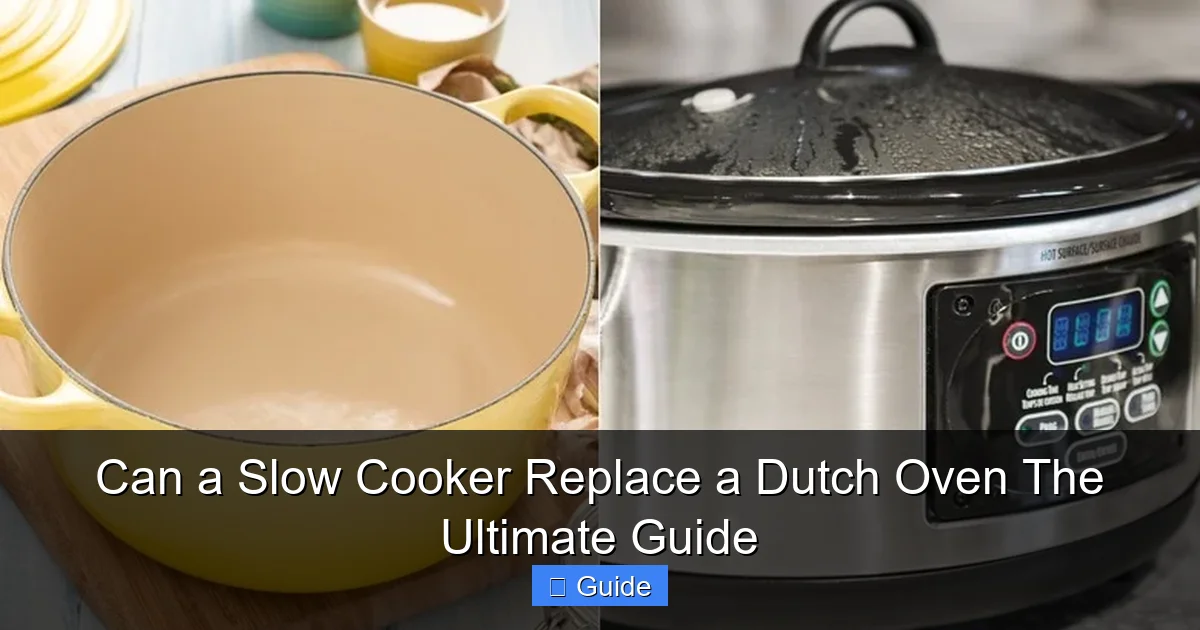
Visual guide about slow cooker replace dutch oven
Image source: thedailymeal.com
Ideal Scenarios for Slow Cooker Substitution
You can often use a slow cooker in place of a Dutch oven when the recipe primarily involves long, moist cooking without the need for initial high-heat searing or baking. Think of dishes that are essentially liquid-based and require tenderizing.
- Simple Braises and Stews: For dishes like chicken stew or lentil soup where the flavors develop slowly in a broth, a slow cooker is an excellent substitute.
- Pulled Meats: Recipes for pulled pork, shredded chicken for tacos, or beef barbacoa work beautifully in a slow cooker, as the goal is ultimate tenderness.
- One-Pot Meals (with pre-browning): If you’re willing to do a quick sear of your meat and sautéing of aromatics in a separate pan before adding them to the slow cooker, many Dutch oven braises can be successfully adapted.
- Side Dishes and Appetizers: Things like mashed potatoes, dips, or even some baked beans can be made or kept warm effectively in a slow cooker.
Recipes Where Replacement Falls Short
There are definite situations where a slow cooker simply won’t cut it, and a Dutch oven is indispensable:
- Recipes Requiring Searing: Any recipe that relies heavily on a good sear for flavor (e.g., beef bourguignon, short ribs with a crust) will suffer in a slow cooker.
- Baking: You cannot bake bread, casseroles that need a browned crust, or gratins in a slow cooker. The dry, even heat of an oven (via a Dutch oven) is essential.
- Recipes Needing Quick Temperature Changes: If a recipe calls for reducing a sauce at high heat after braising, a slow cooker won’t be able to achieve this effectively.
- Dishes with Delicate Textures: While slow cookers make things tender, some recipes benefit from a crisp exterior or a specific texture that only direct heat can provide.
Tips for Adapting Dutch Oven Recipes to a Slow Cooker
If you’re determined to use your slow cooker for a Dutch oven recipe, here are some tips to bridge the gap:
- Sear Separately: Always sear your meat in a skillet on the stovetop before transferring it to the slow cooker. Don’t skip this step – it’s crucial for flavor!
- Sauté Aromatics: Sauté onions, garlic, and other aromatics in that same skillet to build a flavor base before adding them to the slow cooker.
- Reduce Liquid: Slow cookers retain a lot of moisture. You might need to reduce the amount of liquid in a Dutch oven recipe by about 25-50% to prevent your dish from being too watery.
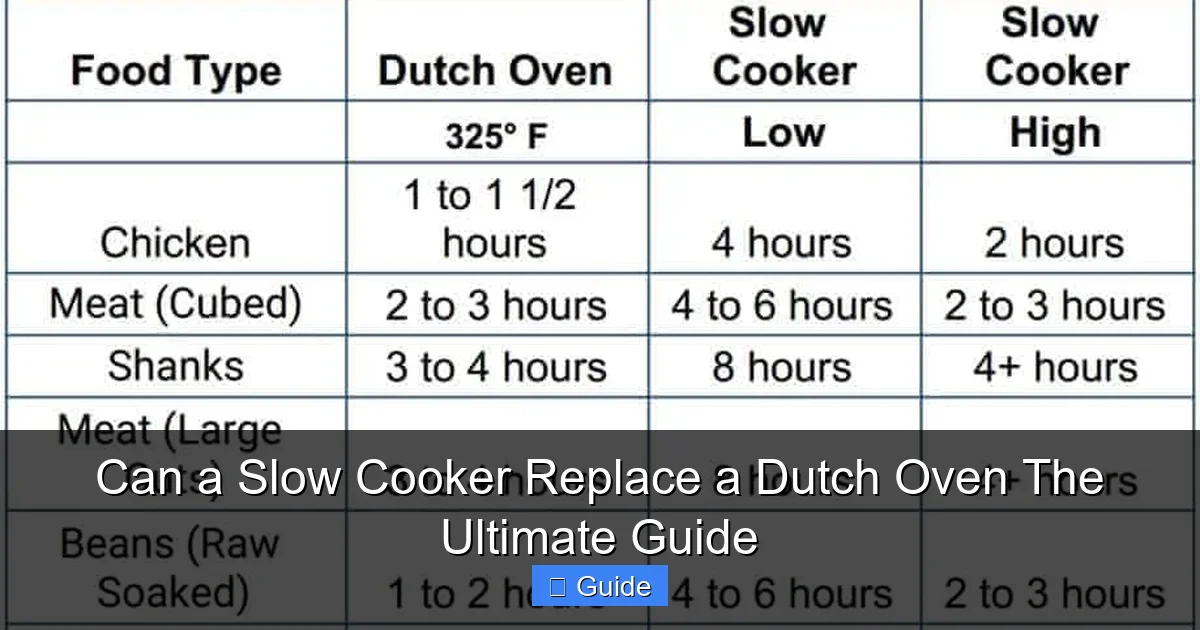
- Convert Cooking Times: A Dutch oven recipe typically cooked for 2-3 hours in the oven will likely need 4-6 hours on high or 8-10 hours on low in a slow cooker.
- Add Dairy/Delicate Ingredients Later: Dairy products (milk, cream, sour cream) can curdle or separate during long slow cooking. Add them in the last 30 minutes to an hour.
- Thicken Later: If your sauce needs thickening, you might need to transfer it to a saucepan on the stove and simmer vigorously for a few minutes after the slow cooker is done.
The Verdict: Coexistence, Not Competition
So, can a slow cooker replace a Dutch oven? The definitive answer is: partially, for some recipes, but not entirely for all. They are distinct tools designed for different, albeit sometimes overlapping, culinary tasks. Thinking of them as competitors misses the point; they are complementary workhorses in a well-equipped kitchen.
Owning Both: The Ultimate Kitchen Setup
For the avid home cook, owning both a slow cooker and a Dutch oven offers the ultimate flexibility. You get the unparalleled convenience of the slow cooker for hands-off weeknight meals and batch cooking, while the Dutch oven provides the versatility and precision needed for more complex, flavor-layered dishes that benefit from searing, high-heat roasting, and multi-stage cooking. One is for ultimate ease; the other for ultimate control and depth of flavor.
Making the Right Choice for Your Needs
If you have to choose just one, consider your cooking style and the types of dishes you make most often. If convenience, unattended cooking, and tenderizing tough meats are your top priorities, and you don’t mind searing separately, a slow cooker is an excellent choice. If you value versatility, one-pot meal preparation from start to finish (including browning), and creating deep, rich flavors, a Dutch oven is an indispensable investment.
Ultimately, both appliances empower you to create delicious, comforting meals. Understanding their unique capabilities is the key to harnessing their full potential and making the most informed decision for your kitchen.
Conclusion
Navigating the world of kitchen appliances can sometimes feel overwhelming, especially when two tools seem to serve similar purposes. However, as we’ve explored, the slow cooker and the Dutch oven, while both champions of slow cooking, possess unique characteristics that define their ideal roles in the kitchen.
The slow cooker excels at hands-off convenience, offering consistent, gentle heat for incredibly tender results, making it perfect for busy schedules. It’s a true set-it-and-forget-it device. The Dutch oven, with its robust cast-iron construction, stands out for its incredible versatility, ability to achieve deep browning, and seamless transition from stovetop to oven, allowing for superior flavor development and a wider range of culinary techniques.
Therefore, rather than being direct replacements, these two kitchen giants are best viewed as partners. They complement each other beautifully, each filling a specific niche to enhance your cooking repertoire. So, the next time you encounter a recipe calling for one or the other, you’ll be armed with the knowledge to make the perfect choice, ensuring your meals are not just cooked, but truly exceptional.
Frequently Asked Questions
Can I brown meat in a slow cooker like I can in a Dutch oven?
No, a slow cooker’s maximum temperature is not high enough to achieve the browning (Maillard reaction) that adds rich flavor to meat. You will need to sear meat in a separate skillet on the stovetop before transferring it to the slow cooker if browning is desired.
Is a slow cooker more energy-efficient than a Dutch oven?
For long cooking times, yes, a slow cooker is generally more energy-efficient. It heats a smaller, insulated space compared to a conventional oven, which heats a much larger cavity when using a Dutch oven.
Can I bake bread or casseroles in a slow cooker?
No, a slow cooker is not suitable for baking bread or casseroles that require a crispy crust or even browning. These dishes need the dry, radiant heat of an oven, which a Dutch oven can provide, but a slow cooker cannot.
What are the main advantages of a Dutch oven over a slow cooker?
The main advantages of a Dutch oven include its superior versatility (stovetop to oven), ability to achieve deep browning and searing for flavor, excellent heat retention, and even heat distribution, allowing for a wider range of cooking techniques in one pot.
When is a slow cooker a better choice than a Dutch oven?
A slow cooker is a better choice when convenience and unattended cooking are your top priorities. It’s perfect for recipes that require very long cooking times at a consistent low temperature, such as pot roasts, pulled meats, and simple stews, especially if you’re out of the house for extended periods.
Can I use a Dutch oven for “set-it-and-forget-it” cooking like a slow cooker?
While you can use a Dutch oven for long, slow cooking in the oven, it typically requires more monitoring than a slow cooker, which often has automatic timers and warm settings. You’ll need to rely on your oven’s timer and be mindful of the heat setting, as a Dutch oven doesn’t have the same “walk away for 8 hours” built-in convenience features.

Jennifer D. Simon has spent the last 26 years studying and practicing nutrition science. She has used a larger part of this time in improving people’s livelihoods. She has done so by coming up with unquestionable ideas on how to tackle food problems in her community. Read More