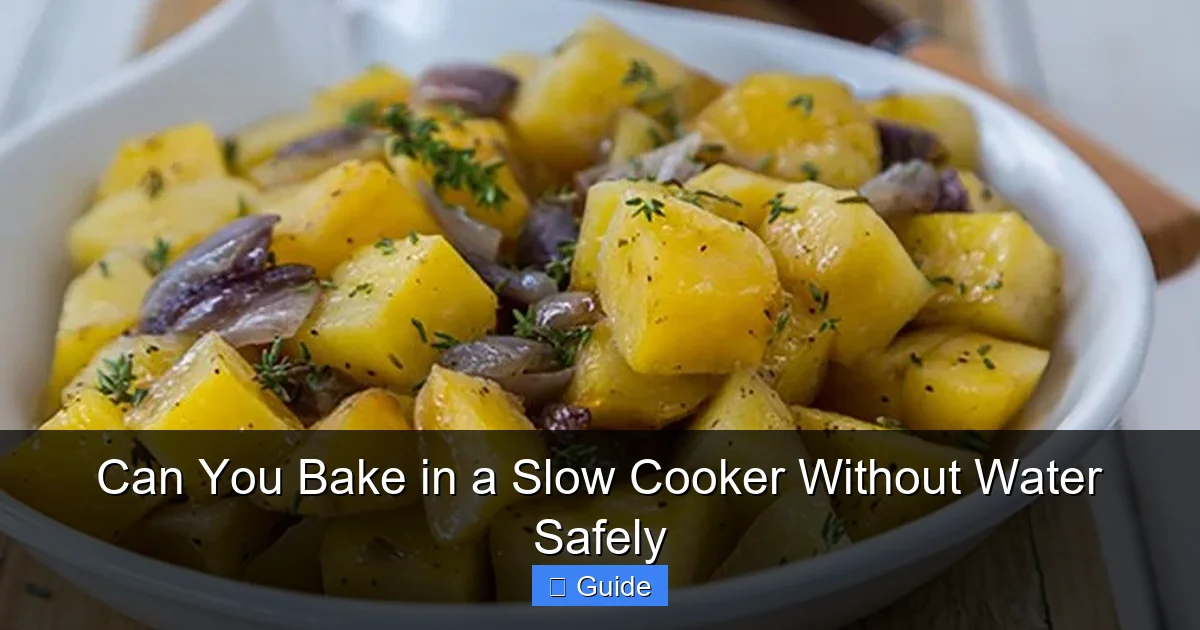
Can You Bake in a Slow Cooker Without Water Safely
Yes, you absolutely can bake in a slow cooker without adding water directly to the stoneware, but it requires specific methods and careful monitoring to ensure safety and prevent burning. While slow cookers typically rely on moisture for even cooking, dry baking is possible by using elevated baking dishes or foil slings, effectively turning your slow cooker into a miniature, indirect oven. Mastering this technique opens up a world of slow cooker desserts and main dishes, all without submerging your food.
Picture this: you’re craving a warm, gooey brownie, a tender quick bread, or perhaps a comforting cake, but your oven is occupied, or maybe you just don’t want to heat up the entire kitchen. You glance at your trusty slow cooker, usually reserved for stews and roasts, and a thought sparks: “Can I bake in there? And more importantly, can I bake in a slow cooker without water, safely?”
It’s a fantastic question, and one that many home cooks ponder. Traditionally, we associate slow cookers with moist, low-and-slow cooking, often involving liquids like broths or sauces. The idea of baking something like a cake without any added water might seem counterintuitive, or even risky. Will it burn? Will it cook properly? Will it damage my beloved appliance? Let’s dive into the fascinating world of dry slow cooker baking and unlock its secrets.
The short answer is a resounding “yes!” You absolutely can bake in a slow cooker without water. However, it’s not as simple as just tossing your batter in. It requires a specific understanding of how your slow cooker works and employing clever techniques to ensure your culinary creations turn out perfectly, without any burnt bottoms or dangerous mishaps. Think of it as repurposing your slow cooker from a braising machine into a mini, indirect oven. Ready to transform your slow cooker into a versatile baking buddy? Let’s explore how to bake in a slow cooker without water safely and deliciously!
Key Takeaways
- Dry Baking is Possible: You can indeed bake in a slow cooker without adding water to the stoneware, but it’s different from traditional slow cooking and requires specific techniques.
- Indirect Heat is Key: The goal is to create an indirect heat environment, mimicking an oven, rather than relying on the usual moist heat that slow cookers are known for.
- Elevate and Protect: Always use an elevated rack, crumpled foil, or an inverted heat-proof dish to lift your baking pan off the slow cooker’s bottom and prevent direct burning.
- Choose the Right Cookware: Use smaller, oven-safe baking dishes (like ramekins, loaf pans, or springform pans) that fit inside your slow cooker without touching the sides.
- Monitor Closely: Dry baking can lead to quicker cooking times and a higher risk of burning compared to water-assisted methods. Keep a close eye on your food, especially towards the end.
- Not for Crispy Results: Expect soft, moist baked goods rather than crispy crusts, as the enclosed environment still retains some moisture, even without added water.
- Safety First: Ensure your slow cooker is designed for high heat, avoid extreme temperatures if possible, and always unplug when done.
📑 Table of Contents
- The Core Question: Can You Bake Without Water Safely?
- Understanding Your Slow Cooker’s Heating Mechanism for Baking
- Methods for “Dry” Baking in a Slow Cooker
- What to Bake (and What Not To) in a Dry Slow Cooker
- Safety Considerations and Potential Pitfalls
- Tips for Successful Dry Slow Cooker Baking
- Conclusion
The Core Question: Can You Bake Without Water Safely?
Let’s address the elephant in the room: can you really bake in a slow cooker without water safely? The answer is a qualified yes, and it’s a technique that’s gaining popularity among home cooks. The key distinction here is understanding the role of water in traditional slow cooking versus dry baking.
Understanding Water’s Role in Slow Cooking
In most slow cooker recipes, water, broth, or other liquids are added directly to the stoneware alongside the ingredients. This creates a moist, steamy environment that prevents food from drying out, facilitates tenderization, and distributes heat gently. The moisture helps to conduct heat evenly and keeps temperatures stable, acting as a buffer against scorching.
Why Dry Baking is Different
When you choose to bake in a slow cooker without water, you’re essentially trying to replicate the dry heat of an oven, but in a much smaller, enclosed space. This changes the dynamics significantly. Without direct moisture, the heating elements on the bottom and sides of your slow cooker can become much hotter relative to the food, increasing the risk of burning if your baking dish is in direct contact with the stoneware.
The “safely” part comes from how you manage this dry heat. The goal is to elevate your baking dish and create an air gap between it and the stoneware, preventing direct contact with the hottest surfaces. This allows for a more even, indirect baking process, mimicking how food bakes in a conventional oven on a rack, rather than directly on the heating element. As long as you follow specific guidelines and don’t place food directly on the bottom of the unlined stoneware without an appropriate barrier, you can bake in a slow cooker without water without damaging your appliance or burning your food.
Understanding Your Slow Cooker’s Heating Mechanism for Baking
To successfully bake in a slow cooker without water, it’s crucial to understand how these appliances generate and distribute heat. This knowledge will guide your techniques and help you avoid common pitfalls.
Visual guide about bake in a slow cooker without water
Image source: boredoflunch.com
How Slow Cookers Heat Up
Slow cookers typically have heating elements wrapped around the base and sometimes up the sides of the outer shell. These elements warm the stoneware insert, which then radiates heat to the food. The temperature settings (Low, High, Warm) control the rate at which this heat is applied. Generally, “Low” reaches about 200°F (93°C) and “High” reaches about 300°F (149°C), though these can vary by model. The lid then traps the heat and any moisture, creating a sealed, humid environment.
The Challenge of Dry Heat in a Moist Environment
When you’re baking in a slow cooker without water, you’re trying to use these heating elements to provide dry, even heat for baking. However, the slow cooker’s design is inherently geared towards moisture retention. Even without adding extra water, the ingredients in your baked goods (butter, eggs, milk, fruits) will release some moisture, which will become trapped by the lid. This means your “dry” baking will still have a slightly steamy quality, resulting in very moist, tender baked goods, often without the crispy crusts you might get from a conventional oven. This isn’t a bad thing – it’s just something to be aware of.
Differences from a Conventional Oven
A conventional oven uses convection (air circulation) and radiant heat to cook food from all sides, creating a generally dry environment unless steam is intentionally added. A slow cooker, on the other hand, relies primarily on conduction from the stoneware and trapped steam. This means:
- Uneven Heating: The bottom and sides of the slow cooker tend to be the hottest points. Without a buffer, anything in direct contact can easily scorch.
- Longer Cooking Times: Even on “High,” a slow cooker’s temperature is lower than most oven baking temperatures (which typically start at 325-350°F or 160-175°C). This means your baking times will be significantly longer.
- No Browning on Top: Unless your slow cooker has a browning or broiler function (which most standard models don’t), the top of your baked goods will remain pale because the heat primarily comes from below and the sides, and the top is exposed to the cooler, moist air under the lid.
Understanding these differences is key to adapting recipes and achieving successful results when you bake in a slow cooker without water.
Methods for “Dry” Baking in a Slow Cooker
So, how exactly do you pull off baking in a slow cooker without water? The secret lies in creating a safe, indirect heat environment for your baking dish. Here are the most effective methods:
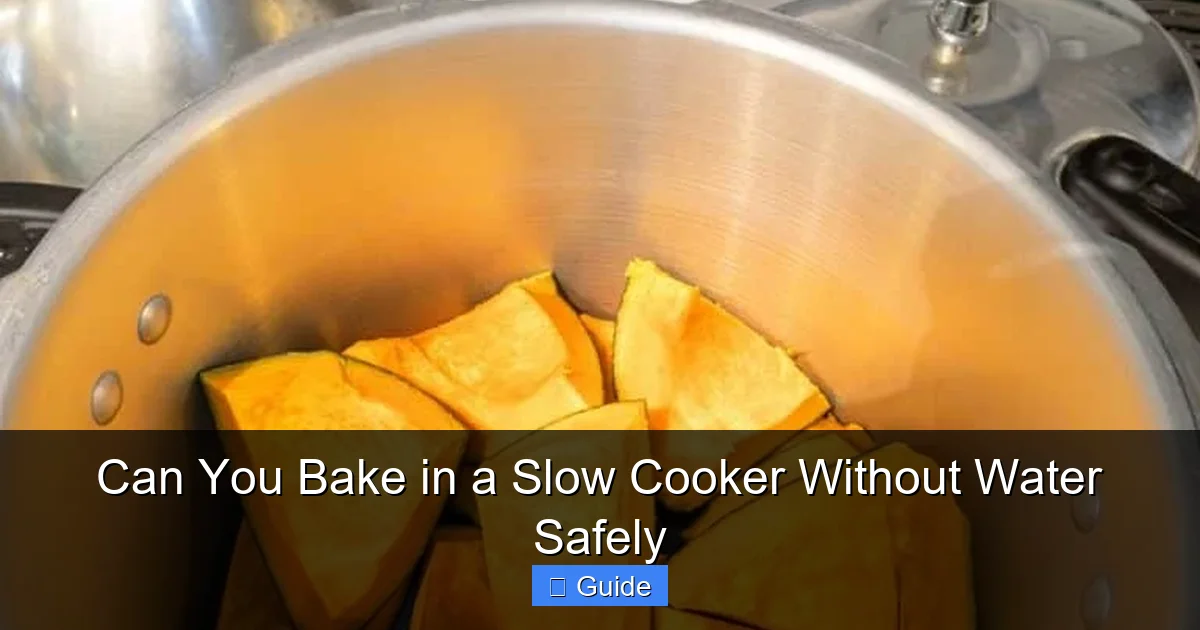
Visual guide about bake in a slow cooker without water
Image source: missvickie.com
1. The Elevated Rack Method
This is arguably the most common and effective method. You simply place a small, oven-safe wire rack at the bottom of your slow cooker stoneware. This lifts your baking pan off the direct heat source, allowing air to circulate and preventing the bottom of your baked good from burning. Most slow cookers come with a rack for roasts, but if yours doesn’t, you can purchase one or improvise.
- What to Use: A standard roasting rack, a cooling rack that fits, or even a collapsible steamer basket (inverted).
- How to Do It: Place the rack at the bottom of the slow cooker. Carefully place your baking pan on top of the rack.
- Best For: Cakes, brownies, quick breads, bread puddings, anything that benefits from even bottom heat.
2. Crumpled Aluminum Foil Balls
No rack? No problem! This ingenious hack uses everyday aluminum foil to create a makeshift elevation system. It’s incredibly simple and works wonderfully.
- What to Use: Heavy-duty aluminum foil.
- How to Do It: Tear off several sheets of aluminum foil (about 12-18 inches long). Crumple each sheet tightly into a ball, about 1.5 to 2 inches in diameter. Place 3-4 of these balls evenly spaced at the bottom of your slow cooker, forming a sturdy base for your baking pan.
- Best For: Any recipe that needs elevation, particularly good for heavier dishes where a standard rack might struggle.
3. Inverted Heat-Proof Dish Method
Another excellent alternative to a rack is using a small, inverted heat-proof dish or ramekin.
- What to Use: A sturdy, oven-safe ramekin, a small ceramic bowl, or even a heavy metal cookie cutter (ensure it’s stable).
- How to Do It: Place the inverted dish at the center of your slow cooker. Position your baking pan on top of the inverted dish. If your baking pan is large, you might need two or three smaller inverted dishes for stability.
- Best For: Round pans, smaller baking projects, or when you need a very stable, fixed point of elevation.
4. The Foil Sling for Easy Removal
While not strictly about dry baking, a foil sling is an invaluable technique when you bake in a slow cooker without water. It makes removing your delicate baked goods much easier and safer.
- What to Use: Two long strips of heavy-duty aluminum foil.
- How to Do It: Crisscross two long strips of foil at the bottom of your slow cooker before placing your baking dish on top of your chosen elevation (rack, foil balls, etc.). Ensure the ends of the foil strips extend up the sides of the slow cooker and beyond the rim. Once baking is complete, you can use these “handles” to gently lift the entire baking dish out.
- Best For: Any baked good, especially cakes and breads, to prevent crumbling or breakage during removal.
Remember, the goal is always to prevent your baking dish from sitting directly on the hot stoneware. By employing one of these elevation methods, you can safely and effectively bake in a slow cooker without water, opening up a world of culinary possibilities.
What to Bake (and What Not To) in a Dry Slow Cooker
While the possibilities for baking in a slow cooker without water are exciting, not all baked goods are created equal for this method. Understanding what works best will save you from disappointment and culinary disasters.
Visual guide about bake in a slow cooker without water
Image source: i.pinimg.com
Ideal Candidates for Dry Slow Cooker Baking
The slow cooker’s moist, enclosed environment (even without added water) is perfect for items that benefit from gentle, even heat and don’t rely on crispness for texture.
- Cakes: Think dense, moist cakes like chocolate fudge cake, lemon pound cake, or even simple vanilla cakes. They turn out incredibly tender and moist, often with a slight ‘steamed pudding’ texture. Layer cakes are tricky due to the pale top, but single-layer cakes work beautifully.
- Brownies and Blondies: These are excellent choices. The slow cooker yields incredibly fudgy, gooey brownies that are a dream for chocolate lovers.
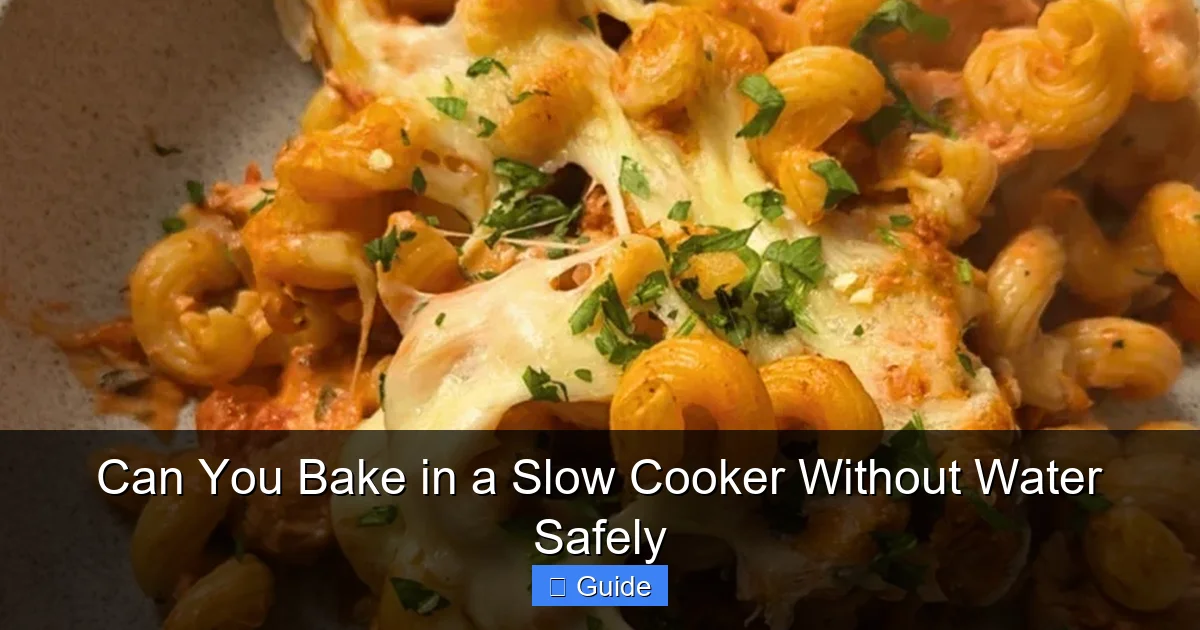
- Bread Puddings: An absolute winner! The low, moist heat is ideal for custard-based dishes, resulting in a perfectly set and comforting dessert.
- Quick Breads: Banana bread, zucchini bread, pumpkin bread – these loaf-style quick breads thrive in the slow cooker. They emerge wonderfully moist and flavorful. Just remember the top will be pale.
- Coffee Cakes: Similar to quick breads, coffee cakes with streusel toppings (which might get slightly soft) can still be delicious and incredibly tender.
- Fruit Crisps and Cobblers (with caveats): While the topping won’t get crispy, the fruit filling will cook down beautifully, and you’ll end up with a wonderfully warm, spoonable dessert. If you want a crispy topping, you might need to finish it under a broiler in a conventional oven, but the base can be slow-cooked without water.
Recipes to Avoid or Approach with Caution
Some baked goods just aren’t suited for the dry slow cooker environment due to their textural requirements or sensitivity to prolonged, moist heat.
- Crusty Breads: Forget about artisan loaves with crackly crusts. The slow cooker environment is too moist to create any significant crust development.
- Pies with Flaky Crusts: Pie crusts rely on high, dry heat to become flaky and golden. In a slow cooker, they will likely turn out soggy and pale.
- Cookies: While some drop cookies *can* be made, they won’t have the crisp edges or chewiness you expect from oven-baked cookies. They’ll be softer and cakier.
- Soufflés and Delicate Custards: These require precise temperature control and often direct oven heat to rise properly and set without collapsing. The slow cooker’s uneven, slower heat isn’t ideal.
- Anything Requiring Significant Browning on Top: Unless you plan to transfer your baked good to a conventional oven or broiler for finishing, anything that needs a golden-brown top (like gratins or some casseroles) won’t achieve that in a standard slow cooker.
When you decide to bake in a slow cooker without water, always consider the desired texture. If “moist” and “tender” are what you’re after, you’re on the right track!
Safety Considerations and Potential Pitfalls
When you bake in a slow cooker without water, safety is paramount. While generally safe, there are specific considerations to keep in mind to prevent mishaps, protect your appliance, and ensure your food is delicious and safe to eat.
1. Preventing Scorching and Burning
This is the biggest concern when dry baking. Without liquid to regulate temperature, the direct heat from the stoneware can easily burn the bottom of your baking dish.
- Solution: Always use an elevation method (rack, foil balls, inverted dish) to lift your baking pan off the bottom of the stoneware. This creates an air gap, allowing for indirect, more even heat distribution.
- Warning Signs: A strong smell of burning, smoke, or a very dark, hard bottom on your baked good are signs of scorching.
2. Monitoring Temperatures and Doneness
Slow cookers cook slowly, but dry baking can sometimes be more intense on the bottom. Overcooking is still a risk, leading to dry or tough results.
- Solution: Check your food periodically, especially after the halfway point of the estimated cooking time. Use a toothpick or cake tester to check for doneness. An instant-read thermometer is excellent for dense items like bread puddings, ensuring they reach safe internal temperatures (e.g., 160°F or 71°C for custards).
- Adjust for Your Cooker: Every slow cooker is different. Old models might run hotter or cooler. Get to know your appliance.
3. Avoiding Appliance Damage
Modern slow cookers are built to withstand high temperatures, but extreme thermal shock or prolonged, excessively high dry heat *could* theoretically stress the stoneware or heating elements, although this is rare with proper use.
- Solution: Ensure your stoneware is free from cracks before use. Avoid extreme temperature changes (e.g., placing a frozen dish directly into a hot slow cooker). As long as you’re using appropriate bakeware and an elevation method, the risk of damage is minimal when you bake in a slow cooker without water.
- What Not To Do: Never turn on an empty slow cooker for extended periods, or place items directly on the heating elements without the stoneware insert.
4. Lid Management and Heat Loss
Every time you lift the lid of your slow cooker, you lose a significant amount of heat (some estimates say 15-20 minutes of cooking time). For dry baking, this can be even more impactful.
- Solution: Resist the urge to peek too often. Only lift the lid when absolutely necessary for checking doneness. If you do peek, try to do it quickly.
5. Food Safety and Storage
As with any cooking method, proper food safety is crucial.
- Solution: Ensure your baked goods reach appropriate internal temperatures. Cool perishable baked goods (especially those with dairy or eggs) rapidly after cooking and refrigerate promptly.
By being mindful of these considerations, you can confidently and safely bake in a slow cooker without water, enjoying delicious results without worry.
Tips for Successful Dry Slow Cooker Baking
Ready to master the art of baking in a slow cooker without water? These practical tips will help you achieve consistent, delicious results every time.
1. Choose the Right Bakeware
The size and material of your baking dish are crucial.
- Size Matters: Select a baking pan (ceramic, glass, metal) that fits comfortably inside your slow cooker stoneware, leaving a small gap (at least half an inch) around the sides for heat circulation. Avoid pans that touch the sides, as this can concentrate heat and cause uneven baking. Small loaf pans, round cake pans, Bundt pans (if they fit), or ramekins are perfect.
- Oven-Safe: Ensure your chosen bakeware is oven-safe, as it needs to withstand the heat of the slow cooker.
2. Line Your Pan
Even if you grease and flour, lining your pan with parchment paper is a game-changer when you bake in a slow cooker without water.
- Why: It prevents sticking, makes cleanup a breeze, and helps you remove delicate baked goods without damage (especially if you create a sling with the parchment).
- How: Cut a circle or rectangle of parchment paper to fit the bottom of your pan, and if possible, extend it up the sides.
3. Elevate, Elevate, Elevate!
We’ve said it before, but it bears repeating: never place your baking dish directly on the bottom of the slow cooker stoneware. Use a metal rack, crumpled aluminum foil balls, or an inverted heat-proof dish to create an air gap. This is the single most important tip for preventing scorched bottoms.
4. Preheat Your Slow Cooker
Just like with a conventional oven, preheating your slow cooker on the “High” setting for 30-60 minutes before adding your baking dish can help create a more stable and consistent baking environment from the start. This prevents the baked good from sitting in a slowly heating environment for too long, which can affect texture.
5. Manage the Lid Moisture
Even without added water, moisture from your ingredients will condense on the lid.
- Prevent Dripping: To prevent this condensation from dripping back onto your baked good and making the top soggy, you can place a clean, dry kitchen towel or a few layers of paper towels between the lid and the stoneware. Just make sure the towel doesn’t touch the food and doesn’t hang over the edges where it could get too hot.
- Quick Wipes: Alternatively, lift the lid quickly every hour or so and wipe away any accumulated moisture.
6. Adapt Recipes and Cooking Times
Slow cooker baking times will be significantly longer than oven times. As a general rule, a recipe that bakes for 30-40 minutes in an oven might take 2-4 hours on “High” or 4-8 hours on “Low” in a slow cooker.
- Start with Recipes: Begin with recipes specifically designed for slow cooker baking.
- Test for Doneness: Always rely on visual cues and the toothpick test rather than just the clock.
7. Don’t Expect a Golden-Brown Top
Unless your slow cooker has a special browning element, the top of your baked goods will likely remain pale. This is normal. If you desire a golden top, you can carefully transfer the baked item to a preheated conventional oven or under a broiler for a few minutes at the very end (but only if your bakeware is oven-safe).
8. Let It Cool
Allow your baked goods to cool in the pan for a bit before attempting to remove them. This helps them set and prevents crumbling. Use a foil sling (if you made one) for easy, mess-free extraction.
By following these tips, you’ll be well on your way to mastering the art of baking in a slow cooker without water, creating delicious, moist treats with minimal fuss!
Conclusion
So, the answer to “Can you bake in a slow cooker without water safely?” is a resounding yes, absolutely! It’s a clever and often overlooked method that expands the versatility of your slow cooker far beyond its traditional stews and soups. By understanding the unique heating dynamics of your appliance and employing smart techniques like elevating your baking dish and managing moisture, you can transform your slow cooker into a gentle, indirect oven perfect for a surprising array of baked goods.
While you won’t achieve the crispy crusts or dramatic browning of a conventional oven, what you will get are incredibly moist, tender, and comforting cakes, brownies, quick breads, and bread puddings. It’s an ideal solution for freeing up your main oven, keeping your kitchen cool, or simply experimenting with a new way to create delicious treats.
Remember the key takeaways: always elevate your bakeware, choose appropriate recipes, monitor your cooking, and don’t be afraid to experiment. With a little practice and these guidelines, you’ll be safely baking in your slow cooker without water like a seasoned pro in no time. Happy baking!
Frequently Asked Questions
Is it safe to leave a slow cooker on “High” for hours without water?
Yes, it is generally safe to leave a slow cooker on “High” for hours without water, provided there is food or a baking dish inside. The stoneware insert and heating elements are designed to withstand these temperatures. The key is to ensure the appliance is not running empty and that any baking dish is elevated to prevent direct scorching.
Will baking without water damage my slow cooker?
No, baking in a slow cooker without water using proper techniques (like elevating the baking dish) will not damage your slow cooker. Modern slow cookers are built to handle the heat. The risk comes from direct contact between the heating element and food, which is why elevation is crucial, rather than the absence of water itself.
What kinds of dishes are best for dry baking in a slow cooker?
Dishes that benefit from moist, gentle heat and don’t require a crispy crust or significant browning on top are best. This includes fudgy brownies, dense cakes (like pound cake), quick breads (banana, zucchini), and bread puddings. They emerge incredibly moist and tender.
How do I prevent the bottom of my baked goods from burning?
The most crucial step to prevent burning is to always elevate your baking dish off the bottom of the slow cooker stoneware. Use a metal rack, several crumpled balls of aluminum foil, or an inverted heat-proof ramekin to create an air gap. This ensures indirect heat and even baking.
Do I need to put a towel under the lid when dry baking?
Placing a clean kitchen towel or paper towels under the lid is optional but highly recommended. It absorbs condensation that forms on the lid, preventing it from dripping back onto your baked goods and making the top soggy. Ensure the towel doesn’t touch the food or hang over the sides of the slow cooker.
Will my baked goods brown on top in a slow cooker without water?
Generally, no. Slow cookers heat primarily from the bottom and sides, and the trapped moisture, even without added water, creates a steamy environment that prevents significant browning on top. Your baked goods will have a pale top, which is normal for this method. If a golden top is desired, you can briefly finish them under a broiler or in a conventional oven.
Jennifer D. Simon has spent the last 26 years studying and practicing nutrition science. She has used a larger part of this time in improving people’s livelihoods. She has done so by coming up with unquestionable ideas on how to tackle food problems in her community. Read More