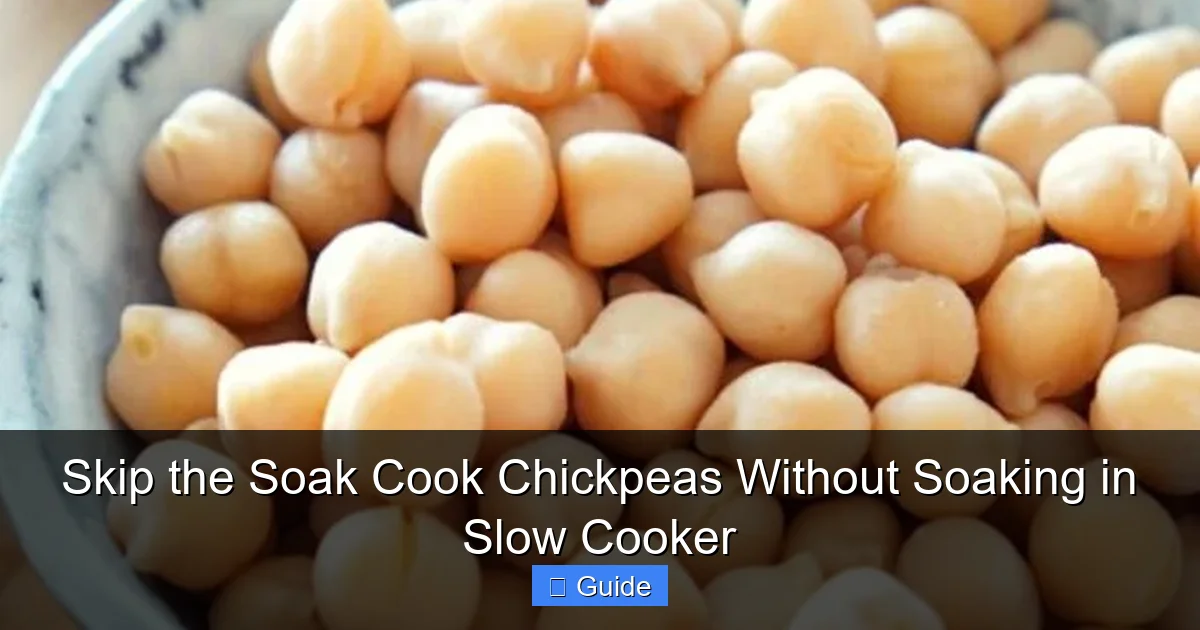
Skip the Soak Cook Chickpeas Without Soaking in Slow Cooker
Tired of remembering to soak chickpeas overnight? Good news! You absolutely can cook chickpeas without soaking in a slow cooker, saving you time and effort. This guide reveals the simple steps to achieve perfectly tender, flavorful chickpeas using your slow cooker, transforming meal prep and making healthy eating more accessible. Say goodbye to the hassle and hello to convenience!
Skip the Soak Cook Chickpeas Without Soaking in Slow Cooker
Ever found yourself craving a delicious batch of homemade hummus, a hearty chickpea curry, or a vibrant salad studded with these versatile legumes, only to remember you forgot the cardinal rule: soaking them overnight? It’s a classic kitchen conundrum, isn’t it? The thought of waiting another 8-12 hours can be enough to send you reaching for a can opener instead. But what if we told you there’s a game-changing method that lets you bypass the soaking entirely, delivering perfectly cooked, tender chickpeas right when you need them?
Prepare to have your mind blown and your meal prep routine revolutionized! We’re diving deep into the art of how to cook chickpeas without soaking in a slow cooker. Yes, your trusty Crock-Pot, typically reserved for roasts and stews, is about to become your new best friend for effortlessly preparing dried chickpeas. This isn’t just about convenience; it’s about unlocking a deeper flavor and a wonderfully creamy texture that canned chickpeas can rarely match.
Forget the frantic last-minute soaking or the endless hours of boiling on the stovetop. The slow cooker provides the gentle, consistent heat needed to transform those hard, dried legumes into a pantry staple you’ll reach for again and again. Whether you’re a seasoned home cook or just starting your culinary journey, learning to cook chickpeas without soaking in slow cooker will empower you to create delicious, healthy meals with less fuss and more flexibility. Let’s get cooking!
Key Takeaways
- No Soaking Required: You can successfully cook dried chickpeas in a slow cooker without any prior soaking, saving significant planning time.
- Slow Cooker Benefits: The low and slow heat of a slow cooker gently cooks chickpeas to a creamy, tender texture, often superior to pressure cooking or stovetop methods for no-soak.
- Simple Process: The method is straightforward: combine dried chickpeas, plenty of water, and optional aromatics in your slow cooker, then cook until tender.
- Salt Timing Matters: For best results, add salt towards the end of the cooking process to ensure chickpeas soften properly and maintain their integrity.
- Versatile & Convenient: Cooking chickpeas this way makes them readily available for salads, hummus, stews, or side dishes, simplifying meal preparation.
- Digestibility Considerations: While convenient, some find pre-soaked chickpeas easier to digest. Listen to your body and adjust if needed, though slow cooking often helps break down tough fibers.
📑 Table of Contents
- Why the Slow Cooker is Your Chickpea Hero (No Soak Edition)
- Understanding the ‘No-Soak’ Science for Chickpeas
- Gathering Your Gear: What You’ll Need for No-Soak Slow Cooker Chickpeas
- Your Step-by-Step Guide to Perfect No-Soak Slow Cooker Chickpeas
- Troubleshooting & Tips for Success
- Beyond the Bowl: Delicious Ways to Use Your Freshly Cooked Chickpeas
Why the Slow Cooker is Your Chickpea Hero (No Soak Edition)
The idea of cooking dried beans directly, without a preliminary soak, often raises eyebrows. Traditional wisdom dictates that soaking is essential for faster cooking, improved digestion, and even a more uniform texture. While soaking certainly has its merits, the slow cooker offers a compelling argument for skipping this step, especially when it comes to chickpeas.
Unbeatable Convenience and Flexibility
The most obvious benefit of learning to cook chickpeas without soaking in slow cooker is the sheer convenience. No more planning ahead! You can decide you want chickpeas for dinner that evening or the next day, toss them in the slow cooker, and go about your day. This flexibility is a game-changer for busy households and spontaneous cooks alike. Imagine waking up to a batch of perfectly tender chickpeas, ready for whatever culinary adventure awaits.
Superior Texture and Flavor
Many slow cooker enthusiasts argue that the low and slow cooking method actually yields a superior chickpea. The gentle heat allows the chickpeas to slowly absorb water and cook through without bursting their skins, resulting in a wonderfully creamy, tender interior and intact structure. This contrasts with high-heat boiling, which can sometimes lead to mushy exteriors and hard cores, or even pressure cooking, which can sometimes compromise texture if not timed perfectly. When you cook chickpeas without soaking in slow cooker, you get a nuanced flavor profile that often surpasses canned varieties.
Energy Efficiency
While a slow cooker might be on for several hours, its energy consumption is surprisingly low compared to keeping a stovetop burner on for an extended period. This makes it an energy-efficient choice for those long cooking times required for un-soaked legumes.
Understanding the ‘No-Soak’ Science for Chickpeas
Let’s address the elephant in the room: why does cooking chickpeas without soaking in slow cooker actually work, and is it safe?
The Role of Heat and Hydration
Dried chickpeas are, at their core, dormant seeds. For them to become edible, their cells need to rehydrate and their complex starches need to break down. Soaking accelerates this process by allowing the chickpeas to absorb water, but it’s not the only way. The slow cooker provides a prolonged period of gentle heat and consistent hydration. Over many hours, the chickpeas slowly absorb the cooking liquid, rehydrating fully and steadily breaking down their starches, much like a long, slow soak combined with cooking.
Addressing Digestibility Concerns
One common reason for soaking is to reduce oligosaccharides, complex sugars that can cause gas and bloating for some individuals. While soaking does help in this regard (as some of these sugars leach into the soaking water), slow cooking also aids in breaking down these compounds over time due to the extended heat exposure. Additionally, adding a strip of kombu (a type of seaweed) to the slow cooker can further help with digestibility and add a subtle umami flavor. Many people find that slow-cooked, un-soaked chickpeas are perfectly digestible, but it’s always wise to listen to your body and adjust if necessary.
The Myth of “Hard” Chickpeas
Some believe that cooking un-soaked chickpeas will result in tough, hard legumes. This isn’t true for the slow cooker method. The extended, low-temperature cooking ensures even penetration of heat and water, breaking down the fibers evenly. The key is simply giving them enough time. Trying to cook un-soaked chickpeas on the stovetop at a rolling boil might lead to varied results, but the slow cooker’s gentle approach eliminates this concern.
Gathering Your Gear: What You’ll Need for No-Soak Slow Cooker Chickpeas
Getting started with cooking chickpeas without soaking in slow cooker is incredibly simple, requiring minimal equipment and just a few basic ingredients.
Essential Equipment
- A Slow Cooker: Any standard slow cooker (3-6 quart capacity works well for a pound of chickpeas) will do the trick.
- Colander: For rinsing the dried chickpeas.
Key Ingredients
- Dried Chickpeas (Garbanzo Beans): Look for fresh, unblemished dried chickpeas. Older beans can take longer to cook and sometimes remain tougher. About 1 pound (approximately 2 cups) of dried chickpeas will yield 5-6 cups of cooked chickpeas.
- Water or Broth: The main cooking liquid. Water is perfectly fine, but vegetable broth can add a layer of flavor.
- Salt: Essential for flavor, but crucial to add at the right time.
- Optional Flavor Enhancers:
- Bay Leaves: Add an earthy, aromatic note.
- Garlic Cloves: Whole, peeled garlic cloves infuse a gentle garlicky flavor.
- Onion Halves: Similar to garlic, they add depth.
- Herbs: A sprig of rosemary or thyme can be lovely.
- Kombu: A strip of dried kelp helps with digestibility and adds minerals.
Your Step-by-Step Guide to Perfect No-Soak Slow Cooker Chickpeas
Ready to experience the magic of cooking chickpeas without soaking in slow cooker? Here’s a detailed guide to getting it right every time.
Step 1: Rinse Your Chickpeas Thoroughly
Before anything else, place your dried chickpeas in a colander and rinse them under cold running water. You want to remove any dust, debris, or small stones that might be hiding. Take a moment to visually inspect them for any shriveled or discolored beans and discard them.
Step 2: Load Up the Slow Cooker
Transfer the rinsed chickpeas to your slow cooker pot.
Step 3: Add Liquid and Aromatics
Now, cover the chickpeas generously with water or broth. A good rule of thumb is to use about 6-8 cups of liquid for every 1 pound (2 cups) of dried chickpeas. This ensures they have plenty of liquid to rehydrate and expand. It’s better to have too much liquid than too little, as you can always drain excess later.
If using, now is the time to add your optional aromatics: bay leaves, whole garlic cloves, onion halves, a strip of kombu, or herbs.
Step 4: Set and Forget (Mostly)
Place the lid on your slow cooker and set it to the LOW setting. Avoid the HIGH setting for un-soaked chickpeas, as the intense heat can cause them to burst or cook unevenly. The ‘low and slow’ approach is key here.
Step 5: The Waiting Game (and Salt Timing)
This is where the patience comes in! Cooking time for un-soaked chickpeas in a slow cooker on LOW typically ranges from 4 to 8 hours. The exact time can vary depending on the age of your chickpeas and your slow cooker model.
Crucial Tip for Salt: Resist the urge to add salt at the beginning of the cooking process. Adding salt too early can toughen the chickpea skins and prevent them from softening properly. Instead, wait until the last 30 minutes to 1 hour of cooking to stir in about 1-2 teaspoons of salt (to taste). This allows the chickpeas to fully rehydrate and soften before seasoning.
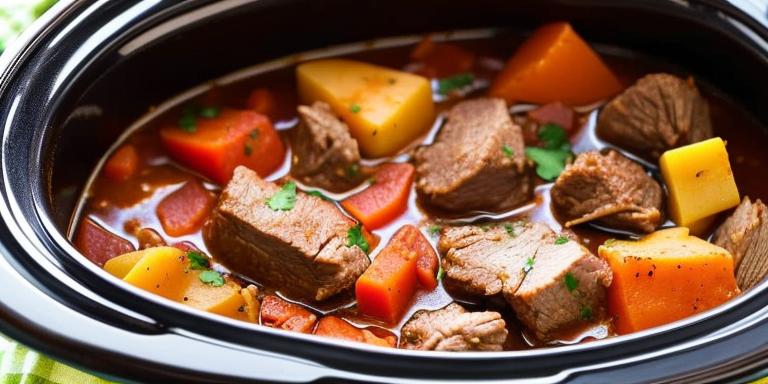
Visual guide about cook chickpeas without soaking in slow cooker
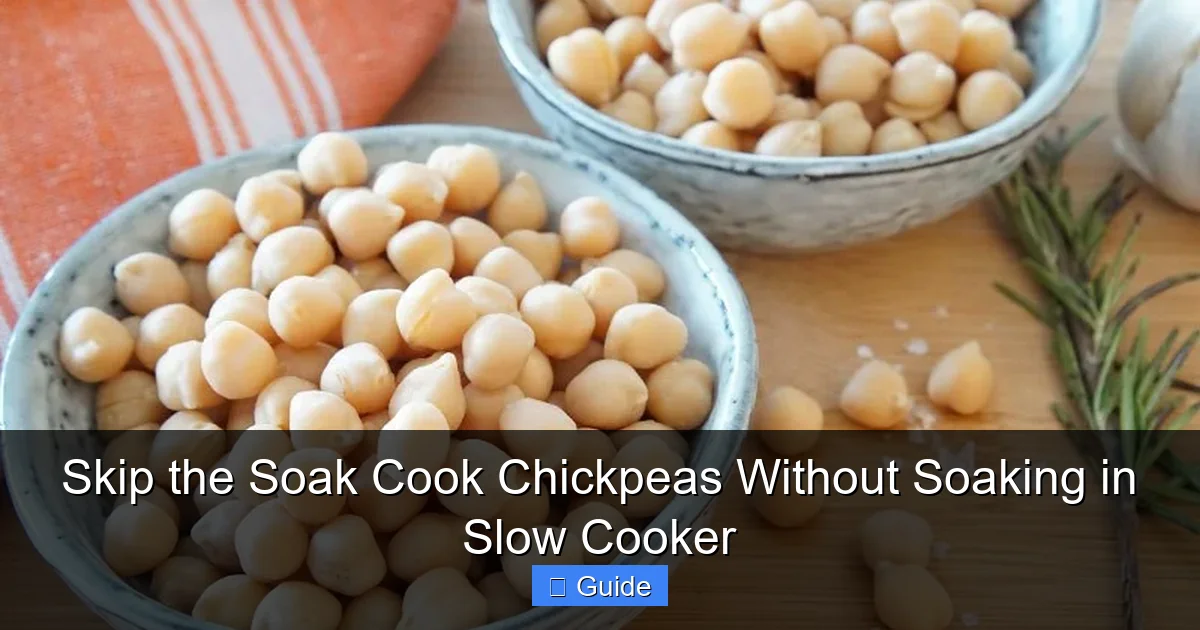
Visual guide about cook chickpeas without soaking in slow cooker
Visual guide about cook chickpeas without soaking in slow cooker
Step 6: Check for Doneness
After about 4 hours, start checking for doneness. Carefully remove a few chickpeas, let them cool slightly, and taste. They should be creamy and tender throughout, not crunchy or chalky. If they’re still firm, simply continue cooking, checking every hour or so, until they reach your desired tenderness.
Step 7: Drain and Use
Once cooked, carefully drain the chickpeas. You can reserve some of the cooking liquid (aquafaba) if you plan to use it for recipes like vegan meringues or mayonnaise, or simply discard it. Your perfectly cooked, no-soak slow cooker chickpeas are now ready to be used!
Troubleshooting & Tips for Success
Even with a straightforward method like cooking chickpeas without soaking in slow cooker, a few common issues can arise. Here’s how to handle them and some extra tips for optimal results.
“My Chickpeas are Still Hard!”
This is the most common complaint.
- Older Beans: Dried beans age, and older beans simply take longer to cook. If your chickpeas have been in the pantry for a while, they might need an extra hour or two (or even more).
- Not Enough Liquid: Ensure your chickpeas are always fully submerged in liquid. If the water level drops too much, they won’t cook evenly.
- Salt Added Too Early: As mentioned, adding salt at the beginning can inhibit softening. If you did this, your best bet is to continue cooking and hope for the best, or learn for next time.
Solution: Continue cooking on LOW. If the water level is low, add more hot water to avoid slowing down the cooking process. Patience is key!
“My Chickpeas are Mushy!”
While tender is good, mushy might be too far.
- Overcooked: You simply cooked them too long. Once they reach your desired tenderness, it’s best to turn off the slow cooker.
- Too High Heat: Cooking on HIGH for too long can sometimes lead to uneven cooking and mushiness.
Solution: For future batches, start checking for doneness earlier (e.g., at 4 hours) and reduce the overall cooking time once you know your slow cooker’s rhythm.
Flavor Enhancement Tips
- Toasting: For an extra layer of flavor, lightly toast the dried chickpeas in a dry pan for a few minutes before adding them to the slow cooker. This brings out a nuttier taste.
- Infuse with Aromatics: Don’t underestimate the power of bay leaves, garlic, and onion. They subtly infuse flavor into the beans as they cook.
- A Touch of Baking Soda (Optional): A tiny pinch (1/4 teaspoon per pound of chickpeas) of baking soda can help tenderize beans, especially older ones, by raising the pH of the cooking water. However, use sparingly, as too much can make them mushy or impart a soapy taste. Add it with the water at the beginning.
Beyond the Bowl: Delicious Ways to Use Your Freshly Cooked Chickpeas
Now that you’ve mastered how to cook chickpeas without soaking in slow cooker, what to do with your glorious bounty? The possibilities are truly endless!
Classic & Comforting
- Homemade Hummus: This is arguably the most popular use. Blend your tender chickpeas with tahini, lemon juice, garlic, and olive oil for a creamy, fresh dip.
- Salads: Add them to green salads for protein and texture, or create a dedicated chickpea salad with chopped veggies, herbs, and a light vinaigrette.
- Soups & Stews: Chickpeas are fantastic in hearty vegetable stews, minestrone, or a simple chickpea and spinach soup.
- Curries & Tagines: Their ability to absorb flavors makes them perfect for rich, spiced dishes.
- Roasted Chickpeas: Toss with olive oil and spices (paprika, cumin, chili powder) and roast until crispy for a healthy snack or salad topper.
Creative & Unexpected
- Chickpea ‘Tuna’ Salad: Mash chickpeas with vegan mayonnaise, celery, onion, and seasonings for a plant-based sandwich filling.
- Burgers & Fritters: Blend cooked chickpeas with grains, spices, and binders to form delicious veggie burgers or fritters.
- Pasta Dishes: Stir them into pasta sauces for added protein and bulk.
- Breakfast Hash: Use them in a savory breakfast hash alongside potatoes and other vegetables.
Storage Solutions
Once your chickpeas are cooked and cooled, you can store them in various ways:
- Refrigerator: Keep them in an airtight container with a little bit of their cooking liquid for up to 5 days.
- Freezer: For longer storage, freeze cooked chickpeas in a single layer on a baking sheet, then transfer to freezer-safe bags or containers. They can be stored for up to 3 months. Thaw in the refrigerator or add directly to hot dishes.
Mastering the art of how to cook chickpeas without soaking in slow cooker is more than just a kitchen hack; it’s a pathway to more flexible, flavorful, and budget-friendly meals. It takes away the planning pressure and opens up a world of culinary possibilities, making healthy plant-based eating easier than ever. So go ahead, dust off that slow cooker, grab a bag of dried chickpeas, and get ready to enjoy the convenience and deliciousness that awaits!
Frequently Asked Questions
Can I cook chickpeas without soaking in a slow cooker on high?
While you technically can, it’s generally not recommended for un-soaked chickpeas. The high heat can cause the skins to burst and lead to uneven cooking, potentially resulting in mushy outsides and hard interiors. The low setting allows for a more gentle, even rehydration and cooking process.
How much water do I need for no-soak slow cooker chickpeas?
A good ratio is about 3-4 cups of water for every 1 cup of dried chickpeas. This ensures there’s plenty of liquid for the chickpeas to absorb as they expand during cooking, preventing them from drying out.
Why shouldn’t I add salt at the beginning of cooking un-soaked chickpeas?
Adding salt too early can toughen the skins of the chickpeas, preventing them from softening properly during the cooking process. It’s best to add salt during the last 30-60 minutes of cooking to ensure tender results and excellent flavor.
How long do slow-cooked no-soak chickpeas last in the fridge?
Cooked chickpeas, when stored in an airtight container with a little of their cooking liquid, will typically last for up to 5 days in the refrigerator. For longer storage, they can be frozen for up to 3 months.
Can I add spices to the slow cooker with the chickpeas?
Absolutely! While salt should be added later, you can definitely add whole spices like bay leaves, garlic cloves, onion halves, a strip of kombu, or even a few peppercorns at the beginning to infuse subtle flavors into your chickpeas as they cook.
Are slow-cooked un-soaked chickpeas as digestible as soaked ones?
Many people find that the long, slow cooking process helps to break down the complex sugars (oligosaccharides) in chickpeas, making them quite digestible even without soaking. However, individual sensitivity varies, so it’s always best to observe how your body reacts.

Jennifer D. Simon has spent the last 26 years studying and practicing nutrition science. She has used a larger part of this time in improving people’s livelihoods. She has done so by coming up with unquestionable ideas on how to tackle food problems in her community. Read More