Avoid disaster: Can slow cooker be too big for recipe
Ever wondered if your trusty slow cooker is sabotaging your meals? The truth is, yes, a slow cooker can be too big for a recipe, leading to common kitchen woes like dry, burnt, or watery dishes. Understanding the ideal fill level is crucial for achieving perfectly cooked, flavorful results every time, ensuring your ingredients cook evenly and safely.
Ah, the slow cooker. It’s a kitchen marvel, isn’t it? The promise of tossing in a few ingredients in the morning and returning home to a delicious, ready-to-eat meal is nothing short of culinary magic. From savory stews and tender pulled pork to comforting chili and even desserts, the slow cooker has earned its place as a beloved appliance in kitchens worldwide. It simplifies busy weeknights, makes entertaining a breeze, and generally feels like a culinary hug in a pot.
But sometimes, that magic seems to fizzle. You follow a recipe to the letter, anticipating perfection, only to find your chicken dry, your stew watery, or your edges suspiciously crispy. You might scratch your head, wondering what went wrong. Did you add too much liquid? Did you cook it too long? Or could the culprit be something less obvious, something you might not even consider? What if the problem isn’t what you put into the slow cooker, but the slow cooker itself?
It’s a common question that many home cooks ponder: can slow cooker be too big for recipe? The answer, unequivocally, is yes. Just like trying to bake a single cupcake in an oven designed for a dozen, using a slow cooker that’s disproportionately large for your ingredients can lead to a host of problems. Understanding why this happens and how to prevent it is key to unlocking consistent slow cooker success. Let’s dive deep into the science, the common pitfalls, and the clever solutions to ensure your slow-cooked meals are always a triumph.
Key Takeaways
- The “Too Big” Problem Is Real: A slow cooker that’s too large for a recipe can lead to food disasters, from dry and burnt edges to watery, flavorless meals, and even food safety issues.
- Heat Distribution is Key: When a slow cooker is too big, the heat elements struggle to properly distribute warmth to a small amount of food, leading to uneven cooking and hotspots.
- Moisture Loss Accelerates: Excess empty space in a large slow cooker allows liquids to evaporate too quickly, concentrating flavors or, conversely, leaving food dry and tough.
- The Ideal Fill Level: For optimal results, aim to fill your slow cooker between 2/3 and 3/4 full. This ensures proper heat circulation and moisture retention.
- Adjustments Are Possible: If your slow cooker is too big, you can adjust recipes, use smaller heat-safe inserts, or even aluminum foil balls to reduce the empty space and improve cooking.
- Food Safety Concerns: Improper heat distribution in an oversized slow cooker can keep food in the “danger zone” (40°F-140°F) for too long, increasing the risk of bacterial growth.
📑 Table of Contents
- The Science Behind the Size Mismatch: Why a Too Big Slow Cooker Causes Trouble
- Common Disasters When Your Slow Cooker Is Too Big
- How to Determine the Right Slow Cooker Size for Your Recipe
- Smart Solutions and Workarounds for an Oversized Pot
- Beyond Size – Other Factors Affecting Slow Cooker Success
- Conclusion: Master Your Slow Cooker, Master Your Meals
The Science Behind the Size Mismatch: Why a Too Big Slow Cooker Causes Trouble
You might think a bigger pot just means more space, right? Not exactly. Slow cookers operate on a very specific principle of gentle, even heat over a long period. When there’s too much empty space, this delicate balance gets thrown off, and that’s when you start running into issues. Understanding the underlying physics can help you see why a slow cooker can be too big for recipe success.
Heat Distribution Hazards
Slow cookers heat from the bottom and sides, gradually warming the food inside. If your slow cooker is too big for the amount of food you’re cooking, a significant portion of the heating element is left exposed to empty air. This means the heat has to travel further to reach the ingredients, and it won’t distribute evenly. You end up with hotspots where the food might overcook or even burn, while other parts remain undercooked. Imagine trying to warm a small mug of water on a massive stovetop burner; the heat isn’t focused, and it takes longer and less efficiently warms the target.
This uneven heating is one of the primary reasons why using a slow cooker that is too big can lead to such frustrating results. The heating elements work hard, but without sufficient mass inside the pot to absorb and distribute that heat, much of it is wasted or misdirected.
Evaporation and Moisture Loss
Slow cookers are designed to trap moisture. The tight-fitting lid creates a steamy environment, returning condensation to the food. This is what keeps your meats tender and your stews juicy. However, when your slow cooker is too big, there’s a larger surface area of exposed liquid and ingredients relative to the food volume. This extra empty space allows for more air circulation and, consequently, more evaporation. Even with a tight lid, increased surface area means more liquid can escape as steam.
When too much moisture escapes, your dish can become dry, tough, and less flavorful. Sauces intended to be thick and rich might reduce too much, becoming overly concentrated or even burning. This is a common pitfall when a slow cooker is too big for a recipe, turning a potentially succulent meal into something lackluster.
The ‘Fill Line’ Philosophy
Most slow cooker manufacturers recommend filling the pot between 2/3 and 3/4 full. This isn’t just an arbitrary guideline; it’s based on optimizing heat transfer, moisture retention, and food safety. Filling it less than 2/3 full means the slow cooker can be too big, leading to the issues we’ve just discussed. Filling it more than 3/4 full can lead to overflowing and uneven cooking because the heat can’t penetrate to the center effectively, plus the potential for a messy counter. Sticking to this sweet spot ensures your appliance works as intended, delivering consistently delicious results.
Common Disasters When Your Slow Cooker Is Too Big
If you’ve experienced any of these frustrating outcomes, the size of your slow cooker might be the silent saboteur. When your slow cooker is too big, these issues become alarmingly common.
Visual guide about can slow cooker be too big for recipe
Dry and Burnt Edges
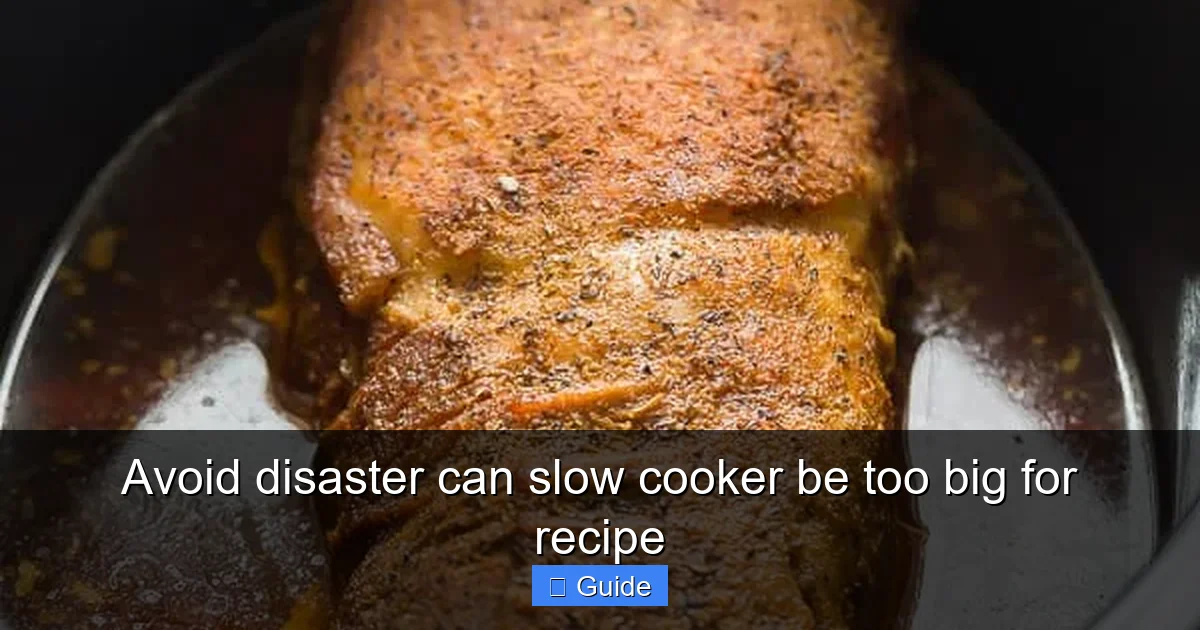
This is perhaps the most common complaint. You open your slow cooker expecting fall-apart tenderness, only to find the meat around the edges or the sauce clinging to the sides has dried out or even blackened. This happens because the exposed heating elements directly cook the thin layer of food closest to the crock’s wall, without enough moisture or bulk to insulate it. It’s a clear sign your slow cooker can be too big for the amount you’re cooking.
Undercooked Centers (Paradoxically)
While the edges might be overcooked, a small amount of food in a too-large pot can ironically lead to an undercooked center. Because the heat isn’t evenly distributed and struggles to build up properly around the smaller food mass, the core of your ingredients might not reach the desired temperature or tenderness in the recommended cooking time. This is particularly concerning with poultry or larger cuts of meat, where proper internal temperature is crucial for safety.
Watery, Flavorless Broth
On the flip side of dryness, sometimes using a slow cooker that is too big can result in a thin, watery broth. This seems counterintuitive given the evaporation point earlier, but it stems from the *rate* of heating. If the ingredients are spread too thin and don’t fill the pot sufficiently, the liquids might not reach a gentle simmer or bubble consistently enough to reduce and concentrate flavors. Instead, they just warm up, creating a bland, watery sauce rather than a rich, flavorful one. This happens when the balance of heat, food mass, and liquid is off, making the question of “can slow cooker be too big for recipe” a critical one for flavor.
Food Safety Risks
This is the most critical concern. For food to be safe to eat, it needs to reach and maintain specific temperatures to kill harmful bacteria. The “danger zone” for bacterial growth is between 40°F and 140°F (4°C and 60°C). If your slow cooker is too big, the uneven and slow heating of a small amount of food means it might spend too much time in this danger zone, especially if it doesn’t adequately fill the pot to absorb and distribute the heat efficiently. This significantly increases the risk of foodborne illness. Always ensure your food reaches safe internal temperatures, especially when concerned that your slow cooker can be too big.
How to Determine the Right Slow Cooker Size for Your Recipe
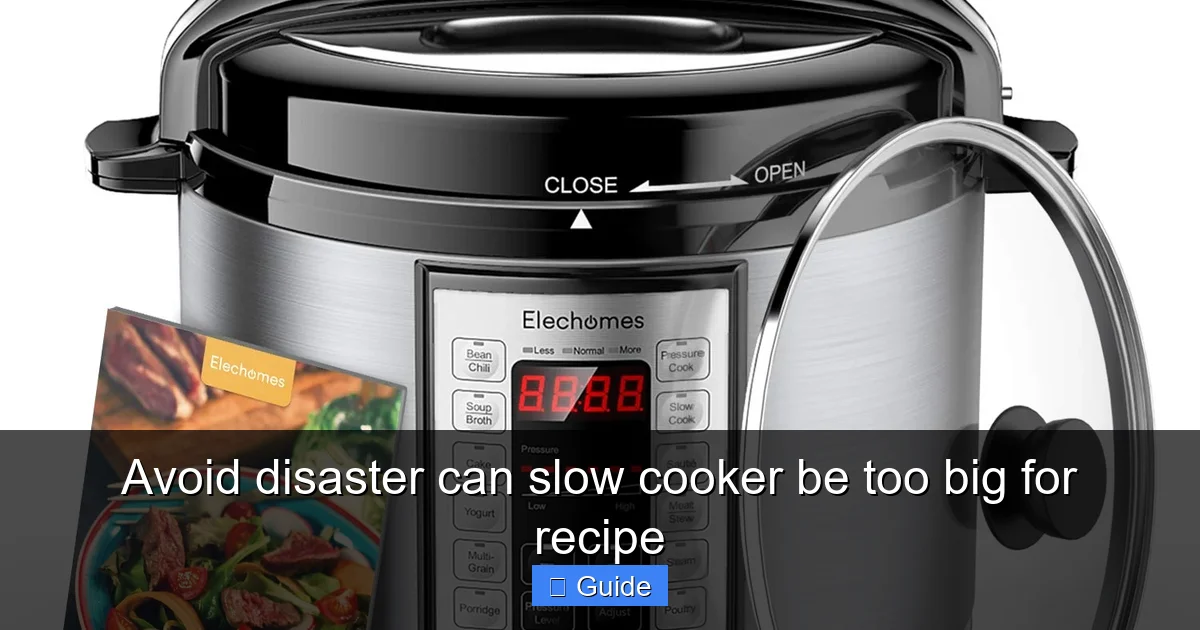
So, how do you avoid these kitchen calamities? The key is to match your slow cooker’s capacity to your recipe’s volume. It’s not just about what you put in, but how much space it takes up. If you’re wondering, “can slow cooker be too big for recipe?” these guidelines will help.
Visual guide about can slow cooker be too big for recipe
The 2/3 to 3/4 Rule
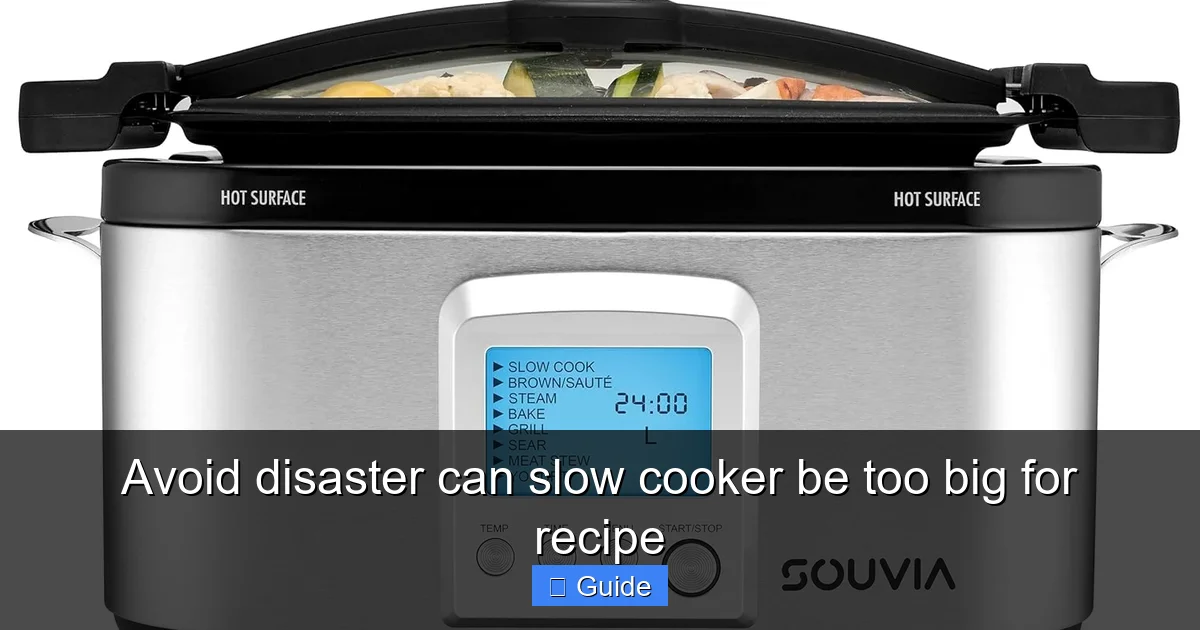
As mentioned, this is your golden rule. A 6-quart slow cooker is perfect for feeding 4-6 people, often holding around 3-4 pounds of meat plus vegetables and liquid. A 3-quart model is ideal for 1-3 people, or smaller dishes. If your ingredients don’t come close to filling your slow cooker to at least 2/3, it’s a good indicator that your slow cooker can be too big for recipe success. This is especially true for recipes with a lot of liquid, which will suffer from excessive evaporation.
Consider the Recipe’s Volume, Not Just Ingredient Count
Don’t just look at “serves 4.” Think about the actual volume of the ingredients. A recipe for chicken breasts and sauce might take up less space than a full pot of chili with beans and vegetables, even if both serve four. Visualize your ingredients in the pot. Will they create a snug fit, or will they look like they’re swimming in an Olympic-sized pool? This mental visualization helps in deciding if your slow cooker can be too big.
When in Doubt, Downsize (If Possible)
If you own multiple slow cookers, and you’re unsure if your larger one will be too big for a recipe, err on the side of using a smaller one. It’s far better to have a slightly fuller smaller slow cooker than a cavernous larger one. If a recipe calls for a specific size and you only have a larger one, that’s when workarounds become essential.
Smart Solutions and Workarounds for an Oversized Pot
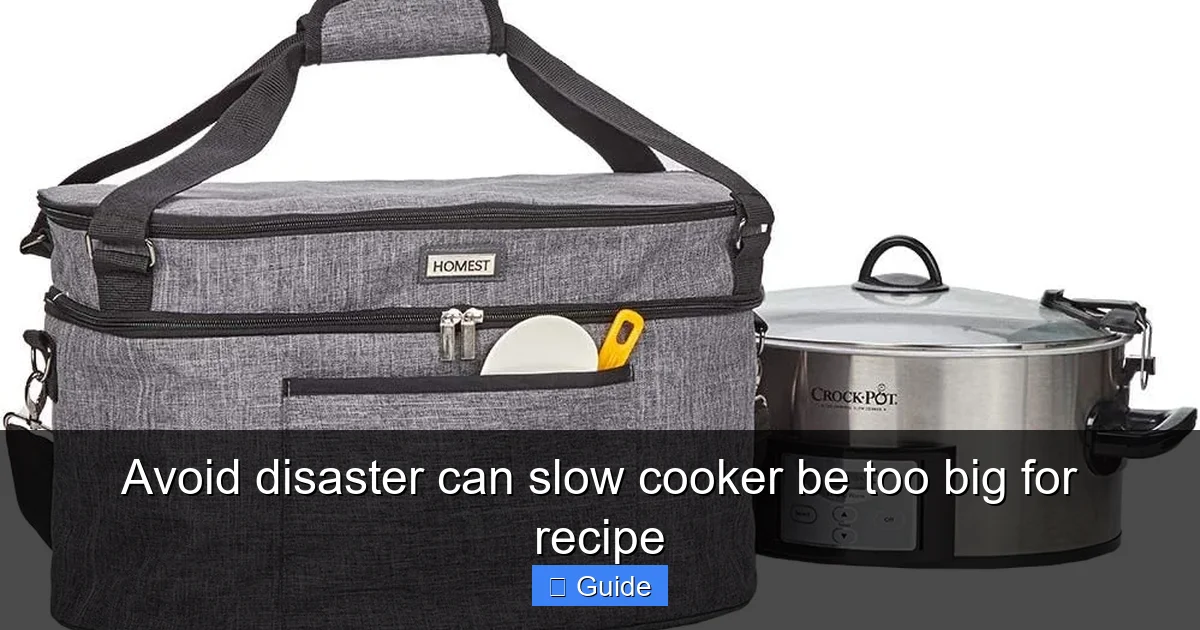
Don’t despair if your slow cooker can be too big for recipe. There are clever ways to adapt and still achieve fantastic results. You don’t necessarily need to buy a new slow cooker for every recipe.
Visual guide about can slow cooker be too big for recipe
Adjusting Recipes for Larger Pots
If you only have a big slow cooker and your recipe feels small, consider scaling up the recipe. Can you double it? Triple it? If you’re cooking for one or two, this might mean more leftovers, which isn’t always a bad thing! Just remember to adjust seasonings and liquids appropriately. If you double a recipe, you might not need to exactly double the liquid, as the evaporation rate changes slightly. Start with about 1.5 times the liquid and add more if needed later. When you scale up, the question “can slow cooker be too big for recipe?” becomes less relevant.
Using Inserts or Ramekins
This is a brilliant trick! Place smaller, oven-safe dishes (like ceramic ramekins, glass baking dishes, or even a smaller crock-pot insert if you have one that fits) inside your larger slow cooker. You can cook your main dish in the smaller insert, and then fill the space around it with water or even other ingredients you want to cook simultaneously (like potatoes or corn on the cob wrapped in foil). This helps reduce the empty air space and promotes more even heating for your primary dish. This is a great way to deal with the problem when your slow cooker is too big.
The Foil Ball Hack
Similar to using inserts, you can create “filler” by crumbling up aluminum foil into large, dense balls. Place these foil balls in the empty space around your food in the slow cooker. They help displace air, improve heat retention, and prevent direct exposure of the heating elements to empty space, thus mitigating the issues that arise when a slow cooker is too big.
Batch Cooking for a Full Pot
If you have a recipe that truly is small and your slow cooker is quite large, consider making a double or triple batch and freezing the extra portions. This way, you fill the pot to the optimal level, cook efficiently, and stock your freezer with ready-made meals for future busy days. It’s a smart way to maximize the utility of your appliance and solve the dilemma of “can slow cooker be too big for recipe” by simply making more.
Beyond Size – Other Factors Affecting Slow Cooker Success
While the size of your slow cooker is a significant factor, it’s not the only one. Many other elements play a role in achieving that perfect slow-cooked meal, even if you’ve ensured your slow cooker isn’t too big.
Lid Fit and Seal
A loose-fitting lid is a silent destroyer of slow-cooked meals. If the lid isn’t snug, precious steam and moisture will escape, leading to dry food and extended cooking times. Always ensure your lid fits tightly. If it’s a bit wobbly, a layer of aluminum foil placed under the lid can help create a better seal. This is important regardless of whether your slow cooker can be too big for recipe or not.
Recipe Moisture Content
Unlike traditional stovetop cooking where liquids evaporate quickly, slow cookers retain most of the moisture. Many recipes need far less liquid than you might think. If your recipe ends up watery, you might be adding too much liquid from the start. Reduce liquids by about a third compared to stovetop recipes, especially if you’re cooking vegetables that release a lot of water. Even if your slow cooker isn’t too big, excess liquid can dilute flavors.
Temperature Settings and Cook Times
“Low and slow” is the slow cooker mantra. Cooking on the LOW setting for a longer duration often yields more tender and flavorful results than rushing it on HIGH. HIGH setting essentially cooks food in half the time but can be harsher and lead to dryness, especially for leaner meats. Always follow recipe guidelines for settings and times, but remember that all slow cookers vary slightly. Get to know your specific appliance.
Material of the Crock
The material of your slow cooker’s inner pot can also make a subtle difference. Ceramic crocks tend to hold and distribute heat very evenly, while metal inserts (less common now) might heat up more quickly. Glass lids allow you to peek without releasing steam, which is always a bonus. While this won’t change if your slow cooker can be too big for recipe, it contributes to overall cooking consistency.
Conclusion: Master Your Slow Cooker, Master Your Meals
The slow cooker is an incredible tool for home cooks, offering convenience and comforting meals with minimal effort. But like any kitchen appliance, it has its nuances. Understanding that the answer to “can slow cooker be too big for recipe” is a resounding yes, is the first step toward unlocking its full potential.
By paying attention to the ideal fill level, understanding how heat and moisture behave, and employing smart workarounds when your pot is oversized, you can transform your slow cooker results. No more dry chicken, watery stews, or burnt edges! Instead, you’ll consistently create perfectly cooked, tender, and flavorful dishes that everyone will love.
So, the next time you reach for your slow cooker, take a moment to consider the recipe’s volume and your appliance’s size. A little foresight goes a long way in avoiding kitchen disasters and ensuring every slow-cooked meal is a resounding success. Happy slow cooking!
Frequently Asked Questions
Can I cook a small roast in a large slow cooker?
Yes, but it’s not ideal. A small roast in a large slow cooker risks drying out or cooking unevenly due to excess empty space. It’s best to either scale up the recipe, use a smaller slow cooker, or employ workarounds like adding foil balls or a heat-safe insert to reduce the empty volume.
What happens if I underfill my slow cooker too much?
If you underfill your slow cooker too much, the food is likely to dry out, burn on the edges, and cook unevenly. The heating elements will be overexposed, causing too much liquid to evaporate and leading to a less tender and flavorful final dish.
Will cooking time be affected if my slow cooker is too big?
Yes, cooking time can be affected. While it might seem counterintuitive, an underfilled slow cooker can paradoxically take longer for the food to reach the proper temperature evenly, as the heat isn’t effectively absorbed and distributed by a sufficient food mass. It can also lead to overcooked edges before the center is done.
Can I use a slow cooker liner to help with an oversized pot?
Slow cooker liners are great for easy cleanup but don’t effectively address the issue of an oversized pot. They don’t reduce the internal volume or improve heat distribution. For that, you’ll need physical fillers like smaller inserts or foil balls.
Is it safer to use a slow cooker that’s too small or too big?
Generally, it’s safer to err on the side of a slow cooker that’s slightly too small rather than too big, as long as it doesn’t overflow. A pot that’s too small might extend cooking time slightly or cook food closer together, but a pot that’s too big carries greater risks of uneven cooking and food spending too long in the bacterial “danger zone.”
How do I know the correct capacity of my slow cooker?
Most slow cookers have their capacity (in quarts or liters) clearly marked on the bottom or side of the unit, or in the instruction manual. If not, you can fill it with water and then measure the water using a liquid measuring cup to determine its total volume. Remember to then aim for 2/3 to 3/4 full with ingredients.
Jennifer D. Simon has spent the last 26 years studying and practicing nutrition science. She has used a larger part of this time in improving people’s livelihoods. She has done so by coming up with unquestionable ideas on how to tackle food problems in her community. Read More