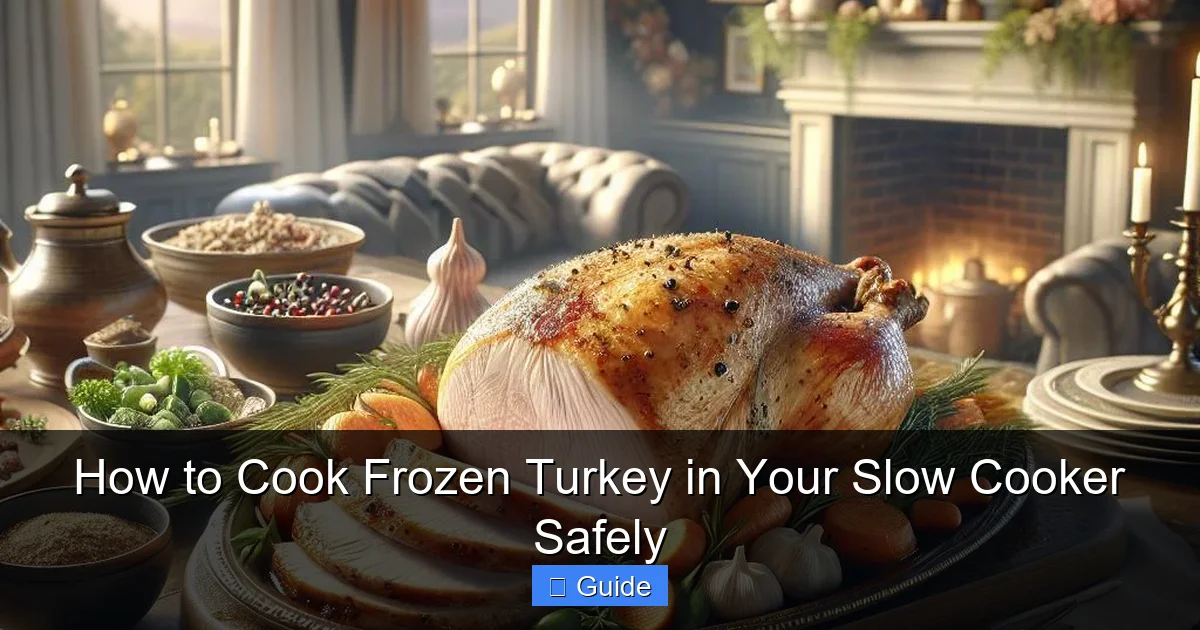
How to Cook Frozen Turkey in Your Slow Cooker Safely
Wondering if you can cook frozen turkey in your slow cooker? Absolutely, but with crucial safety measures! This guide provides a comprehensive, step-by-step approach to safely slow cook frozen turkey breasts or smaller whole turkeys, ensuring it reaches the correct internal temperature while remaining moist and delicious. Learn vital preparation tips, the proper cooking process, and how to avoid common pitfalls to enjoy a perfectly cooked meal every time.
Ah, the humble slow cooker! It’s a culinary hero in many homes, effortlessly transforming tough cuts into tender masterpieces and making weeknight dinners a breeze. But have you ever looked at a rock-solid frozen turkey in your freezer and wondered, “Can I really just pop that into my slow cooker?” It’s a question that sparks both curiosity and a little bit of culinary apprehension. The good news is, yes, you absolutely *can* cook frozen turkey in a slow cooker, but it comes with a few important caveats, especially regarding safety and the size of your turkey. We’re here to demystify the process, turning that frozen block into a succulent, flavorful meal.
Forget the stress of last-minute thawing or hours spent waiting for a large oven to preheat. The slow cooker offers a fantastic alternative for preparing smaller cuts of turkey, like breasts or even very small whole turkeys, directly from the freezer. This guide will walk you through everything you need to know, from selecting the right turkey for your slow cooker to ensuring it’s cooked perfectly and, most importantly, safely. Get ready to embrace the convenience and delicious results of slow cooking frozen turkey!
Key Takeaways
- Size Matters: A slow cooker is best for cooking *frozen turkey breasts* or *very small whole turkeys* (typically 6 lbs or less) from frozen. Larger turkeys will not fit or cook safely and evenly.
- No Thawing Required, But Preparation Is Key: You do not need to thaw the turkey, but ensure it fits comfortably in your slow cooker and that any giblets are removable (they often aren’t in frozen turkey breasts, but check).
- Liquid is Essential: Always add at least 1-2 cups of liquid (broth, water, etc.) to the slow cooker to prevent drying out and aid in even cooking.
- Food Safety First: The most critical step is reaching an internal temperature of 165°F (74°C) in the thickest part of the meat. Use a reliable meat thermometer to verify doneness.
- Cook Time Varies Greatly: Expect cooking times ranging from 4-8 hours on high or 6-12 hours on low, depending on the turkey’s size and your slow cooker’s efficiency. Always prioritize temperature over time.
- Avoid the “Danger Zone”: Never allow the turkey to sit at temperatures between 40°F and 140°F (4°C and 60°C) for more than two hours. Starting from frozen helps bypass this zone faster.
- Flavor & Moisture: Slow cooking from frozen can yield incredibly tender and moist turkey, especially when seasoned well and cooked with adequate liquid.
📑 Table of Contents
- Dispelling Myths: Can You Really Cook Frozen Turkey Safely?
- Choosing Your Turkey and Slow Cooker: A Perfect Match
- Prepping Your Frozen Turkey for the Slow Cooker
- Step-by-Step Guide to Cooking Frozen Turkey in a Slow Cooker
- Ensuring Food Safety: The Golden Rules
- Elevating Your Slow Cooker Turkey: Tips for Flavor and Moisture
- Conclusion: Embrace the Convenience, Savor the Flavor
Dispelling Myths: Can You Really Cook Frozen Turkey Safely?
One of the biggest concerns people have about cooking any meat from frozen is food safety. The “danger zone” for bacterial growth – temperatures between 40°F (4°C) and 140°F (60°C) – is a real concern. However, with the right approach, cooking frozen turkey in a slow cooker can be perfectly safe and yield fantastic results. The key is understanding how slow cookers work and how they interact with frozen food.
Understanding the Slow Cooker’s Role
Slow cookers, by their nature, heat food slowly. When starting with raw, thawed meat, this slow heating could potentially keep the food in the danger zone for too long. However, when you cook *frozen* meat, especially poultry like turkey, the USDA (United States Department of Agriculture) guidelines state that it is safe to cook it from its frozen state, provided the internal temperature reaches a safe 165°F (74°C) without delay. The slow cooker provides consistent, moist heat, which helps ensure the turkey cooks through evenly.
The “Why” Behind Safe Frozen Cooking
When you cook frozen turkey, the intense, prolonged heat of the slow cooker gradually thaws and then cooks the meat. The critical factor is that the food does not linger in the danger zone for an extended period. Because the cooking process begins immediately with high heat (even on the “low” setting, it’s still heating), the turkey passes through the danger zone quickly enough to prevent harmful bacterial growth. However, this is primarily true for smaller cuts. Larger, denser frozen items might not heat quickly enough throughout their core, which is why we emphasize turkey breasts or very small whole turkeys.
Choosing Your Turkey and Slow Cooker: A Perfect Match
Not all turkeys are created equal when it comes to slow cooker cooking. Size and cut are paramount to both safety and success.
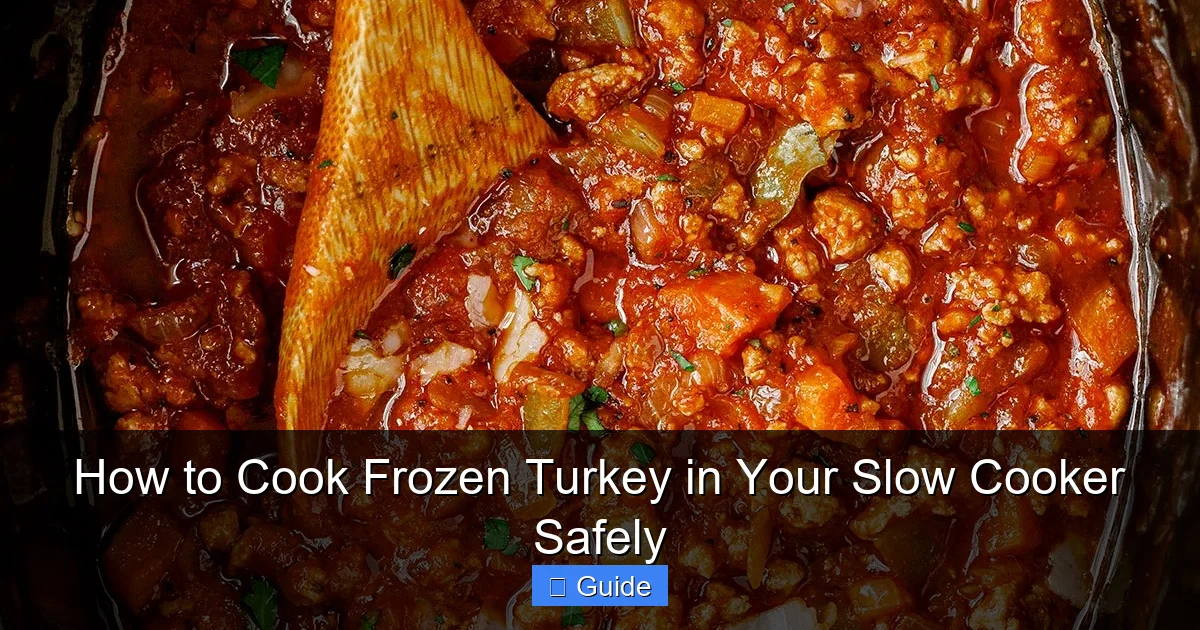
Visual guide about cook frozen turkey in slow cooker
Image source: eatwell101.com
The Ideal Turkey for Your Slow Cooker
- Turkey Breast (Bone-in or Boneless): This is hands down the best option for slow cooking from frozen. Turkey breasts typically range from 2-7 pounds, fitting comfortably in most standard slow cookers (4-7 quarts). They cook more evenly and reach safe temperatures reliably.
- Small Whole Turkey: If you’re set on a whole turkey, aim for one no larger than 6 pounds (approximately 2.7 kg). Anything larger will likely not fit in a standard slow cooker and, more importantly, won’t cook evenly or safely from frozen. Even with a small whole turkey, you might need to adjust its position to ensure it’s fully submerged or surrounded by liquid and heat.
- Turkey Thighs or Drumsticks: These individual pieces are also excellent candidates for slow cooking from frozen, offering juicy, flavorful results.
What to Avoid: Do not attempt to cook a large, whole frozen turkey (over 6-7 pounds) in a slow cooker. It simply won’t work safely or effectively. The mass is too great for the slow cooker to heat evenly and quickly enough to pass through the danger zone.
Matching Turkey Size to Slow Cooker Size
Make sure your chosen piece of turkey fits snugly but not crammed into your slow cooker. Ideally, there should be a little room around the turkey for liquid to circulate and for the lid to seal properly.
- 3-4 Quart Slow Cooker: Best for 2-3 lb turkey breasts or individual pieces.
- 5-6 Quart Slow Cooker: Can handle 4-6 lb turkey breasts or a very small (under 4 lb) whole turkey.
- 7 Quart or Larger Slow Cooker: Suitable for up to a 7 lb turkey breast or a 5-6 lb small whole turkey.
Remember, the turkey should not touch the lid when it’s closed. If it does, your slow cooker is too small for that particular piece of meat.
Prepping Your Frozen Turkey for the Slow Cooker
While the beauty of cooking frozen turkey in a slow cooker is minimal prep, there are a few things you need to do before you simply drop it in.
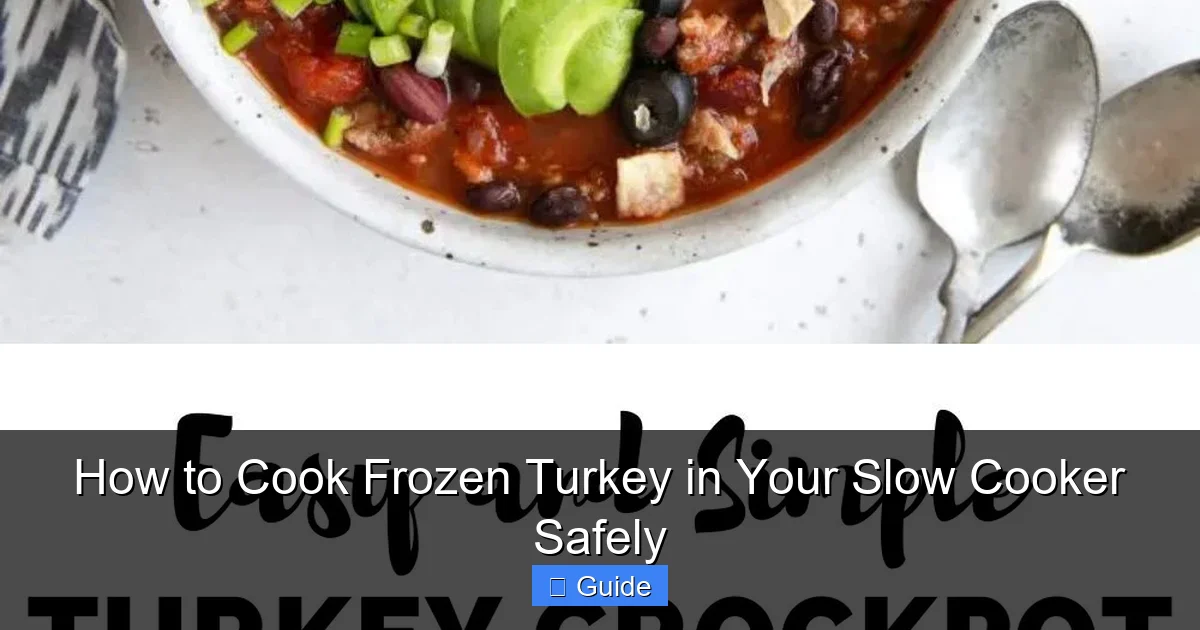
Visual guide about cook frozen turkey in slow cooker
Image source: i.pinimg.com
Giblets and Packaging Check
Most frozen turkey breasts or smaller cuts are sold without giblets or neck, which is ideal. However, if you are cooking a small whole turkey, *you must be able to remove the giblet packet and neck from the cavity before cooking*. If the turkey is frozen solid and you cannot access the cavity to remove these, then you cannot safely cook it from frozen in the slow cooker. This is a critical safety point, as the giblets wrapped in paper or plastic inside the turkey can leach chemicals or melt during cooking, contaminating your food.
Seasoning and Liquid: The Flavor Foundation
You can’t really rub seasonings onto a rock-solid frozen turkey, but you can certainly season the cooking liquid. This is where a lot of your flavor will come from.
- Liquid Base: Always add liquid to your slow cooker. Chicken or turkey broth is excellent, but water, vegetable stock, or even white wine can work. Aim for 1-2 cups of liquid, ensuring it covers at least the bottom third of your turkey. This creates a moist cooking environment and helps distribute heat.
- Aromatic Foundation: Place aromatics at the bottom of the slow cooker or around the turkey. Think sliced onions, carrots, celery, garlic cloves, or fresh herbs like rosemary and thyme. As they cook with the liquid, their flavors will infuse into the turkey.
- Salt and Pepper: Generously season your liquid with salt and freshly ground black pepper. You can also add other dried herbs and spices like paprika, poultry seasoning, or a bay leaf. The turkey will absorb these flavors as it cooks.
Pro Tip: A layer of sliced onions or carrots at the bottom of the slow cooker can also act as a natural rack, preventing the turkey from sticking and lifting it slightly out of the direct liquid for more even cooking.
Step-by-Step Guide to Cooking Frozen Turkey in a Slow Cooker
Once you’ve got your turkey and your slow cooker ready, the actual cooking process is straightforward. Patience is your best friend here!
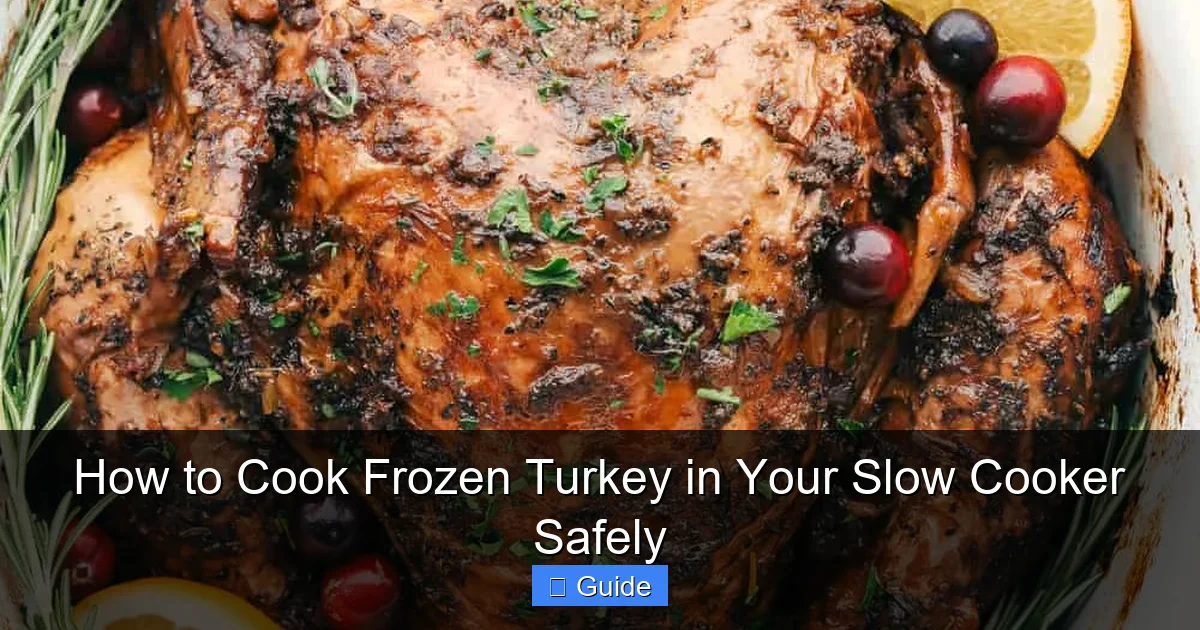
Visual guide about cook frozen turkey in slow cooker
Image source: therecipecritic.com
1. Prepare the Slow Cooker
If desired, spray the inside of your slow cooker with non-stick cooking spray or use a slow cooker liner for easier cleanup.
2. Add Aromatics and Liquid
Place your chosen aromatics (onions, carrots, celery, garlic) at the bottom of the slow cooker. Pour in 1-2 cups of broth or other liquid. Season the liquid generously.
3. Place the Frozen Turkey
Carefully place the frozen turkey breast (or small whole turkey, ensuring giblets are removed) into the slow cooker. If cooking a breast, place it skin-side up if possible, but don’t worry too much if it doesn’t fit perfectly this way due to its frozen state.
4. Set the Cooker
Cover the slow cooker with its lid. Set the slow cooker to the “LOW” setting for a longer, more gentle cook, or “HIGH” for a faster cook. Most recipes for frozen meat recommend the “LOW” setting for best results in terms of tenderness and moisture, but “HIGH” is also acceptable if time is a factor. Cooking on “LOW” is generally preferred to prevent drying out.
5. Monitor and Check Temperature
Do not lift the lid during the first few hours of cooking, as this releases heat and significantly prolongs the cooking time.
Begin checking the internal temperature after the minimum suggested cooking time (see below). Insert a reliable meat thermometer into the thickest part of the turkey, avoiding bone. The turkey is safely cooked when it reaches an internal temperature of 165°F (74°C). You may need to check in a couple of spots to ensure consistent doneness.
Approximate Cooking Times (Always Verify with a Thermometer!)
- 2-3 lb Turkey Breast (frozen): 4-6 hours on HIGH, 6-8 hours on LOW
- 4-5 lb Turkey Breast (frozen): 5-7 hours on HIGH, 7-10 hours on LOW
- 6-7 lb Turkey Breast (frozen) or Small Whole Turkey (frozen, 5-6 lbs): 6-8 hours on HIGH, 8-12 hours on LOW
These are estimates. Every slow cooker is different, and the density of the frozen turkey can vary. Always rely on your thermometer!
6. Rest and Serve
Once the turkey reaches 165°F (74°C), carefully remove it from the slow cooker. Place it on a cutting board, tent it loosely with foil, and let it rest for 10-15 minutes before slicing. Resting allows the juices to redistribute, resulting in a more tender and moist turkey.
Ensuring Food Safety: The Golden Rules
When cooking frozen turkey in a slow cooker, safety is paramount. Follow these golden rules to ensure your meal is not only delicious but also safe to eat.
The Meat Thermometer is Non-Negotiable
We’ve said it before, but it bears repeating: A reliable meat thermometer is your best friend. Visual cues are simply not enough to guarantee doneness, especially with poultry. Always check the internal temperature in the thickest part of the meat, avoiding bones, until it reads a consistent 165°F (74°C).
No Peeking!
Resist the urge to lift the lid of your slow cooker frequently. Every time you peek, heat escapes, and the cooking time can be extended by 20-30 minutes. This increases the time the food spends warming up, potentially lengthening its stay in the danger zone.
Don’t Use the “Warm” Setting for Cooking
The “Warm” setting on a slow cooker is designed to *hold* hot food at a safe temperature, not to cook it. Always start cooking on “LOW” or “HIGH” and only switch to “Warm” once the turkey has reached 165°F (74°C).
Leftovers Management
Cool and refrigerate any leftover turkey within two hours of cooking. Store it in shallow, airtight containers to cool quickly. Consume leftovers within 3-4 days or freeze them for longer storage.
Elevating Your Slow Cooker Turkey: Tips for Flavor and Moisture
Cooking frozen turkey in a slow cooker doesn’t mean sacrificing flavor or succulence. With a few extra steps, you can create a truly memorable meal.
Crispy Skin Finish (Optional)
If you prefer crispy skin (and let’s be honest, who doesn’t?), your slow cooker won’t achieve it. After cooking, transfer the turkey breast to a baking sheet. Brush the skin with a little melted butter or olive oil, and broil it in a preheated oven for 5-10 minutes, or until the skin is golden brown and crispy. Watch it closely to prevent burning!
Making Gravy from Pan Juices
The liquid left in the slow cooker after cooking is packed with incredible flavor. Don’t let it go to waste! Strain out any solids, then use it as a base for a delicious gravy.
Quick Gravy Idea: Skim off excess fat from the pan juices. In a small saucepan, melt 2 tablespoons of butter over medium heat. Whisk in 2 tablespoons of flour and cook for 1 minute to form a roux. Gradually whisk in 2 cups of the strained turkey juices, bringing to a simmer. Cook, whisking constantly, until the gravy thickens to your desired consistency. Season with salt and pepper to taste.
Flavor Boosters and Variations
- Herbs: Fresh rosemary, thyme, sage, or bay leaves added to the liquid will infuse the turkey beautifully.
- Citrus: A sliced lemon or orange placed in the slow cooker with the turkey can add a bright, zesty note.
- Spices: Experiment with different spice blends like smoked paprika, garlic powder, onion powder, or a dash of cayenne for a little kick.
- Vegetables: Besides the initial aromatics, you can add heartier vegetables like potatoes, sweet potatoes, or winter squash to the slow cooker during the last 1-2 hours of cooking for a complete meal.
Conclusion: Embrace the Convenience, Savor the Flavor
Cooking frozen turkey in your slow cooker is a game-changer for busy cooks, offering a convenient, safe, and incredibly delicious way to enjoy turkey. By following the guidelines for turkey size, ensuring proper cooking temperatures, and embracing the slow cooker’s gentle heat, you can achieve tender, moist results every time. Remember to prioritize food safety above all else, using a meat thermometer as your ultimate guide.
So, the next time you find yourself with a frozen turkey breast and a craving for a comforting meal, don’t hesitate. Pull out that slow cooker, follow these steps, and prepare to be delighted by the ease and flavor of your perfectly cooked frozen turkey. Happy slow cooking!
Frequently Asked Questions
Can I put a large frozen turkey (e.g., 15 lbs) in my slow cooker?
No, a large frozen turkey will not cook safely or evenly in a slow cooker. Slow cookers are suitable only for very small whole turkeys (under 6-7 lbs) or turkey breasts, as larger cuts will not reach safe internal temperatures quickly enough.
Do I need to add any liquid when cooking frozen turkey in a slow cooker?
Yes, adding liquid is essential! At least 1-2 cups of broth, water, or other liquid should be added to the slow cooker to create a moist environment, prevent the turkey from drying out, and aid in even heat distribution.
How do I know when my frozen turkey is safely cooked in the slow cooker?
The only reliable way to confirm doneness is by using a meat thermometer. Insert it into the thickest part of the turkey, avoiding bones, until it reads a safe internal temperature of 165°F (74°C).
What if my frozen turkey has giblets inside? Can I still slow cook it from frozen?
If your frozen turkey has giblets inside its cavity and you cannot remove them because the turkey is frozen solid, then you cannot safely cook it from frozen in the slow cooker. The giblet packet (often paper or plastic) must be removed before cooking.
Can I cook frozen turkey on the “Warm” setting in my slow cooker?
No, the “Warm” setting is only for holding already cooked food at a safe temperature. You must cook frozen turkey on either the “LOW” or “HIGH” setting to ensure it cooks through safely and reaches 165°F (74°C).
How long does it take to cook a frozen turkey breast in a slow cooker?
Cooking times vary based on the size of the breast and your slow cooker. A 2-3 lb frozen turkey breast typically takes 4-6 hours on HIGH or 6-8 hours on LOW. Always use a meat thermometer to confirm it reaches 165°F (74°C).

Jennifer D. Simon has spent the last 26 years studying and practicing nutrition science. She has used a larger part of this time in improving people’s livelihoods. She has done so by coming up with unquestionable ideas on how to tackle food problems in her community. Read More