
Can You Put Sour Cream in Slow Cooker
Adding sour cream in a slow cooker can create wonderfully rich and creamy dishes, but it requires a specific technique to prevent curdling. The key is to add it at the very end of the cooking process, after the main dish is cooked and the heat has been reduced. This guide will show you how to temper sour cream and incorporate it perfectly for a smooth, delicious finish, ensuring your creamy slow cooker meals are always a hit.
Can You Put Sour Cream in Slow Cooker? Absolutely, With a Twist!
The slow cooker is a magical kitchen appliance, transforming tough cuts of meat into tender delights and simmering ingredients into flavorful, comforting meals with minimal effort. But when it comes to adding creamy elements like sour cream, many home cooks hesitate. The fear of a curdled, separated mess is real, and for good reason! High heat and sour cream don’t always play nicely together.
However, don’t despair! The good news is, you absolutely *can* put sour cream in a slow cooker, and doing so can elevate your dishes to new heights of richness and tang. The trick isn’t *if* you can add it, but *when* and *how* you add it. This comprehensive guide will walk you through the science behind why sour cream sometimes misbehaves, the golden rules for successful incorporation, step-by-step instructions, and practical tips to ensure your slow cooker creations are always wonderfully creamy and never curdled. Get ready to master the art of adding sour cream to your slow cooker recipes!
Key Takeaways
- Timing is Crucial: Always add sour cream to your slow cooker dish at the very end of the cooking process, when the heat is reduced or turned off. This prevents curdling.
- Prevent Curdling: Sour cream curdles due to high, prolonged heat, which causes its proteins to separate. Adding it late minimizes exposure to intense heat.
- Temper for Success: Before adding sour cream directly, temper it by mixing a small amount of the hot liquid from your slow cooker into it. This gradually raises its temperature and prevents thermal shock.
- Use Full-Fat Varieties: Full-fat sour cream is significantly more stable and less prone to curdling than low-fat or fat-free versions when exposed to heat.
- Gentle Heat is Key: After incorporating sour cream, only warm the dish gently for a short period (15-30 minutes on a “Warm” setting); never bring it back to a full boil or cook on high.
- Room Temperature Helps: Bringing your sour cream to room temperature for about 30 minutes before tempering and adding can further reduce the risk of curdling.
- Recipe Flexibility: Sour cream works wonderfully in many slow cooker recipes like stroganoff, goulash, or creamy chicken dishes, provided it’s added correctly.
Understanding the Challenge: Why Sour Cream Curdles in a Slow Cooker
Before we dive into the “how,” let’s quickly understand the “why.” Sour cream is a dairy product made by fermenting cream with lactic acid bacteria. This process thickens the cream and gives it its characteristic tangy flavor. It’s rich in fat and protein.
When these proteins are exposed to high, prolonged heat, especially in an acidic environment (which sour cream itself provides, and many slow cooker dishes can be), they can seize up, contract, and separate from the water and fat in the cream. This separation is what we call curdling. Instead of a smooth, integrated sauce, you get unsightly little white clumps floating in a watery liquid. This is precisely what we want to avoid when using sour cream in a slow cooker.
Think of it like scrambling an egg. You start with a smooth liquid, but apply heat, and the proteins coagulate and form curds. While intentional in scrambled eggs, it’s not what we want in our creamy slow cooker sauce! Other dairy products like milk or very light cream can suffer a similar fate, though full-fat heavy cream tends to be more stable due to its higher fat content. Cheese, especially cream cheese, is often more heat-stable because it’s already a coagulated protein product, but even it can separate if overheated. For sour cream in slow cooker dishes, a specific approach is essential.
The Golden Rule: When to Add Sour Cream to Your Slow Cooker Dish

Visual guide about how to put sour cream in slow cooker
Image source: theglutenfreeblogger.com
This is the single most important piece of advice you’ll receive: always add sour cream at the very end of the cooking process.
Do not add sour cream to the slow cooker at the beginning, in the middle, or for any significant duration of high heat. Your goal is to expose the sour cream to the minimum amount of heat necessary to warm it through and incorporate it into the sauce, but never to cook it. By following this rule, you dramatically reduce the risk of curdling and ensure your dish retains its smooth, creamy texture and delightful tang. This applies whether you’re making a beef stroganoff, a creamy chicken dish, or a rich goulash. The secret to successfully adding sour cream in a slow cooker lies in its late introduction.
Preparing Your Sour Cream for Slow Cooker Success
Visual guide about how to put sour cream in slow cooker
Image source: img.sndimg.com
Even with perfect timing, a few preparatory steps can further safeguard your dish from curdling.
Bringing to Room Temperature
Take your sour cream out of the refrigerator about 30 minutes before you plan to add it to your slow cooker. Adding cold sour cream directly to a hot dish can cause thermal shock, increasing the likelihood of curdling. Allowing it to warm up slightly reduces this temperature differential. This simple step makes a big difference when preparing to add sour cream in slow cooker recipes.
Tempering Your Sour Cream
Tempering is a crucial technique that helps gradually raise the temperature of your sour cream before it joins the main pot. This gentle transition prevents the proteins from seizing up abruptly.
To temper:
- In a separate bowl, place the amount of sour cream you intend to use.
- Carefully spoon out a small amount (1/2 to 1 cup, depending on the volume of your dish) of the hot liquid from your slow cooker into the bowl with the sour cream.
- Whisk the sour cream and hot liquid together thoroughly until it’s smooth and fully combined. The mixture will now be warmer and thinner.
- Repeat this process 1-2 more times, adding a little more hot liquid and whisking each time, until the sour cream mixture is warm to the touch.
This tempered sour cream is now ready to be gently folded into your slow cooker dish without shock.
Choosing the Right Type of Sour Cream
For optimal results when using sour cream in a slow cooker, always opt for full-fat sour cream. Full-fat versions are much more stable under heat due to their higher fat content. Low-fat or fat-free sour creams contain more water and stabilizers, and their reduced fat content makes their proteins more susceptible to curdling when heated. While health-conscious choices are good, for creamy sauces, full-fat is your friend. Greek yogurt can be used similarly but is even more prone to curdling, so it requires even more careful tempering and minimal heat.
Step-by-Step Guide: Incorporating Sour Cream into Your Slow Cooker Recipes
Here’s how to perfectly add sour cream to your slow cooker creation for a smooth, creamy finish every time.
Step 1: Cook Your Main Dish Until Almost Done
Follow your recipe directions for the main cooking time. Ensure your meat is tender, vegetables are cooked through, and the sauce base is flavorful and simmering. The dish should be fully cooked, with perhaps 15-30 minutes remaining in the original cooking time, or right at the end before serving.
Step 2: Prepare Your Sour Cream
- Remove your full-fat sour cream from the refrigerator about 30 minutes before you’re ready to add it.
- Measure out the required amount of sour cream into a medium-sized bowl.
Step 3: Temper the Sour Cream
- Carefully open your slow cooker lid.
- Ladle about 1/2 to 1 cup of the hot liquid from your slow cooker (the sauce, broth, or juices) into the bowl with the sour cream.
- Whisk vigorously until the sour cream is completely smooth and no lumps remain. The mixture should be noticeably warmer. You can add another ladle of hot liquid and whisk again if you feel it’s necessary for a smoother, warmer transition.
Step 4: Reduce Heat and Add Tempered Sour Cream
This is the critical moment for adding sour cream in slow cooker dishes.
- Turn your slow cooker setting from “High” or “Low” to the “Warm” setting, or even turn it off completely if your recipe allows for immediate serving. The goal is to reduce the direct, high heat.
- Pour the tempered sour cream mixture into the slow cooker.
- Stir gently but thoroughly with a spoon or whisk until the sour cream is fully incorporated into the sauce. Be careful not to over-stir, as vigorous stirring can sometimes contribute to separation.
Step 5: Heat Gently (If Necessary) and Serve
- If your slow cooker is on the “Warm” setting, allow the dish to sit for an additional 15-30 minutes. This allows the sour cream to gently warm through and fully meld with the sauce without actually cooking.
- If you turned the slow cooker off, you can serve immediately once the sour cream is incorporated and warmed through by the residual heat.
- Taste and adjust seasonings as needed.
- Serve your beautifully creamy slow cooker dish and enjoy!
Remember, the key is not to bring the mixture back to a boil or expose it to high heat for an extended period after the sour cream has been added.
Recipes Where Sour Cream Shines (and How to Add It)
Many classic comfort foods are perfect for a touch of sour cream. Here are a few examples of slow cooker dishes where sour cream truly enhances the flavor and texture:
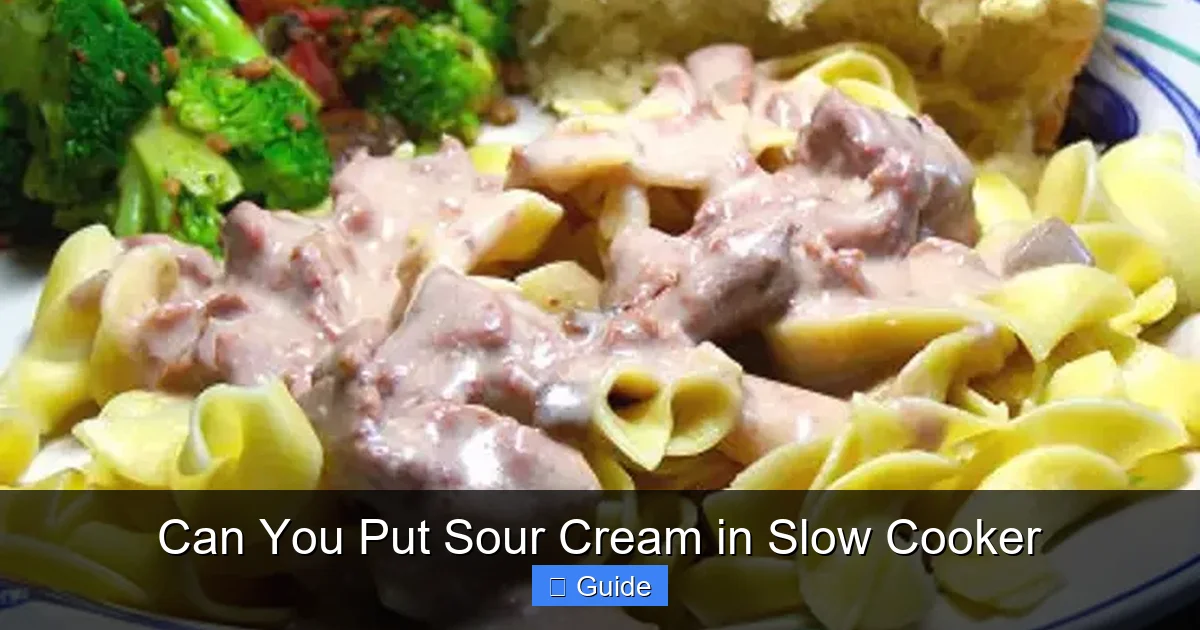
Beef Stroganoff
A quintessential creamy dish! For slow cooker beef stroganoff, cook your beef and mushroom mixture until tender. Near the end, reduce the heat, temper the sour cream with some of the rich beef broth, and stir it in. Warm gently and serve over noodles. The tang of the sour cream perfectly balances the savory beef.
Chicken Paprika or Goulash
Hungarian-inspired dishes often benefit from the richness of sour cream. Cook chicken or beef with onions, paprika, and broth until tender. Right before serving, temper sour cream with some of the saucy liquid and stir it in. This creates a beautifully complex and creamy sauce that’s delightful with rice or dumplings.
Creamy Chicken and Noodles
After your chicken and vegetables are cooked until tender in a flavorful broth, and the noodles are added and cooked through, turn the slow cooker to “Warm.” Temper your sour cream with some of the hot broth, then stir it into the creamy chicken and noodles mixture. The sour cream provides a lovely tang and an extra layer of richness to this classic comfort food.
Chili
While often served as a dollop on top, you can incorporate sour cream into a chili base for a creamier texture. Cook your chili as usual. Five minutes before serving, turn the slow cooker off or to “Warm.” Temper the sour cream with some hot chili liquid, then stir it into the chili. This creates a milder, creamier chili with a touch of tang.
Creamy Soups and Stews
For slow cooker soups and stews that call for a creamy finish, follow the same method. Cook your soup or stew thoroughly. At the very end, reduce the heat, temper sour cream with some of the hot soup broth, and stir it in. This adds depth and creaminess without the risk of curdling.
Troubleshooting Common Sour Cream Slow Cooker Issues
Even with the best intentions, things can sometimes go awry. Here’s how to address a few common problems.
My Sour Cream Curdled Anyway!
Oh no! This usually means it was exposed to too much heat, either too early, too hot, or for too long.
- What went wrong? You might have added it too early, didn’t temper it enough, or kept the slow cooker on a setting too high for too long after adding.
- How to salvage it: If it’s only slightly curdled, sometimes a vigorous whisking can help break up the smaller curds. For more significant curdling, you might try using an immersion blender directly in the slow cooker to smooth out the sauce. This won’t reverse the protein separation, but it can create a more palatable texture. Another option is to carefully strain the sauce, although this will remove some of the thicker elements.
The Dish Tastes Too Tangy/Sour!
Sour cream naturally has a tangy flavor, which is usually a desirable quality. However, if it’s overwhelming:
- Balance with sweetness: A pinch of sugar can help balance the acidity.
- Add fat: Stirring in a knob of butter or a splash of heavy cream (which is more heat-stable) can mellow the tanginess and add richness.
- Dilute: If the sauce is thick enough, you could add a little more broth or water to dilute the flavor.
The Sauce is Too Thin!
If your sauce is thinner than desired after adding the sour cream (or even before), address this *before* adding the sour cream.
- Cornstarch slurry: About 30 minutes before you plan to add the sour cream, make a slurry with equal parts cornstarch and cold water. Stir this into your slow cooker mixture, turn the heat up to “High” (if it’s not already) for 15-20 minutes, then reduce it back to “Warm” before adding the tempered sour cream. This allows the cornstarch to thicken the sauce without interfering with the sour cream.
- Reduce: For some recipes, you can remove the lid for the last hour of cooking to allow some liquid to evaporate, thereby thickening the sauce. Do this *before* you add the sour cream.
Tips for Achieving the Perfect Creamy Texture
Mastering the art of using sour cream in a slow cooker involves a bit of practice, but these tips will set you up for success.
- Don’t Rush It: Patience is a virtue, especially with slow cookers and creamy additions. Take the time to temper the sour cream properly.
- Stir Gently: Once the sour cream is in, stir just enough to combine. Over-mixing can sometimes lead to an undesirable texture or even separation.
- Consider Alternatives (If Needed): If a recipe absolutely requires dairy to be added early and cooked for a long time at high heat, sour cream might not be the best choice. In such cases, consider cream cheese (often more stable), heavy cream (less prone to curdling than sour cream), or even evaporated milk. However, for that classic tangy finish, sour cream is irreplaceable when added correctly.
- Taste as You Go: Always taste your sauce before and after adding sour cream. This helps you understand how the flavor profile changes and allows you to adjust other seasonings.
- Use a Whisk: A whisk is your best friend when tempering sour cream. It ensures a smooth, lump-free mixture before it even touches the main slow cooker dish.
Conclusion
The answer to “Can you put sour cream in slow cooker?” is a resounding yes! With the right technique and understanding, you can confidently add sour cream to your favorite slow cooker recipes, transforming them into incredibly rich, tangy, and satisfying meals. Remember the golden rules: add it at the end, temper it patiently, use full-fat varieties, and heat it gently. By following these simple steps, you’ll avoid the dreaded curdling and unlock a world of creamy, delicious possibilities for your slow cooker. So go ahead, grab that tub of sour cream, and get ready to elevate your next slow cooker masterpiece!

Jennifer D. Simon has spent the last 26 years studying and practicing nutrition science. She has used a larger part of this time in improving people’s livelihoods. She has done so by coming up with unquestionable ideas on how to tackle food problems in her community. Read More