Can You Cook Meat From Room Temp in a Slow Cooker
When it comes to cooking meat from room temperature in a slow cooker, safety is paramount. Food safety experts strongly advise against placing meat at room temperature directly into a slow cooker due to the prolonged time it spends in the “danger zone” (40°F-140°F), where harmful bacteria can multiply rapidly. Always start with fully thawed meat from the refrigerator to ensure your slow-cooked meals are safe and delicious.
Ah, the slow cooker. It’s a kitchen hero, isn’t it? Imagine coming home after a long day to the savory aroma of a perfectly cooked meal, bubbling away, ready to be devoured. It’s the ultimate set-it-and-forget-it appliance, making busy weeknights feel like a breeze and transforming tough cuts of meat into tender, succulent masterpieces. From hearty stews to pulled pork, the slow cooker is a beloved tool for countless home cooks.
But amidst the convenience and culinary magic, there’s a question that often stirs up confusion and, more importantly, a potential food safety concern: can you cook meat from room temperature in a slow cooker safely? It’s a common practice for some cooking methods to let meat sit out to achieve an even cook, but when it comes to the slow cooker, this seemingly innocent step can have serious implications for your health. Let’s dive deep into the science, the safety guidelines, and the best practices to ensure your slow-cooked meals are not only delicious but also completely safe to eat.
Key Takeaways
- Avoid Room Temperature Meat: Never place raw meat that has reached room temperature directly into a slow cooker. The slow heating process allows bacteria to multiply to dangerous levels.
- Understand the Danger Zone: The “danger zone” for food is between 40°F and 140°F (4°C and 60°C). Meat should not remain in this temperature range for more than two hours total.
- Start with Refrigerated Meat: For safe slow cooking, always begin with meat that has been fully thawed in the refrigerator and kept at a safe cold temperature (below 40°F).
- Frozen Meat Considerations: While some slow cooker manufacturers state it’s possible to cook certain meats from frozen, USDA guidelines recommend against it due to the extended time in the danger zone. If you choose to, ensure the slow cooker is preheated and the meat reaches 140°F quickly.
- Slow Cookers Heat Slowly: Unlike ovens or stovetops, slow cookers are designed for gradual heating, which is why starting with cold meat is crucial to minimize bacterial growth time.
- Use a Food Thermometer: Always verify the internal temperature of cooked meat with a reliable food thermometer to ensure it has reached the minimum safe temperature for its type (e.g., 160°F for ground meat, 145°F for whole cuts of beef/pork/lamb, 165°F for poultry).
- Prioritize Safety Over Convenience: While letting meat come to room temperature is sometimes recommended for other cooking methods, it’s a significant food safety risk for slow cooking due to the appliance’s nature.
📑 Table of Contents
- The Perilous “Danger Zone”: Understanding Food Safety Basics
- Why Slow Cookers Are Different (and Why That Matters for Room Temp Meat)
- The Official Word: What USDA and Food Safety Experts Say
- Dispelling Myths: “Pre-Browning” and “Pre-Heating” The Slow Cooker
- Best Practices for Safe Slow Cooking Every Time
- Maximizing Flavor Safely: Tips for Delicious Results
The Perilous “Danger Zone”: Understanding Food Safety Basics
Before we specifically address cooking meat from room temperature in a slow cooker, it’s essential to understand the fundamental principle of food safety that underpins all cooking methods: the “Danger Zone.” This term, coined by food safety experts, refers to the temperature range where harmful bacteria multiply most rapidly. For perishable foods like meat, this zone is between 40°F (4°C) and 140°F (60°C). The longer food spends in this zone, the higher the risk of bacterial growth, which can lead to foodborne illness.
The Two-Hour Rule
The general rule of thumb is that perishable foods should not be left in the Danger Zone for more than two hours total. This includes the time spent thawing, preparing, and cooking. If the ambient temperature is above 90°F (32°C), that time limit shrinks to just one hour. Why is this so critical? Because bacteria like Salmonella, E. coli, and Listeria thrive in these temperatures, doubling in number every 20 minutes under ideal conditions. While cooking food to a safe internal temperature will kill these bacteria, the toxins they produce might not be destroyed, and a high bacterial load can still make you very sick.
Where Room Temperature Meat Fits In
When you let meat sit out on the counter to reach room temperature, you are intentionally placing it in the Danger Zone. For many cooking methods, like searing a steak or roasting a chicken in a hot oven, the meat quickly passes through this zone to reach a safe internal temperature. The brief time it spends at room temperature is often offset by the rapid, high-heat cooking. However, the slow cooker operates on a fundamentally different principle, which changes the game entirely.
Why Slow Cookers Are Different (and Why That Matters for Room Temp Meat)
Slow cookers, by their very design, are meant to cook food slowly at low temperatures over an extended period. This is their superpower – breaking down tough connective tissues and infusing flavors deeply. But it’s also why they pose a unique challenge when it comes to cooking meat from room temperature in a slow cooker.
Visual guide about cook meat from room temperature in slow cooker
Image source: littleupgrades.com
The Gradual Heating Process
Unlike a roaring oven or a sizzling skillet, a slow cooker takes its time to heat up and bring its contents to a safe temperature. It’s not uncommon for a slow cooker to take several hours to reach the 140°F mark, especially if it’s filled with cold ingredients. If you add meat that’s already at room temperature to this equation, you significantly extend the period it spends in the Danger Zone at the beginning of the cooking process. The bacteria on the surface and within the meat have a much longer window to multiply before the temperature becomes high enough to inhibit their growth or kill them.
No Quick Sear, No Immediate Safety Net
When you sear meat in a pan or place it directly into a hot oven, the high initial temperature rapidly heats the surface, killing many surface bacteria quickly and beginning the cooking process immediately. A slow cooker doesn’t offer this initial rapid heat. It’s a gentle, gradual warmth that allows for extended bacterial proliferation if you start with meat that’s already warm. This prolonged exposure is the core reason why food safety guidelines advise against cooking meat from room temperature in a slow cooker.
The Official Word: What USDA and Food Safety Experts Say
When in doubt, always turn to the experts. Organizations like the United States Department of Agriculture (USDA) and the Food and Drug Administration (FDA) provide clear, evidence-based guidelines for food safety. Their recommendations are unequivocal when it comes to the starting temperature of meat in a slow cooker.
Visual guide about cook meat from room temperature in slow cooker
Image source: my-test-11.slatic.net
Always Start Cold
The USDA explicitly states that perishable foods, including meat, should never be thawed at room temperature or placed into a slow cooker directly from room temperature. Instead, meat should always be thawed in the refrigerator, under cold running water, or in the microwave, and then transferred to the slow cooker while still cold (below 40°F/4°C). This ensures that the meat spends as little time as possible in the Danger Zone, minimizing the opportunity for bacterial growth.
The Case Against Frozen Meat (Mostly)
Interestingly, the recommendation also extends to cooking meat from frozen in a slow cooker, with some nuances. While some slow cooker manufacturers claim their appliances can safely cook from frozen, the USDA generally advises against it. Why? Because a large, frozen piece of meat will take even longer to heat through, further prolonging its stay in the Danger Zone. If you *must* cook from frozen, ensure the slow cooker is preheated and filled with hot liquid, and the meat reaches 140°F (60°C) very quickly. However, for maximum safety and best results, thawing in the refrigerator first is always the preferred method.
Why Risk It?
It might seem like a small detail, but the difference between starting with cold, refrigerated meat and room temperature meat can be significant in terms of bacterial load. When you’re cooking meat from room temperature in a slow cooker, you’re essentially giving bacteria a head start, and the slow cooker’s gentle heating won’t catch up quickly enough to prevent potential problems. It’s simply not worth the risk of foodborne illness, which can range from mild discomfort to severe, life-threatening conditions.
Dispelling Myths: “Pre-Browning” and “Pre-Heating” The Slow Cooker
Some home cooks try to mitigate the risks of cooking meat from room temperature in a slow cooker by pre-browning the meat or pre-heating the slow cooker itself. Let’s explore whether these common practices offer sufficient safety.
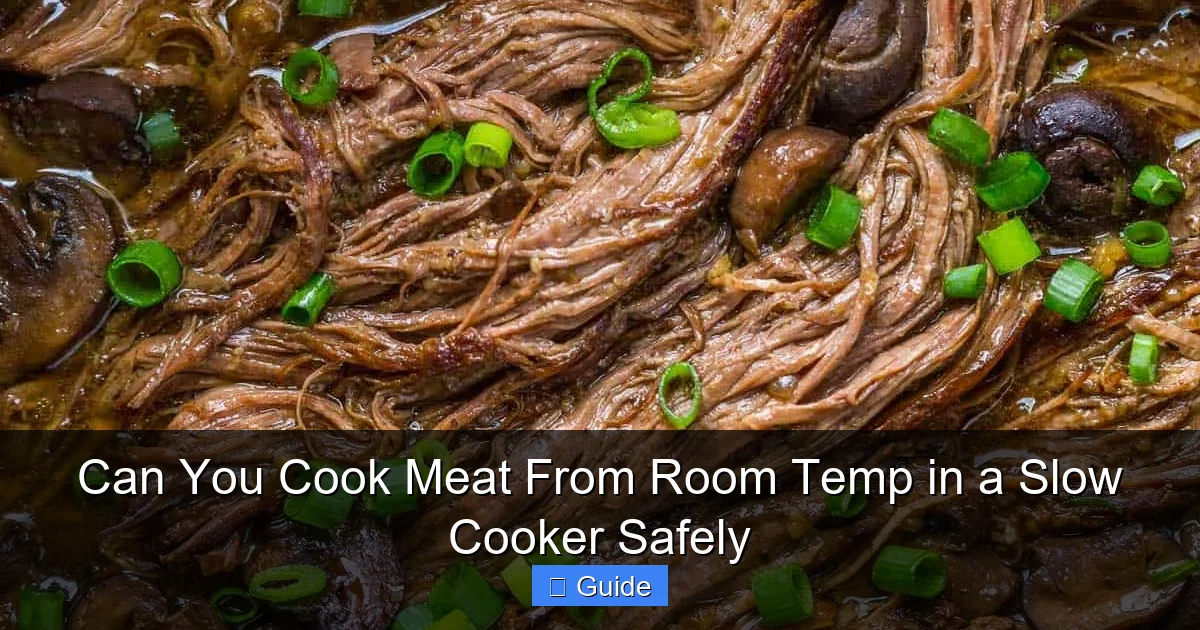
Visual guide about cook meat from room temperature in slow cooker
Image source: natashaskitchen.com
Pre-Browning Meat: A Flavor Boost, Not a Safety Net for Room Temp
Browning meat before adding it to the slow cooker is a fantastic technique for developing rich, complex flavors through the Maillard reaction. It creates a delicious crust and can deepen the overall taste of your dish. However, browning raw meat that has been sitting at room temperature does *not* eliminate the food safety concerns associated with slow cooking. While browning might kill some surface bacteria, it doesn’t sterilize the meat, nor does it address the internal temperature. If the meat has already spent too much time in the Danger Zone before browning, bacterial toxins might already be present, and the browning itself is a quick process that doesn’t heat the meat all the way through. So, while browning is great for flavor, it should still be done with meat that has been kept at a safe cold temperature.
Pre-Heating the Slow Cooker: Limited Impact on Starting Temp
Some people also wonder if pre-heating the slow cooker (running it empty or with liquid on high for an hour) before adding ingredients makes it safe to add room temperature meat. While pre-heating ensures the appliance is ready to go and can help it reach its target temperature slightly faster, it doesn’t fundamentally change the initial slow heating phase once cold ingredients are introduced. Even with a pre-heated slow cooker, adding a large mass of room temperature meat and other cold ingredients will still cause a significant drop in the overall temperature, prolonging the time the meat spends in the Danger Zone. The key is the *meat’s* starting temperature, not just the pot’s.
Best Practices for Safe Slow Cooking Every Time
So, if cooking meat from room temperature in a slow cooker is a no-go, what are the best practices to ensure your meals are both delicious and safe?
1. Thaw Meat Safely and Thoroughly
- Refrigerator Thawing: This is the safest method. Place frozen meat in a container on the bottom shelf of your refrigerator. Allow ample time – typically a full day for every 5 pounds of meat.
- Cold Water Thawing: For faster thawing, place meat in a leak-proof bag and submerge it in cold tap water. Change the water every 30 minutes. Cook immediately after thawing.
- Microwave Thawing: Use the defrost setting and cook immediately after, as some areas of the meat may begin to cook during this process.
Once thawed, keep the meat in the refrigerator until you’re ready to add it to the slow cooker. Avoid letting it sit out on the counter.
2. Start with Cold (Refrigerated) Meat
Always add meat that is still cold from the refrigerator to your slow cooker. This might seem counterintuitive if you’re used to letting meat warm up, but for slow cooking, it’s a critical safety measure. The colder the meat is when it goes in, the less time it will spend lingering in the Danger Zone as the slow cooker gradually heats up.
3. Fill Your Slow Cooker Properly
Fill your slow cooker between one-half and two-thirds full for optimal cooking. Overfilling can lead to uneven cooking and longer heating times, while underfilling might result in overcooked or dried-out food.
4. Verify Internal Temperatures with a Food Thermometer
This is your ultimate safety net. While the slow cooker’s settings (low, high) indicate cooking *time*, they don’t guarantee internal temperature. Always use a reliable meat thermometer to check the doneness of your meat before serving. Insert the thermometer into the thickest part of the meat, avoiding bones.
Safe internal temperatures include:
- Ground meat (beef, pork, lamb, veal): 160°F (71°C)
- Poultry (whole, ground, parts): 165°F (74°C)
- Beef, pork, veal, and lamb (steaks, roasts, chops): 145°F (63°C) with a 3-minute rest time
- Fish: 145°F (63°C)
Maximizing Flavor Safely: Tips for Delicious Results
Just because you can’t cook meat from room temperature in a slow cooker doesn’t mean you have to sacrifice flavor! Here are some ways to enhance your slow-cooked dishes safely:
Sear for Flavor, Not for Room Temp Safety
As mentioned, browning meat before slow cooking adds incredible depth of flavor. Do this with cold, refrigerated meat. Pat the meat dry, season it well, and sear it in a hot pan with a little oil until a nice crust forms. Then, transfer it immediately to the slow cooker. This step enhances the taste without compromising safety because you’re starting with cold meat.
Use Aromatic Vegetables and Liquids
Build layers of flavor with ingredients like onions, garlic, carrots, celery, herbs, and spices. Using flavorful liquids like broths, wines, or even a splash of beer can make a huge difference in the final taste profile.
Finish with Fresh Herbs or a Quick Sear After
For a burst of fresh flavor, stir in fresh herbs like parsley, cilantro, or chives just before serving. If you want a crispy exterior on pulled pork or beef, remove it from the slow cooker, shred it, and then spread it on a baking sheet to broil for a few minutes until slightly caramelized.
The slow cooker is an invaluable tool in the kitchen, offering convenience and delicious results with minimal effort. However, its unique heating characteristics demand strict adherence to food safety guidelines, especially regarding the starting temperature of your ingredients. The key takeaway here is clear: for your safety and the deliciousness of your meal, never cook meat from room temperature in a slow cooker. Always start with meat that has been safely thawed in the refrigerator and remains cold.
By understanding the “Danger Zone” and following simple, science-backed best practices – like starting with cold meat and using a food thermometer – you can confidently create wonderful, safe slow-cooked meals for yourself and your loved ones. So go ahead, dust off that slow cooker, plan your next comforting meal, and enjoy the peace of mind that comes with cooking safely!
Frequently Asked Questions
Can I leave meat out overnight to thaw before slow cooking?
No, it is highly unsafe to thaw meat at room temperature, especially overnight. This allows the meat to spend an extended period in the “danger zone” (40°F-140°F), where harmful bacteria can multiply rapidly. Always thaw meat in the refrigerator, under cold running water, or in the microwave.
Why is it okay to let a steak come to room temperature before grilling, but not for a slow cooker?
The difference lies in the cooking speed. For grilling or searing a steak, the high heat quickly brings the meat past the danger zone. A slow cooker, by design, heats food very gradually, meaning meat at room temperature would spend too long in the bacterial growth zone before reaching a safe cooking temperature.
Does pre-browning the meat before slow cooking make it safe to start from room temperature?
No, pre-browning primarily enhances flavor and creates a good crust. While it kills some surface bacteria, it does not heat the meat all the way through or destroy any toxins already produced if the meat spent too long at room temperature. Always start with cold, refrigerated meat for browning and then transfer it to the slow cooker.
Can I put frozen meat directly into a slow cooker?
While some slow cooker manufacturers suggest it’s possible, the USDA generally advises against it. Large frozen pieces of meat take a very long time to heat through, increasing the risk of bacterial growth in the danger zone. For best safety, always thaw meat completely in the refrigerator before slow cooking.
What happens if I accidentally cook meat from room temperature in my slow cooker?
If you’ve unintentionally cooked meat from room temperature in a slow cooker, there’s an increased risk of foodborne illness due to potential bacterial growth and toxin production. While thoroughly cooking to a safe internal temperature might kill bacteria, toxins could remain. It’s generally advised to discard the food to prioritize safety.
How can I ensure my slow-cooked meat is safe to eat?
Always start with cold, refrigerated meat (never room temperature or frozen unless manufacturer instructions specifically allow and you follow strict safety protocols). Ensure your slow cooker is filled between half and two-thirds full, and always verify the internal temperature of the cooked meat with a food thermometer to ensure it reaches the safe minimum for its type.

Jennifer D. Simon has spent the last 26 years studying and practicing nutrition science. She has used a larger part of this time in improving people’s livelihoods. She has done so by coming up with unquestionable ideas on how to tackle food problems in her community. Read More