Does Slow Cooker Cook Faster With Lid Off Answered
Many home cooks wonder if leaving the lid off their slow cooker will speed up the cooking process. The definitive answer is no, it will not. Removing the lid causes significant heat loss and increases evaporation, drastically lowering the internal temperature of the appliance and thereby extending cooking times. For the best results and safely cooked food, it’s crucial to keep the lid on throughout most of the cooking cycle, allowing your slow cooker to work as intended.
Have you ever found yourself in a bit of a rush, staring at your slow cooker, and wondering if perhaps, just perhaps, lifting the lid might speed things up? It’s a common thought, one that often comes from a place of impatience or perhaps a misunderstanding of how these wonderful kitchen appliances truly work. We’ve all been there, peering anxiously at that simmering stew or tender pot roast, wishing it would hurry up and be ready.
The idea that “does slow cooker cook faster with lid off” might seem logical at first glance. After all, when you cook on the stovetop, sometimes leaving the lid ajar helps evaporate liquid or intensifies heat. But a slow cooker is a different beast entirely. It operates on a principle that is quite unique, relying heavily on a controlled environment to transform tough cuts of meat and hearty vegetables into unbelievably tender, flavorful meals.
In this comprehensive guide, we’re going to dive deep into the science and practicalities of slow cooking. We’ll definitively answer the burning question: does slow cooker cook faster with lid off? We’ll explore why the lid is so critical to the slow cooker’s magic, what actually happens when you remove it, and when (if ever) it’s okay to break this cardinal rule of slow cooking. Get ready to uncover the secrets to perfectly cooked, deliciously moist slow cooker meals, every single time.
Key Takeaways
- Lid On is Faster: Counter-intuitively, keeping the lid on ensures your food cooks efficiently and reaches doneness more quickly than with the lid off.
- Significant Heat Loss: Each time the lid is removed, a substantial amount of accumulated heat escapes, especially from the moist, steamy environment inside.
- Increased Evaporation: A lidless slow cooker allows moisture to evaporate rapidly, leading to dry, less flavorful food and a further drop in internal temperature.
- Temperature Drop: Lifting the lid can cause the slow cooker’s internal temperature to plummet by 10-15°F (5-8°C) or more, requiring a long recovery period.
- Extended Cooking Time: This temperature fluctuation means your food will take much longer to cook through, potentially adding hours to the stated recipe time.
- Crucial Moisture Retention: The lid is essential for trapping steam, which is vital for keeping ingredients moist, tender, and evenly cooked in a slow cooker.
- Exceptions are Few: Only remove the lid briefly for specific tasks like thickening sauces at the very end or adding delicate ingredients, and only when absolutely necessary.
📑 Table of Contents
- The Fundamental Principle of Slow Cooking: Low and Slow
- The Myth Debunked: Does Slow Cooker Cook Faster With Lid Off?
- The Science Behind the Stovetop vs. Slow Cooker Lid Debate
- Practical Consequences of Lifting the Lid Too Often
- When It’s Acceptable (and Even Smart) to Remove the Lid
- Best Practices for Slow Cooking Success
- Conclusion
The Fundamental Principle of Slow Cooking: Low and Slow
To understand whether a slow cooker cooks faster with lid off, we first need to appreciate its core design and function. Slow cooking is all about “low and slow” – applying a consistent, gentle heat over many hours. This method is brilliant for breaking down tough connective tissues in meat, allowing flavors to meld beautifully, and creating incredibly tender results.
How a Slow Cooker Works its Magic
A slow cooker, sometimes called a Crock-Pot (which is a brand name, but often used interchangeably), consists of a heating element, a stoneware or ceramic insert, and a tight-fitting lid. The heating element gently warms the insert from the bottom and sides, distributing heat evenly. Unlike an oven or stovetop, which can reach very high temperatures, a slow cooker maintains a relatively low and steady temperature, usually between 175°F (79°C) and 280°F (138°C), depending on the setting (low or high). This consistent, gentle heat is crucial for the chemical processes that occur during slow cooking, like the conversion of collagen into gelatin in meats.
The Undeniable Role of the Lid
The lid on your slow cooker isn’t just there to keep dust out; it’s an absolutely integral part of the cooking process. Its primary job is to create a sealed environment. This seal achieves two critical things:
- Traps Heat: The lid prevents heat from escaping, ensuring the appliance maintains its desired internal temperature. This is key for consistent, even cooking.
- Retains Moisture: As food cooks, it releases steam. The lid traps this steam inside the pot, creating a humid environment. This moisture is essential for keeping food from drying out, tenderizing ingredients, and allowing flavors to circulate.
Without the lid, or with a poorly fitting lid, the slow cooker simply cannot do its job effectively. It loses its ability to maintain temperature and humidity, which are the cornerstones of successful slow cooking.
The Myth Debunked: Does Slow Cooker Cook Faster With Lid Off?
So, let’s get straight to the definitive answer: no, your slow cooker will *not* cook faster with its lid off. In fact, quite the opposite happens. Removing the lid significantly prolongs the cooking time and can negatively impact the quality of your meal. This might seem counter-intuitive to those familiar with stovetop cooking, but the physics of a slow cooker are unique.
Immediate Heat Loss: A Door to the Cold
Imagine opening the door to your refrigerator. You know that blast of cold air means energy is escaping, and the fridge has to work harder to get back to temperature. The same principle applies, in reverse, when you lift the lid off your slow cooker. The moment that lid is removed, a substantial amount of trapped heat immediately escapes into the cooler surrounding kitchen air. This isn’t just a minor release; it’s a significant drop in the internal temperature of the cooking environment.
The Evaporation Effect: Drying Out and Cooling Down
Beyond heat loss, removing the lid allows moisture to escape rapidly in the form of steam. This evaporation has a twofold negative impact. Firstly, it dries out your food, making it tough and less palatable. Slow cookers are designed to create a moist environment, and without the lid, that humidity is lost. Secondly, evaporation is a cooling process. When water turns into steam, it takes energy (heat) with it, further reducing the temperature inside the slow cooker. This is the latent heat of vaporization at play – a lot of energy is required to change water from a liquid to a gas.
Impact on Internal Temperature and Cooking Time
The combined effect of heat loss and increased evaporation can cause the internal temperature of your slow cooker to drop by a surprising amount – often 10-15°F (5-8°C) or even more. Once the lid is replaced, it takes a considerable amount of time for the appliance to recover that lost heat and return to its optimal cooking temperature. This recovery period isn’t instantaneous; it can add anywhere from 20 to 45 minutes to your overall cooking time, sometimes even longer depending on how long the lid was off and the initial temperature of the food. So, if your goal is for your slow cooker to cook faster with lid off, you’re unfortunately working against the very design principles of the appliance.
The Science Behind the Stovetop vs. Slow Cooker Lid Debate
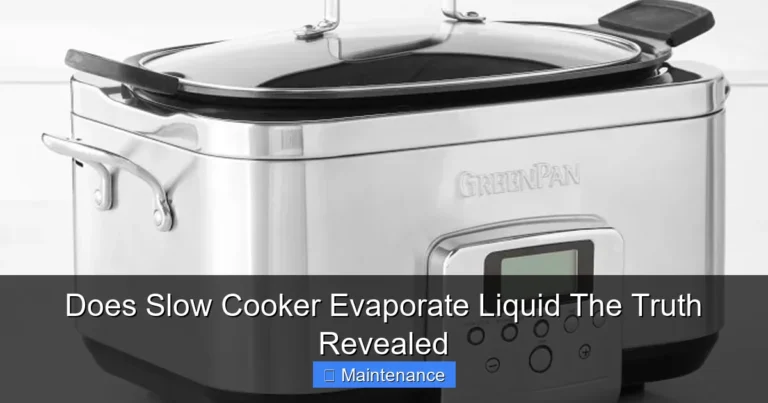
Visual guide about slow cooker cook faster with lid off
Image source: cookoutback.com.au
Many home cooks draw parallels between slow cooking and stovetop cooking, leading to the misconception that “does slow cooker cook faster with lid off” might be true. However, the underlying physics are quite different.
Understanding Latent Heat and Convection
On a stovetop, particularly when boiling or simmering, the goal is often to quickly reach and maintain a high temperature. While a lid helps here too, the direct, intense heat from the burner allows for quicker recovery. With a slow cooker, the heat is much gentler and distributed differently. It relies on convection within the sealed environment to circulate heated air and steam, evenly cooking the food. When the lid is removed, this convection current is disrupted, and the appliance must work to re-establish it from a colder starting point. The energy used to turn liquid into steam (latent heat of vaporization) is enormous, and when that steam escapes, a significant amount of cooking energy is lost.
Why Your Oven and Stovetop Are Different Animals
Think about your oven. While you can open its door, it’s typically for brief periods, and it uses much higher, more direct heat to cook. A stovetop uses even more direct, conductive heat. Slow cookers, by contrast, use indirect, gentle heat. They are designed to simmer, not boil vigorously. Their efficiency comes from trapping heat and moisture, not from direct high-temperature exposure. Therefore, cooking with the lid off in a slow cooker is akin to trying to boil water in a pot with a tiny flame and no lid – it will take an incredibly long time, if it ever boils at all. The principles that might make sense on a stovetop simply don’t apply when you ask if a slow cooker cooks faster with lid off.
Practical Consequences of Lifting the Lid Too Often
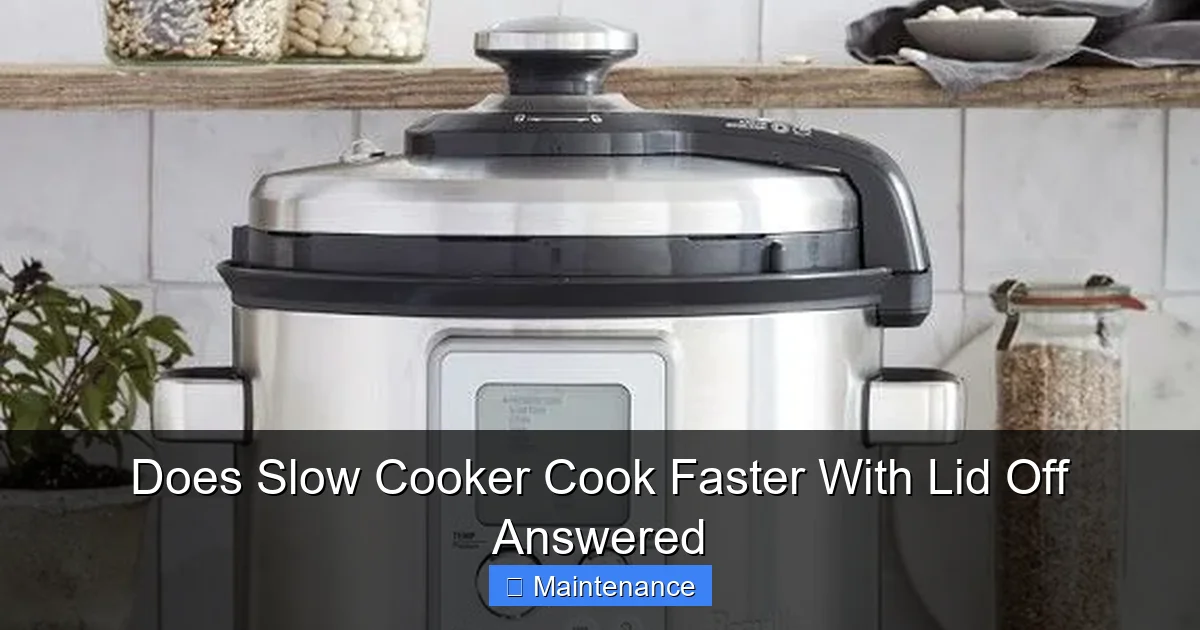
Visual guide about slow cooker cook faster with lid off
Image source: m.media-amazon.com
Beyond just extending cooking times, frequently lifting the lid can have several detrimental effects on your meal and even your safety. Understanding why your slow cooker doesn’t cook faster with lid off is crucial for successful meal preparation.
Unsafe Temperatures and Food Safety Risks
One of the most critical concerns is food safety. Foods cooked in a slow cooker need to reach and maintain a safe internal temperature (usually above 140°F/60°C to inhibit bacterial growth, and higher for full cooking) for an extended period. When you continually drop the temperature by removing the lid, you risk allowing your food to linger in the “danger zone” (between 40°F/4°C and 140°F/60°C) for too long. This creates an environment where harmful bacteria can multiply rapidly, potentially leading to foodborne illness. While the slow cooker will eventually heat up again, these temperature fluctuations introduce unnecessary risks.
Dry, Tough, and Undercooked Meals
A dry, tough, or stringy meal is a common result of a slow cooker with its lid off for extended periods. As moisture evaporates, your succulent stew can turn into a dry, chewy mess. Meat, which relies on that moist environment to become tender, will remain tough. Vegetables might be undercooked or have an unpleasant texture. The overall flavor profile can also be compromised, as the evaporation carries away aromatic compounds along with the steam. If you notice your slow cooker meal is consistently dry or tough, ask yourself how often you’re lifting that lid.
Waste of Energy and Time
Every time you lift the lid, your slow cooker has to expend more energy to reheat its contents. This means your appliance is running for a longer period than necessary, consuming more electricity. Furthermore, you’re investing more of your own time waiting for a meal that would have been ready much sooner if you had simply left the lid untouched. This negates one of the primary benefits of slow cooking – its hands-off, set-it-and-forget-it convenience.
When It’s Acceptable (and Even Smart) to Remove the Lid
While the general rule is to keep the lid on, there are a couple of specific scenarios where a brief lid removal is not only acceptable but can actually be beneficial for the final outcome of your dish. These are typically towards the end of the cooking process.
The Last 30 Minutes: Thickening Sauces
If your slow cooker dish has too much liquid or you prefer a thicker sauce, you can remove the lid for the final 30-60 minutes of cooking. With the lid off, some of the excess moisture will evaporate, naturally thickening your sauce. You can also add a slurry of cornstarch or flour mixed with cold water during this time, stirring it in gently, and then replacing the lid (or leaving it off) for the last period to allow it to thicken properly. Remember, this is a finishing step, not a cooking acceleration technique.
Adding Delicate Ingredients Towards the End
Some ingredients don’t fare well with prolonged slow cooking. Fresh herbs, dairy products (like milk, cream, or sour cream), or quick-cooking vegetables (like spinach or peas) can be added during the last 15-30 minutes of cooking. Briefly removing the lid to stir them in will have minimal impact on the overall cooking time at this late stage, and it ensures these ingredients retain their best texture and flavor.
Brief Stirring or Checking Doneness (Infrequently!)
While it’s best to avoid opening the lid, sometimes you might need to give a stew a quick stir to ensure even distribution of ingredients, or to check the internal temperature of a large piece of meat for doneness. If you must, do it quickly and efficiently. Lift the lid, perform your task, and replace the lid immediately. Try to limit this to no more than once or twice during the entire cooking cycle. Resist the urge to constantly peek; remember, every glance costs you cooking time.
Best Practices for Slow Cooking Success
Now that we’ve definitively answered the question “does slow cooker cook faster with lid off” (spoiler: it doesn’t!), let’s reinforce some best practices for ensuring your slow cooker always delivers delicious, perfectly cooked results.
Preheating Your Slow Cooker (Sometimes!)
Some recipes recommend preheating your slow cooker insert before adding ingredients, similar to an oven. While not always necessary, this can help the appliance reach cooking temperature faster, especially if you’re starting with cold ingredients. Always follow recipe instructions here. However, remember that even if you preheat, removing the lid during cooking will still cause heat loss.
Resist the Urge to Peek
This is perhaps the golden rule of slow cooking. It takes incredible patience, but trust your appliance. If your recipe says 6-8 hours, let it do its job for at least 5-6 hours before even considering a quick check. Every time you lift that lid, you’re setting back your progress. If you’re constantly wondering if your slow cooker cooks faster with lid off, you’re likely opening it too often.
Using a Food Thermometer for Safety
For peace of mind and food safety, especially when cooking meats, invest in an instant-read food thermometer. You can quickly check the internal temperature of your food at the end of the cooking cycle to ensure it has reached a safe doneness. This is a much better method than repeatedly removing the lid to visually inspect the food. Insert the thermometer quickly and replace the lid just as fast.
Choosing the Right Recipes
Finally, choose recipes that are designed for slow cooking. They account for the low, steady heat and the sealed, moist environment. Don’t try to adapt a quick stovetop recipe by simply throwing it into a slow cooker and hoping it will cook faster with lid off. Good slow cooker recipes will guide you on liquid amounts, timing, and when (if ever) to intervene by lifting the lid.
Conclusion
So, let’s put the lingering question to rest: does slow cooker cook faster with lid off? Absolutely not. Attempting to accelerate the cooking process by removing the lid from your slow cooker is a counterproductive measure. It leads to significant heat loss, increased evaporation, extended cooking times, and often, a less desirable final product—dry, tough, and potentially unsafe.
The slow cooker is a marvel of efficiency precisely because it creates and maintains a consistent, humid, low-temperature environment. The lid is not just an accessory; it’s a vital component that enables this process. By understanding and respecting the fundamental principles of slow cooking, you empower your appliance to do what it does best: transform simple ingredients into incredibly tender, flavorful, and effortless meals. So, next time you’re tempted to peek, remember the importance of that humble lid. Keep it on, trust the process, and savor the delicious results of patient, perfectly executed slow cooking.
Frequently Asked Questions
Does lifting the slow cooker lid really add to the cooking time?
Yes, absolutely. Lifting the lid causes a significant drop in the slow cooker’s internal temperature, often by 10-15°F (5-8°C) or more. The appliance then needs 20-45 minutes (or even longer) to recover that lost heat, effectively extending your overall cooking time.
Why does evaporation slow down cooking in a slow cooker?
Evaporation cools the contents of the slow cooker because as water turns into steam, it carries away a large amount of heat energy (latent heat). When the lid is off, this steam escapes, taking valuable cooking energy with it and forcing the slow cooker to work harder and longer to maintain its temperature.
Is it safe to cook with the slow cooker lid off for a long time?
It is generally not recommended to cook with the slow cooker lid off for extended periods due to food safety concerns. The prolonged temperature drops can cause food to remain in the “danger zone” (40-140°F / 4-60°C) where harmful bacteria multiply rapidly, increasing the risk of foodborne illness.
When is it okay to remove the lid from a slow cooker?
You can briefly remove the lid towards the very end of the cooking process for specific purposes, such as thickening sauces, adding delicate ingredients like fresh herbs or dairy, or for a quick, infrequent check of internal temperature. Always replace the lid quickly after these brief interruptions.
Can I stir my food in the slow cooker without affecting cooking time?
While it’s best to avoid opening the lid frequently, a very quick stir will have minimal impact. However, repeated or prolonged stirring with the lid off will cause heat loss and extend cooking time, so try to limit stirring to once or twice during the entire cycle if necessary.
What happens if my slow cooker lid doesn’t fit tightly?
A lid that doesn’t fit tightly will allow heat and moisture to escape, compromising the slow cooker’s ability to maintain a consistent temperature and humid environment. This will lead to longer cooking times, drier food, and less effective tenderization, similar to the effects of cooking with the lid entirely off.

Jennifer D. Simon has spent the last 26 years studying and practicing nutrition science. She has used a larger part of this time in improving people’s livelihoods. She has done so by coming up with unquestionable ideas on how to tackle food problems in her community. Read More