
What Causes Meat to Dry Out in Slow Cookers
Meat can easily dry out in slow cookers due to common mistakes like overcooking, insufficient liquid, or choosing the wrong cut of meat. Understanding how these factors affect moisture and texture is key. This guide reveals the primary culprits behind dry, tough slow cooker meals and provides practical, easy-to-follow solutions to ensure your meat is always wonderfully tender and juicy, maximizing flavor and satisfaction.
What Causes Meat to Dry Out in Slow Cookers
There’s nothing quite like the promise of a tender, succulent meal cooking away in your slow cooker all day. You walk into the kitchen, the aroma is incredible, and you just know dinner is going to be amazing. But then comes the moment of truth: you take out a piece of meat, and instead of falling apart or being perfectly juicy, it’s… dry. Tough. Disappointing.
Sound familiar? You’re not alone! Many home cooks struggle with dry meat in slow cookers. It’s a common issue, and it can be incredibly frustrating, especially when you’ve invested hours of cooking time. The good news is that preventing your meat from drying out in a slow cooker is entirely possible once you understand why it happens.
This comprehensive guide will dive deep into the causes behind dry slow cooker meat. We’ll explore the science, reveal the common mistakes, and provide you with practical, easy-to-follow solutions to ensure your slow cooker creations are always wonderfully moist, tender, and full of flavor. By the end, you’ll be a slow cooker pro, never having to face dry meat again!
Key Takeaways
- Overcooking is a Primary Culprit: Cooking meat for too long or at too high a temperature even in a slow cooker can cause it to expel all its moisture and become dry and tough.
- Liquid Matters More Than You Think: Insufficient cooking liquid prevents the meat from braising properly, leading to dehydration and a chewy texture. Always ensure adequate broth or sauce.
- Choose the Right Cut for Success: Lean cuts like chicken breast or tenderloin are prone to drying out. Opt for tougher, collagen-rich cuts such as chuck roast, pork shoulder, or chicken thighs, which become wonderfully tender with slow cooking.
- Resist the Urge to Peek: Lifting the slow cooker lid too often releases heat and steam, extending cooking time and increasing the risk of the meat drying out.
- Adapt Recipes and Monitor: Don’t just set it and forget it without understanding your specific slow cooker and recipe. Slight adjustments to cooking time or liquid may be needed, especially for older or differently sized models.
- Rest Your Meat: Even after slow cooking, allowing the meat to rest for a few minutes before shredding or serving helps redistribute juices, resulting in a more succulent final product.
Understanding Why Meat Dries Out
Before we get to the solutions, let’s briefly touch on the science behind why meat can dry out, even in a moist environment like a slow cooker.
Meat is made up of muscle fibers, connective tissue (like collagen), and water. When you cook meat, several things happen:
* Protein Denaturation: The muscle proteins coil up and tighten, squeezing out moisture. This starts at around 120-140°F (49-60°C).
* Collagen Breakdown: This is where slow cooking shines! Collagen, the tough connective tissue, breaks down into gelatin at temperatures above 160°F (71°C) and needs time. Gelatin is wonderfully moist and gives meat that “melt-in-your-mouth” texture.
* Moisture Loss: As muscle fibers contract and cook, they lose water. If cooked for too long or at too high a temperature, the meat will expel all its internal moisture, leaving it dry and stringy, even if it’s sitting in a pool of liquid.
The goal of slow cooking is to cook the meat gently and for an extended period, allowing collagen to fully convert into gelatin while minimizing excessive protein denaturation and moisture loss. When this balance is off, you end up with dry meat.
Primary Causes of Dry Meat in Slow Cookers
Now that we understand the basics, let’s pinpoint the specific reasons why your meat might be drying out in your slow cooker.
1. Overcooking is the Biggest Culprit
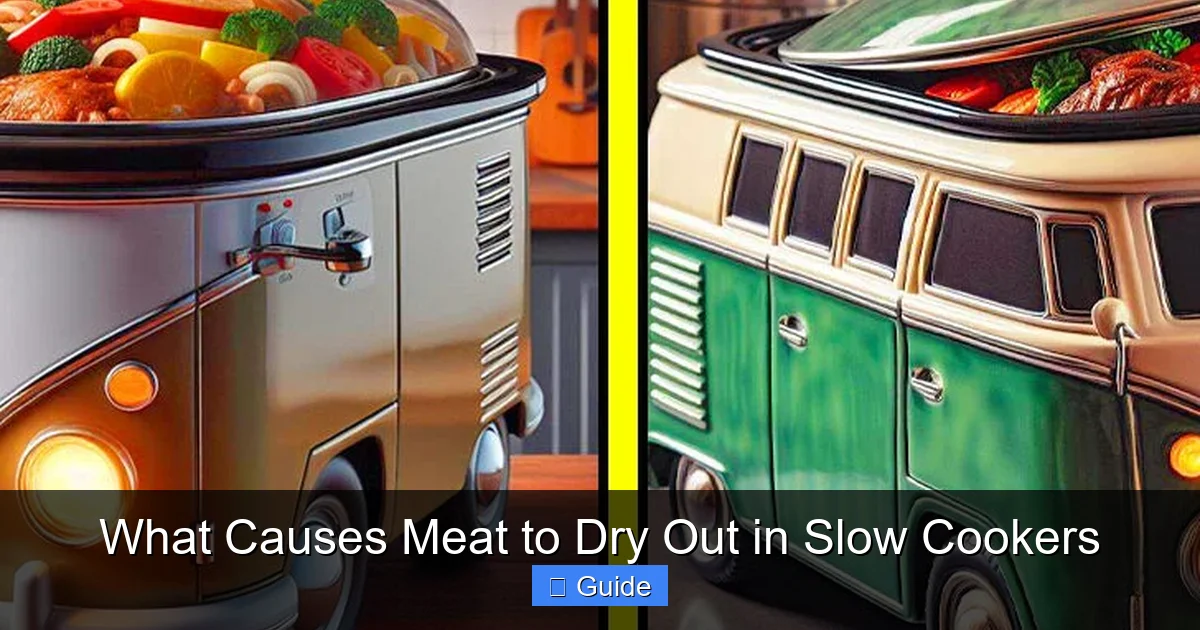
This might seem counterintuitive for a slow cooker, which is designed for long cooking times. However, “slow” doesn’t mean “indefinite.” Even at a low temperature, cooking meat for too long will eventually squeeze out all its moisture.
Visual guide about how to Causes Meat to Dry Out in Slow Cookers
Image source: inspiringdesigns.net
- Too Long Cooking Time: Many recipes provide a range (e.g., 6-8 hours on low). If you consistently cook for the maximum time, or even longer, without checking for doneness, you risk overcooking. Different cuts and sizes of meat will cook at different rates.
- Too High Temperature: While slow cookers have “low” and “high” settings, even “low” can vary between models. Some older or cheaper slow cookers might run hotter than others. If your slow cooker consistently produces dry meat, it might be running too hot, effectively overcooking it faster.
- Effects on Meat: Overcooked meat loses its tenderness, becoming tough, stringy, and dry. It will often fall apart but feel like sawdust rather than succulent shreds.
2. Insufficient Liquid in the Pot
Slow cooking is essentially a braising method, meaning the meat cooks in a flavorful liquid over a long period. This liquid creates a moist environment, helps conduct heat, and infuses flavor. If there isn’t enough liquid, your meat won’t braise properly.
- Role of Liquid: The liquid creates steam and moisture that circulates within the sealed slow cooker, helping to keep the meat hydrated. It also serves as a heat conductor, gently cooking the meat.
- How Much is Enough? A general rule of thumb is to have the liquid come up about one-third to halfway up the sides of the meat. You don’t need to completely submerge it, but a good amount is crucial.
- Evaporation (Even with a Lid): While slow cookers are designed to minimize evaporation, a small amount still occurs. If you start with too little liquid, it can reduce further, leaving your meat exposed and vulnerable to drying.
3. Choosing the Wrong Cut of Meat
Not all cuts of meat are created equal for slow cooking. Some thrive in the slow cooker environment, while others are destined for disappointment.
- Lean vs. Fatty Cuts: Lean cuts of meat, like chicken breast, pork tenderloin, or very lean beef cuts (e.g., sirloin), have very little fat and connective tissue. While they cook quickly and are great for grilling or pan-frying, they have nothing to break down and will quickly dry out and become tough in a slow cooker.
- Collagen-Rich Cuts are Best: The best cuts for slow cooking are those that are inherently tougher and have a lot of connective tissue (collagen). Think of cuts that get a lot of exercise. These cuts require low, slow heat to break down that collagen into gelatin, resulting in incredibly tender, moist meat.
- Examples of Good Cuts: Beef chuck roast, pork shoulder (Boston butt), beef short ribs, lamb shanks, oxtail, chicken thighs, and drumsticks.
- Cuts to Avoid (for most slow cooker recipes): Chicken breast, pork loin, lean steaks. If you must use these, significantly reduce cooking time and ensure ample liquid.
4. Lifting the Lid Too Often
We’ve all been guilty of this! The temptation to peek and check on your delicious meal is strong. However, lifting the lid of your slow cooker is one of the quickest ways to sabotage your results.
- Heat Loss and Temperature Drop: Every time you lift the lid, you release a significant amount of built-up heat and steam. This causes the internal temperature of the slow cooker to drop dramatically.
- Extends Cooking Time: Because the temperature drops, your slow cooker has to work harder and longer to get back up to the desired cooking temperature. This effectively extends the overall cooking time, increasing the risk of overcooking the meat and drying it out.
- The “No Peek” Rule: For most recipes, try to avoid opening the lid for the first several hours of cooking, or until close to the estimated completion time. Plan ahead and gather any additions (like vegetables) so you can add them all at once if needed.
5. Incorrect Slow Cooker Size or Recipe Adaptation
Believe it or not, the size of your slow cooker and how you adapt recipes can also play a role in meat drying out.
- Too Much Empty Space: If you’re cooking a small amount of meat in a very large slow cooker, the empty space allows for more air circulation and can cause the food to heat up and cook faster than intended. This can lead to overcooking and dryness. Aim to fill your slow cooker at least halfway, and ideally two-thirds full, for optimal results.
- Not Adapting Recipes: A recipe designed for a 6-quart slow cooker might need adjustments if you’re using a 3-quart or 8-quart model. Smaller slow cookers might require less liquid and shorter cooking times, while larger ones might need slightly more liquid to compensate for evaporation over a larger surface area if not sufficiently filled.
Preventing Dry Meat: Practical Solutions for Juicy Results
Now that you know the causes, let’s arm you with the solutions to ensure your slow cooker meat is always moist, tender, and delicious.
1. Choose the Right Cut of Meat
This is arguably the most important step for preventing your meat from drying out in a slow cooker.
- Go for Tougher, Fatty Cuts: Prioritize cuts with good marbling (fat woven through the meat) and plenty of connective tissue.
- Beef: Chuck roast, short ribs, beef shanks, brisket.
- Pork: Pork shoulder (Boston butt), pork butt, spareribs.
- Poultry: Chicken thighs, drumsticks, whole chicken (often benefits from being cut up).
- Avoid Lean Cuts: If you use chicken breasts or pork tenderloin, significantly reduce the cooking time. Add them later in the cooking process or ensure they are submerged in liquid.
2. Add Sufficient Liquid
The liquid creates the braising environment essential for tender meat.
- Aim for 1/3 to 1/2 Coverage: Ensure your liquid covers at least one-third to one-half of the meat. You don’t need to completely submerge it, but make sure there’s enough.
- Choose Flavorful Liquids: Use broth (chicken, beef, vegetable), wine, beer, crushed tomatoes, or a combination. Water alone works, but broth adds much more flavor.
- Consider Viscous Liquids: Thicker liquids like tomato sauce, barbecue sauce, or cream of mushroom soup can cling to the meat more effectively, helping to keep it moist.
3. Resist the Urge to Peek (The “No-Peek” Rule)
Once your slow cooker is on, leave the lid alone!
- Maintain Heat and Moisture: Every time you lift the lid, you release valuable heat and moisture, which your slow cooker then has to work to rebuild. This extends cooking time and increases the risk of dry meat.
- Check Only When Necessary: Try not to open the slow cooker for at least the first 2/3 of the cooking time. If you need to add vegetables, do so strategically, perhaps towards the end of the cooking cycle.
4. Cook for the Correct Time and Temperature
Know your recipe, know your slow cooker, and adjust as needed.
- Understand “Low” vs. “High”:
- Low Setting: Typically 6-10 hours, cooks at about 190-200°F (88-93°C). Best for tougher cuts and maximum tenderness.
- High Setting: Typically 3-5 hours, cooks at about 200-210°F (93-99°C). Cook with caution, as it can dry out meat faster.
- Don’t Overcook: Follow recipe times, but be prepared to check doneness. Meat is “done” when it reaches an internal temperature where collagen breaks down (around 190-205°F / 88-96°C for shreddable meat) and is tender, not necessarily when it hits a “safe” temperature like 165°F (74°C) for poultry. A meat thermometer is your friend!
- Adjust for Your Slow Cooker: If your slow cooker runs hot, you might need to reduce cooking times slightly. If it runs cool, you might need to add a bit more time. Get to know your appliance.
5. Sear Meat First (Optional but Recommended for Flavor)
While searing doesn’t directly prevent meat from drying out in a slow cooker (the long cooking process negates any “sealing” effect), it significantly adds to the flavor profile.
- Develop Flavor and Color: A quick sear in a hot pan before adding the meat to the slow cooker creates a rich, caramelized crust, adding depth of flavor to your dish. This is called the Maillard reaction.
- How To: Pat the meat dry, season it well, then sear it in a hot pan with a little oil until browned on all sides. Deglaze the pan with some liquid (broth, wine) and add that flavorful liquid to the slow cooker too!
6. Consider Adding Additional Fats or Moisture Boosters
For extra insurance against dry meat, or for specific recipes, these can help.
- Add Butter or Oil: A pat of butter or a drizzle of olive oil can add richness and moisture.
- Cream Cheese or Sour Cream: Towards the end of cooking, stirring in some cream cheese or sour cream can make sauces extra creamy and help keep shredded meat moist.
- Bone-in Cuts: Bones add flavor and also release collagen, contributing to a richer, more moist dish.
7. Shredding and Resting Are Key
These final steps are crucial for the best texture and moisture.
- Shredding at the Right Time: Wait until the meat is fully cooked and tender before shredding. Shredding too early can result in tough, stringy pieces.
- Rest the Meat: After cooking, remove the meat from the slow cooker (if possible) and let it rest on a cutting board, lightly tented with foil, for 10-15 minutes. This allows the juices to redistribute throughout the meat, resulting in a more succulent piece. If shredding, shred it in the remaining cooking liquid to absorb even more moisture.
Troubleshooting: What If Your Meat is Already Dry?

Visual guide about how to Causes Meat to Dry Out in Slow Cookers
Image source: futuristichome.net
Even with the best intentions, sometimes meat in the slow cooker still turns out a little dry. Don’t despair! You can often salvage it.
* Add More Liquid/Sauce: If it’s just slightly dry, shred the meat directly into the remaining cooking liquid. If there’s not much liquid left, add some warm broth, barbecue sauce, or another complementary sauce. Let it sit for a few minutes to absorb.
* Turn it into a Casserole or Soup: Shred the dry meat and use it as an ingredient in a creamy casserole, a hearty soup, or chili. The added moisture from other ingredients will mask the dryness.
* Make Sandwiches or Tacos: Shred the meat, mix it with a generous amount of sauce (BBQ, gravy, taco sauce), and serve it in buns or tortillas. The bread or tortilla, plus the sauce, will help.
* Repurpose into Hash or Pot Pie: Dice the meat and use it in a breakfast hash with potatoes and onions, or as the filling for a pot pie with a creamy gravy.
Conclusion
Dry meat in a slow cooker can be a real bummer, but it’s a problem with clear solutions. By understanding the core reasons – overcooking, insufficient liquid, choosing the wrong cuts, and frequent lid-lifting – you’re already halfway to success.
Remember these key takeaways: opt for collagen-rich cuts, provide ample cooking liquid, keep that lid closed, and pay attention to cooking times. With these simple adjustments and a little practice, you’ll be consistently turning out incredibly tender, juicy, and flavorful slow cooker meals that everyone will love. Happy slow cooking!

Jennifer D. Simon has spent the last 26 years studying and practicing nutrition science. She has used a larger part of this time in improving people’s livelihoods. She has done so by coming up with unquestionable ideas on how to tackle food problems in her community. Read More