Danger Zone Temperature Slow Cooker
Mastering your slow cooker means understanding and avoiding the danger zone temperature slow cooker range, where harmful bacteria multiply rapidly. This guide provides step-by-step instructions to ensure your slow cooker cooks food safely and efficiently, from proper ingredient handling to serving and storing leftovers. You’ll learn essential techniques to keep your meals delicious and free from foodborne illness, guaranteeing peace of mind with every dish.
Key Takeaways
- Understand the Danger Zone: The “danger zone temperature slow cooker” refers to the range between 40°F (5°C) and 140°F (60°C) where bacteria thrive. Your primary goal is to minimize time food spends in this range.
- Thaw Foods Completely: Never place frozen meat directly into a slow cooker. It significantly prolongs the time food spends in the danger zone, making it unsafe.
- Keep the Lid Closed: Each time you lift the lid, the internal temperature can drop by 10-15°F (5-8°C), extending cooking time and increasing the risk of foodborne illness. Resist the urge to peek!
- Use a Food Thermometer: Confirm your food, especially meat, reaches safe internal temperatures (e.g., poultry 165°F/74°C, ground meat 160°F/71°C) before serving.
- Chill Leftovers Promptly: Divide cooked food into shallow containers and refrigerate within two hours of cooking (one hour if ambient temperature is above 90°F/32°C) to quickly move it out of the danger zone.
- Don’t Overfill or Underfill: Fill your slow cooker between half and two-thirds full for optimal heating and even cooking. Too little or too much can lead to unsafe temperatures.
- Preheat When Possible (Optional but Helpful): While not strictly required, preheating your slow cooker or adding hot liquids can help food reach safe temperatures faster, reducing time in the danger zone.
Quick Answers to Common Questions
Can I really trust my slow cooker to get hot enough?
Yes, modern slow cookers are designed to safely heat food above the danger zone (40°F-140°F / 5°C-60°C) within a few hours on both LOW and HIGH settings. As long as it’s functioning correctly and used as directed, your slow cooker is a safe appliance.
How can I make sure my food isn’t sitting in the danger zone too long at the beginning?
To speed up heating, ensure all ingredients are thawed, cut into smaller pieces, consider preheating your slow cooker for 20 minutes, and use hot liquids instead of cold ones when possible. These steps help food pass through the danger zone quickly.
What’s the best way to cool down a large batch of slow cooker chili for storage?
To cool chili quickly, divide it into several shallow containers (no more than 2-3 inches deep). You can also place the hot containers into an ice bath for faster cooling before refrigerating them within two hours.
Is it okay to add raw vegetables and raw meat at the same time?
Yes, for most slow cooker recipes, it’s perfectly safe to add raw vegetables and raw meat together. The slow cooker will bring all ingredients up to safe cooking temperatures. Just ensure meat is completely thawed and cut to appropriate sizes for even cooking.
My recipe says “don’t lift the lid.” Is that really that important?
Absolutely! Lifting the lid can drop the internal temperature by 10-15°F (5-8°C), significantly extending the cooking time and potentially allowing food to linger in the danger zone for too long. Trust the process and keep that lid closed!
Danger Zone Temperature Slow Cooker: Your Ultimate Safety Guide
Welcome to the wonderful world of slow cooking! There’s nothing quite like coming home to a delicious, hot meal that’s been simmering all day with minimal effort. Slow cookers are incredibly convenient, but like any kitchen appliance, using them safely is paramount. One of the most important aspects of slow cooker safety revolves around understanding and avoiding the “danger zone temperature slow cooker” range.
This comprehensive guide will equip you with all the knowledge you need to use your slow cooker confidently and safely. We’ll demystify the temperature danger zone, explain why it matters, and provide clear, step-by-step instructions to ensure your meals are not only tasty but also free from harmful bacteria. By the end of this guide, you’ll be a pro at preparing delicious slow cooker dishes without any worries about foodborne illness.
What Exactly is the “Danger Zone Temperature Slow Cooker”?
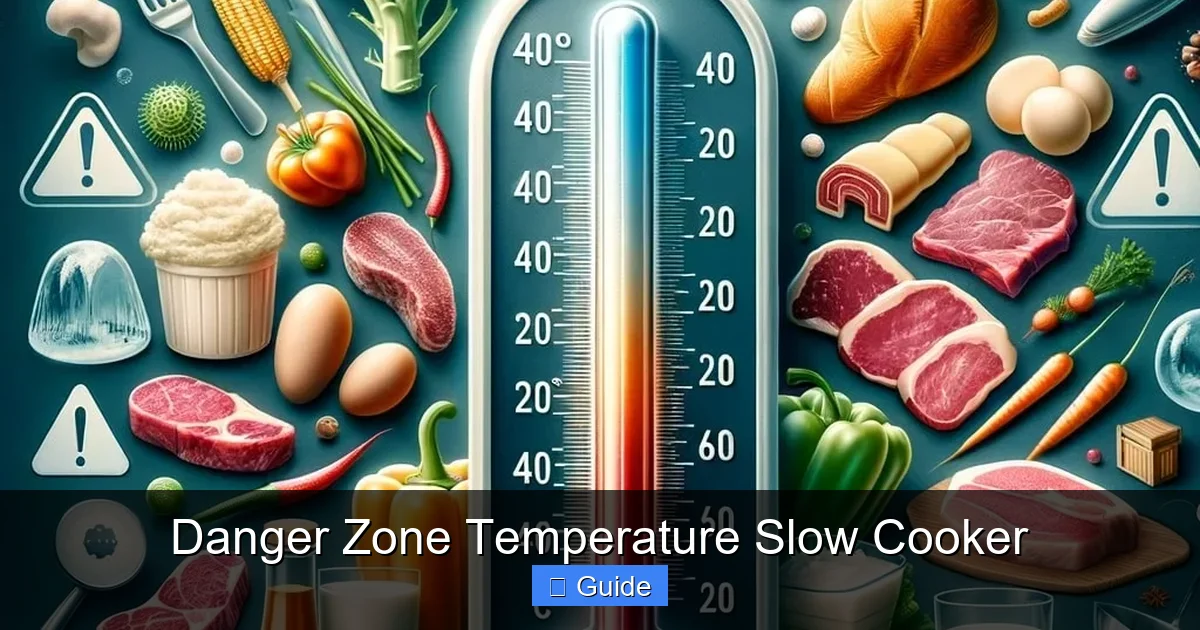
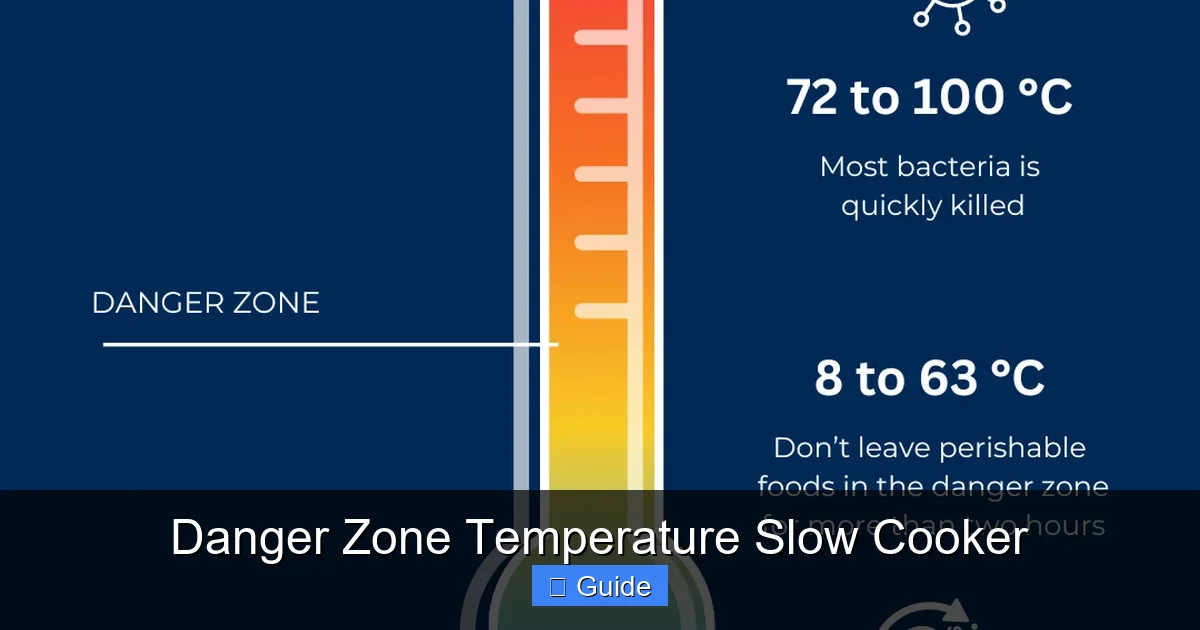
Let’s start with the basics. The “danger zone” in food safety refers to a specific temperature range where bacteria multiply most rapidly. This range is generally between 40°F (5°C) and 140°F (60°C). When food, especially perishable items like meat, poultry, dairy, and cooked vegetables, spends too much time in this temperature window, harmful bacteria like Salmonella, E. coli, and Listeria can grow to dangerous levels. Consuming food contaminated with these bacteria can lead to serious foodborne illnesses.
For slow cookers, the challenge is that they cook food slowly. This “slow” process might make some people worry that their food spends too much time in the danger zone. However, modern slow cookers are designed to heat food safely, reaching temperatures above 140°F (60°C) within a few hours. The key is to use them correctly. Our goal is always to minimize the time food spends in the danger zone temperature slow cooker range, both during the initial cooking phase and when handling leftovers.
Why Slow Cookers Are Generally Safe (When Used Correctly)
Despite their name, slow cookers aren’t inherently “slow” at getting food out of the danger zone. Most slow cooker models, especially newer ones, are designed to bring ingredients up to a safe cooking temperature fairly quickly. On the “LOW” setting, food should reach 140°F (60°C) in 3-4 hours and eventually reach internal temperatures of 165°F (74°C) or higher. On the “HIGH” setting, this process is even faster.
The moist heat created inside a slow cooker also helps to destroy bacteria. The constant, even temperature helps ensure that all parts of the food are cooked thoroughly. However, proper preparation and handling are crucial to maximize this safety. We’ll dive into those details next.
Step-by-Step Guide to Safe Slow Cooking and Avoiding the Danger Zone
Follow these steps to ensure your slow cooker meals are always safe and delicious.
Step 1: Proper Ingredient Selection and Preparation
The safety of your meal starts long before you even turn on the slow cooker.
Choose Fresh, Quality Ingredients
Always use fresh, high-quality ingredients. Check expiration dates on all packaged items, especially meats and dairy. If something looks or smells off, it’s better to discard it than risk illness.
Visual guide about how to Danger Zone Temperature Slow Cooker
Image source: littleupgrades.com
Thaw Frozen Food Completely Before Adding
This is perhaps one of the most critical safety tips for slow cooking. Never put frozen meat directly into a slow cooker. Doing so significantly prolongs the time the food spends in the danger zone. The frozen meat acts like a giant ice cube, keeping the overall temperature of the pot low for too long. By the time the meat finally thaws and reaches a safe cooking temperature, bacteria may have multiplied to dangerous levels.
Always thaw meat completely in the refrigerator, under cold running water, or in the microwave before adding it to your slow cooker. The refrigerator method is generally the safest and recommended.
Cut Food into Appropriate Sizes
Cut meat and vegetables into uniform, smaller pieces. This ensures they cook evenly and reach safe internal temperatures at roughly the same time. Larger pieces of meat will take much longer to cook through, potentially keeping other ingredients in the danger zone for extended periods.
Step 2: Preheating and Loading Your Slow Cooker Safely
How you set up your slow cooker can impact its efficiency and safety.
Consider Preheating Your Slow Cooker (Optional but Recommended)
While not strictly necessary for all recipes, preheating your slow cooker on the “HIGH” setting for about 20 minutes before adding ingredients can help it reach a safe temperature faster. This is particularly useful for recipes with raw meat.
Layer Ingredients Correctly
For even cooking and faster heating, layer ingredients thoughtfully:
- Bottom Layer: Place tougher, slower-cooking vegetables like carrots, potatoes, and onions at the bottom. They benefit from direct heat and liquid.
- Middle Layer: Place meat on top of the vegetables.
- Top Layer: Add more tender vegetables or quick-cooking ingredients later if the recipe allows, or on top if they can withstand long cooking times.
Add Hot Liquids When Possible
Using hot or even boiling liquids (broth, water, sauce) instead of cold liquids can give your slow cooker a head start. This helps the contents get above the 40°F (5°C) danger zone temperature more quickly.
Don’t Overfill or Underfill Your Slow Cooker
Fill your slow cooker between half and two-thirds full. An underfilled slow cooker can cause food to dry out or overcook quickly. An overfilled slow cooker might not heat evenly, prolonging the time some parts of the food spend in the danger zone, and can bubble over.
Step 3: Maintaining Safe Temperatures During Cooking
Once your slow cooker is loaded, let it do its job without interference.
Keep the Lid Closed!
This is crucial. Every time you lift the lid, the internal temperature of your slow cooker can drop by 10-15°F (5-8°C). This adds significant time to the cooking process, potentially extending the time food spends in the danger zone. Resist the urge to peek! Only lift the lid when absolutely necessary, such as to stir (if the recipe calls for it) or to check doneness at the end of the cooking time.
Use the Correct Setting
Always follow the recipe’s recommended setting (LOW or HIGH). While “LOW” cooks longer, both settings are designed to eventually reach safe internal temperatures. The “HIGH” setting simply achieves those temperatures faster. Do not try to convert a “LOW” recipe to “HIGH” by simply reducing time by half without checking for doneness.
Ensure Rapid Heating
Your slow cooker should bring food above the 40°F (5°C) mark and ideally above 140°F (60°C) within a couple of hours. Modern slow cookers are designed to do this. If you are using a very old slow cooker, or one that seems to cook unusually slowly, you might want to consider replacing it. A functioning slow cooker avoids the danger zone temperature effectively.
Step 4: Checking Doneness and Safe Internal Temperatures
Visual cues aren’t always enough. A food thermometer is your best friend.
Use a Food Thermometer
To be absolutely certain your food is safe to eat, use a reliable food thermometer. Insert it into the thickest part of the meat, avoiding bone. Compare the reading to safe internal temperature guidelines:
- Poultry (chicken, turkey): 165°F (74°C)
- Ground Meat (beef, pork, lamb): 160°F (71°C)
- Beef, Pork, Veal, Lamb (roasts, steaks, chops):
- Medium-rare: 145°F (63°C) with a 3-minute rest
- Medium: 160°F (71°C)
- Well-done: 170°F (77°C)
- Fish: 145°F (63°C)
- Leftovers and Casseroles: 165°F (74°C)
Always ensure the thermometer is clean before and after use.
Visual Cues for Doneness
While a thermometer is best, visual cues can help. Meat should be tender and easily shreddable. Vegetables should be soft. Juices from meat should run clear. However, color alone is not a reliable indicator of safety.
Step 5: Safely Serving and Storing Leftovers
The danger zone doesn’t disappear once cooking is complete. Post-cooking handling is just as important.
Serve Immediately
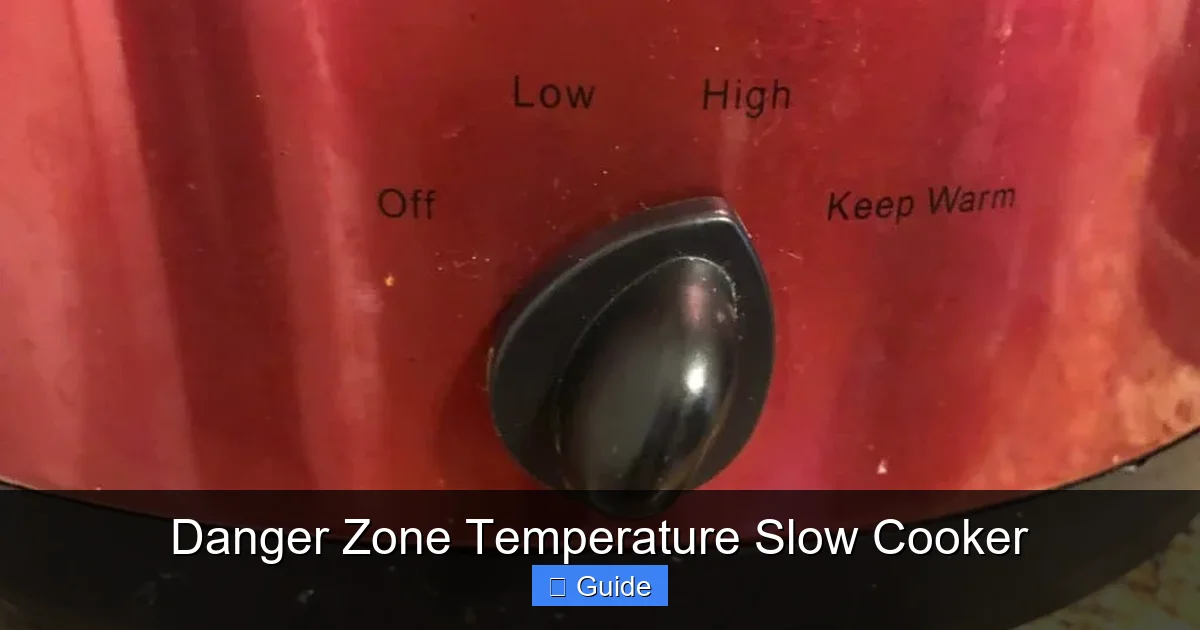
Once your food is cooked, serve it promptly. The longer it sits at room temperature, the more time it spends cooling down into the danger zone. If you need to keep it warm for a short period, use your slow cooker’s “WARM” setting. However, the “WARM” setting is only designed to hold food at or above 140°F (60°C), not to cook it or keep it indefinitely. Do not use the “WARM” setting for more than 2-4 hours.
Refrigerate Leftovers Quickly
This is crucial for preventing bacterial growth. Cooked food should be refrigerated within two hours of cooking. If the ambient air temperature is above 90°F (32°C), this window shrinks to just one hour. To speed up the cooling process:
- Divide into Shallow Containers: Don’t put a huge, hot pot of food directly into the fridge. Divide it into several small, shallow containers. This increases the surface area, allowing the food to cool down faster and pass through the danger zone quickly.
- Don’t Pack the Fridge: Ensure there’s air circulation around the containers in your refrigerator.
- Consider an Ice Bath: For very large quantities, you can place the slow cooker insert (if removable) into a larger bowl of ice water to cool it down more rapidly before portioning and refrigerating.
Reheat Leftovers Thoroughly
When reheating leftovers, always ensure they reach an internal temperature of 165°F (74°C). Reheat food only once. Do not use your slow cooker for reheating; a microwave or stovetop is generally more efficient for reaching safe reheating temperatures quickly.
Troubleshooting Common “Danger Zone Temperature Slow Cooker” Concerns
Even with the best intentions, questions can arise. Here are some common concerns.
My Slow Cooker Isn’t Heating Fast Enough. What Should I Do?
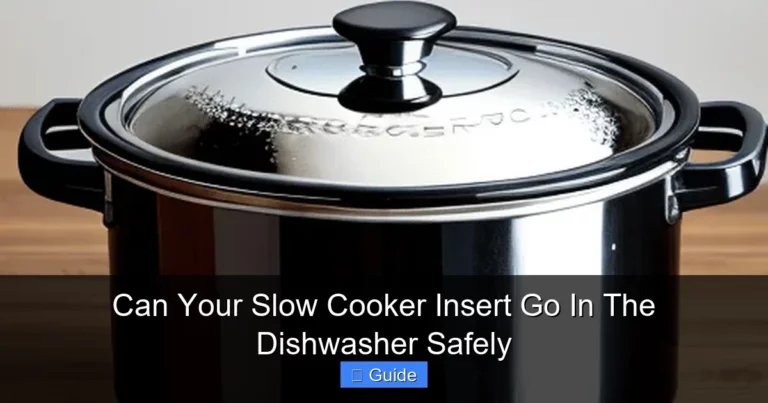
If your slow cooker seems to be cooking unusually slowly or not reaching hot temperatures, it might be malfunctioning. Food should be visibly simmering after a few hours on any setting. If you’re concerned, use a food thermometer to check the temperature of the liquid in the pot. If it’s not well above 140°F (60°C) after 2-3 hours, discard the food and consider replacing your slow cooker. An old or faulty appliance poses a significant food safety risk regarding the danger zone temperature slow cooker range.
Visual guide about how to Danger Zone Temperature Slow Cooker
Image source: lzd-img-global.slatic.net
Can I Put Frozen Meat Directly into a Slow Cooker?
As emphasized before, no, you absolutely cannot. This is a common and dangerous misconception. Frozen meat will cause the food to stay in the danger zone for too long, promoting bacterial growth. Always thaw meat completely first.
What if I Lose Power During Cooking?
If power goes out and your slow cooker stops cooking, the food inside will quickly begin to cool down into the danger zone. If you weren’t home to catch it immediately, or if the food has been sitting at room temperature for more than two hours after the power outage, it’s safest to discard it. “When in doubt, throw it out” is a good rule of thumb for food safety.
Can I Use the “Warm” Setting Indefinitely?
No. The “WARM” setting is designed to hold already cooked food at a safe temperature (above 140°F / 60°C) for a short period, typically 2-4 hours. It’s not meant for cooking or for keeping food warm for extended periods like an all-day buffet. If you need to hold food for longer, consider other warming methods that can maintain higher temperatures.
Tips for Maximizing Safety and Flavor
Beyond the basics, these tips will enhance your slow cooking experience.
Don’t Overcrowd the Pot
This goes hand-in-hand with filling the slow cooker correctly. Too many ingredients can prevent even heat distribution and prolong cooking times, increasing the risk of food staying in the danger zone. Give your food space to breathe and cook thoroughly.
Visual guide about how to Danger Zone Temperature Slow Cooker
Image source: temperature.co.uk
Add Dairy and Delicate Ingredients Later
Ingredients like milk, sour cream, yogurt, and fresh herbs are best added during the last 30 minutes to an hour of cooking. They can curdle, separate, or lose their flavor if cooked for too long. Adding them later helps maintain their quality without compromising safety.
Make Sure There’s Enough Liquid
Most slow cooker recipes require a good amount of liquid to prevent drying out and to facilitate even cooking. This liquid also helps transfer heat efficiently throughout the pot, aiding in quickly moving food out of the danger zone temperature slow cooker range.
Consider a Programmable Slow Cooker
Many modern slow cookers come with programmable timers that can switch from a cooking setting (HIGH or LOW) to a “WARM” setting automatically once the cooking time is complete. This feature is excellent for food safety, as it prevents food from sitting and cooling down into the danger zone if you’re not home exactly when cooking finishes.
Conclusion: Cook Confidently with Your Slow Cooker
Mastering your slow cooker means embracing its convenience while always prioritizing food safety. By understanding the “danger zone temperature slow cooker” concept and following these clear guidelines for preparation, cooking, and storage, you can create delicious, worry-free meals every time. Remember to always thaw frozen foods, keep the lid closed during cooking, use a food thermometer to check doneness, and chill leftovers promptly. With these practices, your slow cooker will be a reliable and safe tool in your kitchen, delivering hearty and wholesome dishes for years to come. Enjoy your culinary adventures!
Jennifer D. Simon has spent the last 26 years studying and practicing nutrition science. She has used a larger part of this time in improving people’s livelihoods. She has done so by coming up with unquestionable ideas on how to tackle food problems in her community. Read More