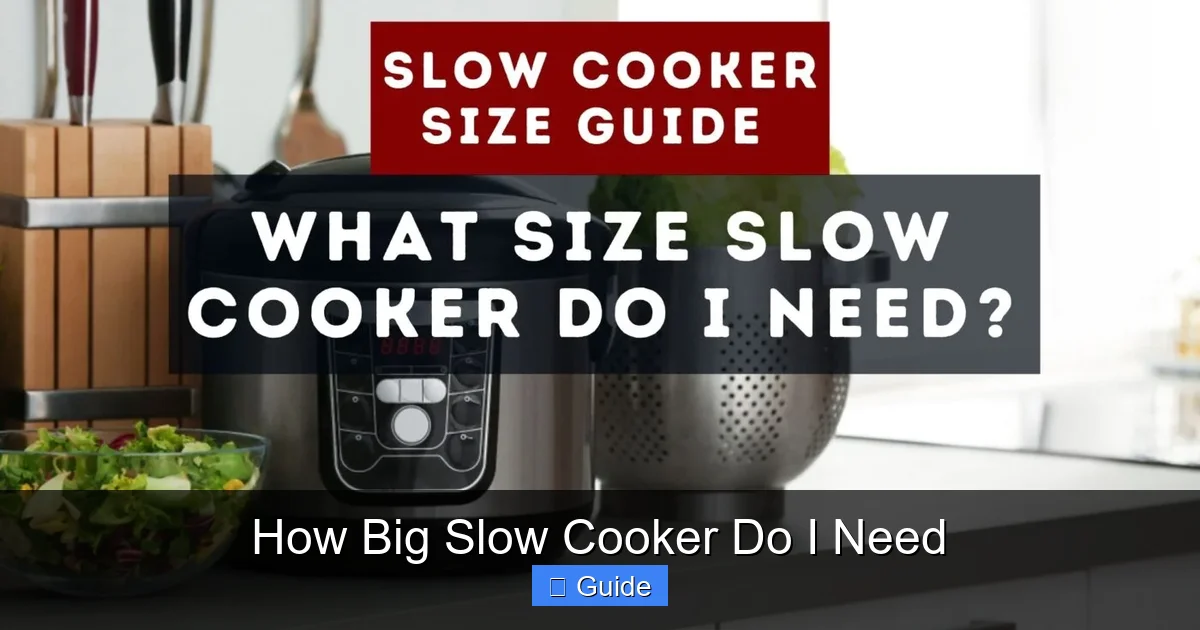
How Big Slow Cooker Do I Need
Choosing the right slow cooker size is crucial for delicious, perfectly cooked meals without waste. This comprehensive guide helps you determine how big a slow cooker you need by carefully considering your household size, typical cooking habits, and available kitchen space. You’ll learn to match quart capacity to your lifestyle, ensuring every dish is a success, whether for a single meal or a large gathering.
How Big Slow Cooker Do I Need
Are you ready to dive into the wonderful world of set-it-and-forget-it cooking but find yourself staring at an aisle full of slow cookers, wondering, “How big slow cooker do I need?” You’re not alone! Choosing the right slow cooker size is one of the most common dilemmas for both first-time buyers and seasoned cooks looking for an upgrade. A slow cooker that’s too small means endless struggles to fit your meals, while one that’s too large can lead to dry, overcooked food and wasted energy.
This comprehensive guide will walk you through all the essential considerations, helping you pinpoint the perfect slow cooker capacity for your unique needs. We’ll cover everything from household size and cooking habits to kitchen space and special features. By the end, you’ll feel confident making an informed decision, ensuring your new kitchen companion is just the right fit for countless delicious meals to come. Let’s find your ideal slow cooker size!
Key Takeaways
- Assess Household Size First: The number of people you regularly cook for is the most critical factor. Smaller families or individuals need 1.5-4 quart, while larger families or entertainers require 6-8+ quart models.
- Consider Your Cooking Style: Think about what you typically cook. Whole chickens or large roasts need an oval-shaped slow cooker of at least 6 quarts, while stews and chilis can work in round models.
- Understand the “Minimum Fill” Rule: For optimal cooking and food safety, your slow cooker should be at least half-full but no more than three-quarters full. This prevents overcooking or undercooking.
- Evaluate Kitchen Space and Storage: Large slow cookers take up significant counter and storage space. Measure your available areas before committing to a big model.
- Don’t Overfill Your Slow Cooker: Never fill your slow cooker more than 3/4 full, as this can lead to uneven cooking, spills, and potential food safety issues.
- Think About Portability: If you often take dishes to potlucks or gatherings, consider models with locking lids for easy, spill-free transport.
Step 1: Assess Your Household Size
The number of people you regularly cook for is, without a doubt, the most significant factor in determining how big a slow cooker you need. Matching the capacity to your typical meal size prevents food waste, ensures even cooking, and makes meal prep a breeze.
For Single Individuals or Couples (1-2 people)
If you’re cooking for just yourself or one other person, you’ll want a smaller slow cooker.
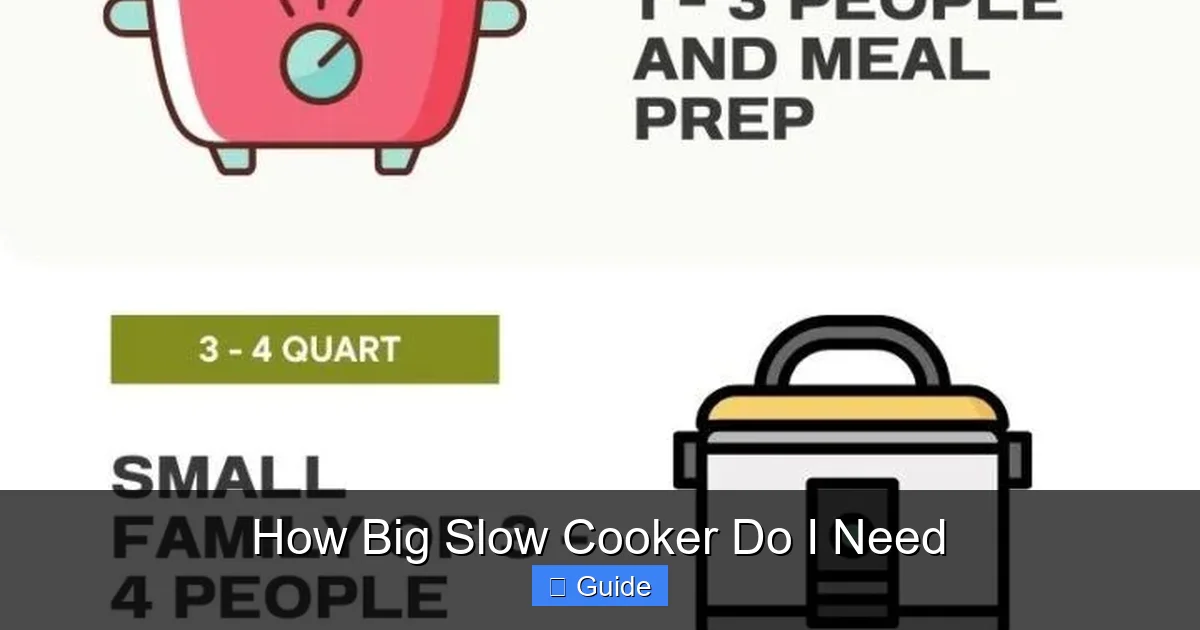
- Recommended Size: 1.5 to 3 quarts.
- Why it works: These compact models are perfect for preparing single servings, small batches of soup, dips, oatmeal, or even a small pot roast for two. They heat up quickly and are ideal for keeping side dishes warm at a party without taking up too much space. A 1.5-quart slow cooker is great for dips, while a 3-quart can handle a small chicken breast or a couple of servings of chili.
- Practical Example: A 2-quart slow cooker can comfortably make 2-3 servings of pulled pork or a hearty stew for lunch and dinner for one.
For Small Families or Roommates (3-4 people)
This is often considered the “standard” family size for many households. You need enough capacity for a main course with potential for a small amount of leftovers.
- Recommended Size: 4 to 5 quarts.
- Why it works: A 4-quart slow cooker is versatile enough for many recipes, from casseroles to small roasts. The 5-quart option offers a little more wiggle room, which is great if you like to have enough for lunch the next day or if your kids have big appetites. This size is typically what comes to mind when people think about a “family-sized” slow cooker.
- Practical Example: A 5-quart slow cooker can easily accommodate a small whole chicken (3-4 lbs), a beef stew, or a large batch of chili that serves four people generously, with a bit left over.
For Medium to Large Families or Frequent Entertaining (5-6 people)
If your dinner table often hosts a few extra guests, or if you have a larger family, you’ll need more substantial capacity. This is a very popular size for general use.
- Recommended Size: 6 to 7 quarts.
- Why it works: This is a highly versatile size that can handle most main dishes for larger groups. A 6-quart slow cooker is often considered the “sweet spot” for many households, offering enough space for big roasts, large batches of soup, or feeding a hungry crowd. The 7-quart provides even more breathing room, which is excellent for entertaining or if you always want leftovers.
- Practical Example: A 6-quart slow cooker is perfect for a 5-6 lb pork shoulder for pulled pork sandwiches, a large pot of beef stew, or a substantial chili for a game day gathering. It can also manage a larger whole chicken.
For Large Families, Batch Cooking, or Big Parties (7+ people)
When you’re feeding a small army, doing serious meal prep for the week, or hosting a big holiday gathering, you need maximum capacity.
- Recommended Size: 8 quarts and larger (up to 10-quart models exist).
- Why it works: These extra-large slow cookers are designed for quantity. They’re ideal for cooking for very large families, preparing meals for potlucks, church events, or making massive batches of food to freeze for later. If you frequently cook for 8 or more people, this is the size for you.
- Practical Example: An 8-quart slow cooker can easily fit a large turkey breast, a substantial pork loin, or enough pulled pork to feed a big party. It’s also fantastic for huge batches of chili or soup for weekly meal prep.
Step 2: Consider Your Cooking Habits and Needs
Beyond just the number of mouths to feed, think about what you typically cook and how you cook. Your recipes and lifestyle can heavily influence how big a slow cooker you need.
Batch Cooking or Meal Prep
If you love to cook in bulk on the weekends to freeze meals for busy weekdays, a larger slow cooker (6 quarts or more) will be your best friend, regardless of your household size. This allows you to maximize your effort and yield several meals from one cooking session. Even if you’re a single person, a 6-quart slow cooker might be ideal for making 4-6 servings of chili or curry to freeze.
Entertaining or Potlucks
Do you frequently host gatherings or contribute dishes to potlucks? A 6-quart or 7-quart slow cooker is excellent for keeping dips, meatballs, pulled pork, or hot appetizers warm for a crowd. If you’re known for bringing the “main event” to larger parties, an 8-quart slow cooker will ensure you have plenty to go around. Look for models with locking lids for easy and secure transport.
Specific Recipes (Whole Chickens, Roasts)
If cooking whole chickens, large roasts (like beef brisket or pork shoulder), or rack of ribs is on your slow cooker agenda, the shape of the slow cooker becomes as important as its size.
- Oval-shaped slow cookers: These are best for longer cuts of meat like roasts, whole chickens, or ribs because they provide more surface area horizontally. For a whole chicken (4-6 lbs), you’ll typically need at least a 6-quart oval slow cooker.
- Round-shaped slow cookers: These are excellent for stews, soups, chili, casseroles, and anything that can be stirred easily. They are generally more compact, making them a good choice if space is a concern, but less ideal for large, intact cuts of meat.
Leftover Preferences
Are you someone who loves leftovers for lunch the next day, or do you prefer to cook just enough for one meal? If you crave those next-day portions, opt for a slightly larger slow cooker than your household size might strictly suggest. This extra capacity will allow you to intentionally make more without overfilling.
Step 3: Think About Kitchen Space and Storage
Slow cookers, especially the larger models, can take up a fair amount of real estate in your kitchen. Before you commit to an 8-quart slow cooker, consider where it will live both when it’s in use and when it’s stored away.
Countertop Space
Do you have enough clear counter space to comfortably operate a large slow cooker? Remember to account for the lid opening and any side handles. A large 8-quart oval slow cooker can be quite long and wide.
Storage Space
Where will you store your slow cooker when it’s not in use? In a cabinet? On a pantry shelf? Measure the height, width, and depth of your available storage areas. A bulky 8-quart slow cooker might not fit easily into standard kitchen cabinets, while smaller 3-quart models are much easier to tuck away. If space is at a premium, a more compact round design might be preferable over an elongated oval.
Step 4: Evaluate Portability and Features
While not directly about how big a slow cooker you need, certain features can enhance your experience and influence your ultimate satisfaction, especially regarding how you use your slow cooker.
Lockable Lids for Transport
If you plan to transport your slow cooker frequently to potlucks, tailgates, or family gatherings, look for models with secure, locking lids. This feature is invaluable for preventing spills in the car and ensuring your dish arrives intact. Many 6-quart and larger slow cookers offer this option.
Programmable Settings
Advanced slow cookers come with programmable timers that allow you to set specific cooking times and then automatically switch to a “warm” setting when done. This is incredibly convenient for busy schedules, as it prevents food from overcooking if you’re not home exactly when it finishes. This feature is available across various slow cooker sizes, but often more prevalent in mid-to-large capacity models.
Digital vs. Manual Controls
Digital controls typically offer more precise temperature and timer settings, while manual controls are simpler (usually just “Low,” “High,” and “Warm”). Your preference for technology versus simplicity might guide your choice.
Removable Crocks
Most modern slow cookers have removable stoneware or ceramic crocks, which are fantastic for easy cleaning and serving. Ensure the crock is dishwasher-safe for maximum convenience. Stainless steel inserts are also becoming more common, offering lighter weight and often stovetop searing capabilities.
Step 5: Don’t Forget the “Minimum Fill” Rule
This is a critical tip for successful slow cooking. Slow cookers work best when they are adequately filled.
- Ideal Fill Level: Your slow cooker should be at least half-full but no more than three-quarters full.
- Why it matters:
- Underfilling: If your slow cooker is less than half full, your food will cook too quickly, potentially drying out or burning around the edges. The heat won’t distribute correctly.
- Overfilling: If your slow cooker is more than three-quarters full, it can lead to uneven cooking (the top might not get hot enough), longer cooking times, and potentially messy spills as the food expands and bubbles during cooking. It can also prevent the lid from sealing properly.
This rule means that even if you have a large 8-quart slow cooker, it’s not ideal for cooking a single serving of stew. In such cases, having a smaller slow cooker (like a 2-3 quart) for smaller batches is a smart investment.
Practical Tips for Choosing Your Slow Cooker Size
- When in doubt, go slightly larger: If you’re torn between two sizes, say a 4-quart and a 6-quart, it’s often better to opt for the slightly larger one. You can always cook smaller quantities in a larger slow cooker (by ensuring it’s at least half full), but you can’t magically make a small slow cooker bigger. Just remember the “half-full” rule!
- Consider a multi-cooker: If counter space is a major concern, or if you’re looking for ultimate versatility, consider a multi-cooker (like an Instant Pot) that also has a slow cooker function. These can often perform several kitchen tasks in one appliance, saving space.
- Two is better than one: Many slow cooker enthusiasts own two slow cookers of different sizes – a smaller one (2-4 quart) for dips, sides, or small meals, and a larger one (6-8 quart) for main courses, entertaining, or batch cooking. This offers maximum flexibility.
- Think long-term: Are you single now but planning to start a family soon? Or are your kids growing and eating more? Factor in future needs when making your purchase to avoid having to buy another slow cooker too soon.
Troubleshooting Common Slow Cooker Size Issues
Sometimes, even with the best intentions, you might run into issues related to slow cooker size.
Food Cooking Too Fast or Too Slow
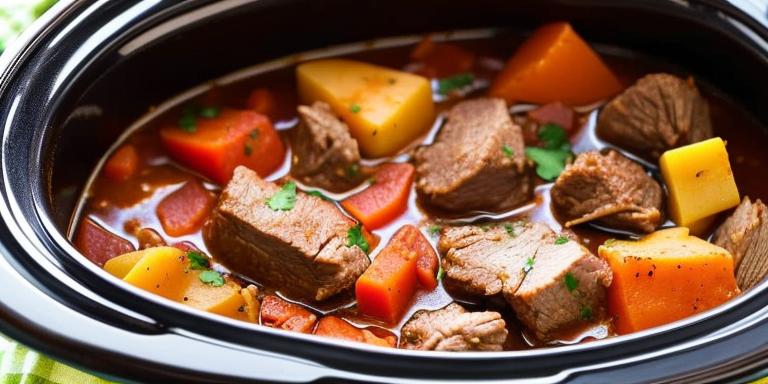
If your food is consistently cooking too fast and drying out, your slow cooker might be too large for the amount of food you’re putting in. Remember the “at least half-full” rule. Try adding more ingredients to fill it adequately, or consider using a smaller slow cooker for that recipe. Conversely, if food takes forever to cook, you might be overfilling your slow cooker, preventing proper heat distribution. Ensure it’s no more than three-quarters full.
Visual guide about how to slow cooker size guide
Image source: i.pinimg.com
Visual guide about how to slow cooker size guide
Image source: greenkithome.com
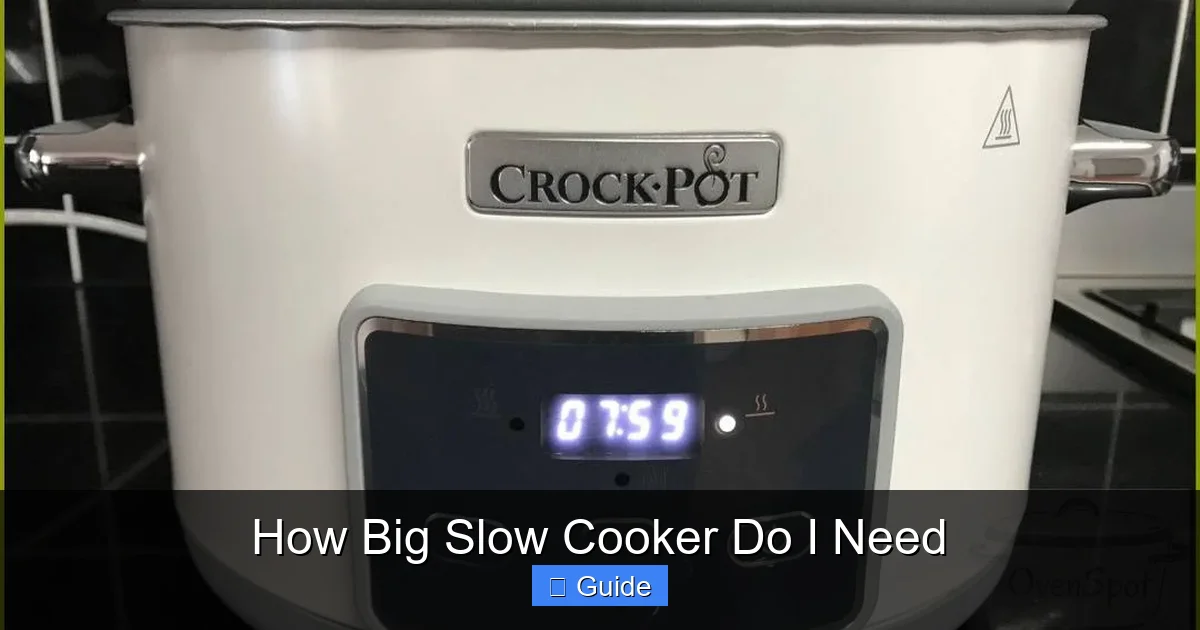
Visual guide about how to slow cooker size guide
Image source: ovenspot.com
Recipe Not Fitting
This is a common frustration! If your ingredients simply won’t fit, you have a few options. First, assess if it’s the shape that’s the problem (e.g., trying to fit a long roast into a round pot). If so, an oval slow cooker might be necessary. If it’s pure volume, you’ll need a larger slow cooker, or you’ll have to adjust the recipe to fit your current one. Never try to force ingredients in or fill above the 3/4 mark.
Burned Edges or Uneven Cooking
If the bottom or edges of your food are burning while the middle is undercooked, it often points to an underfilled slow cooker (causing heat to concentrate) or an older model that cooks too hot. Ensure your slow cooker is at least half-full. If the problem persists, an appliance thermometer can help you check if your slow cooker is running too hot; sometimes older models can have inaccurate thermostats.
Conclusion
Choosing the right slow cooker size is a vital step toward effortless and delicious home cooking. By carefully considering your household size, typical cooking habits, and available kitchen space, you can confidently answer the question, “How big slow cooker do I need?” Remember the “half to three-quarters full” rule, think about the shape for specific recipes, and don’t hesitate to invest in a second, smaller slow cooker if your cooking needs vary widely. With the perfect slow cooker by your side, you’ll be whipping up comforting, flavorful meals with minimal fuss for years to come. Happy slow cooking!
Jennifer D. Simon has spent the last 26 years studying and practicing nutrition science. She has used a larger part of this time in improving people’s livelihoods. She has done so by coming up with unquestionable ideas on how to tackle food problems in her community. Read More