Can You Use Small Slow Cooker for Large Recipe
Navigating larger recipes in a small slow cooker is entirely possible, but it demands careful planning and smart adjustments. This guide explores how to master ingredient scaling, strategic layering, and diligent monitoring to prevent overflows, ensure even cooking, and maintain food safety. While it requires a mindful approach, you can successfully adapt many of your favorite big-batch dishes to fit your compact appliance.
Ah, the trusty slow cooker! It’s a culinary hero, promising tender, flavorful meals with minimal effort. But what happens when your ambition for a hearty family dinner or a week’s worth of meal prep clashes with the cozy confines of your small slow cooker? You have a fantastic recipe that feeds eight, but your appliance comfortably serves only four. The question looms: can you use a small slow cooker for a large recipe?
The short answer is: yes, often, but with careful planning and smart adjustments. It’s not just about cramming everything in and hoping for the best. That approach usually leads to overflows, undercooked food, or a watery mess. This comprehensive guide will walk you through the essential strategies, practical tips, and crucial food safety considerations to successfully adapt large recipes to your beloved small slow cooker, transforming potential kitchen dilemmas into delicious triumphs.
We’ll cover everything from understanding your appliance’s true capacity to adjusting ingredient ratios, mastering layering techniques, and troubleshooting common issues. By the end, you’ll feel confident in making your small slow cooker work harder and smarter, proving that size isn’t everything when it comes to delicious slow-cooked meals.
Key Takeaways
- Understand Capacity Limits: Never fill your small slow cooker beyond 2/3 to 3/4 full to prevent overflow and ensure even cooking, even for a “large” recipe.
- Scale Ingredients Thoughtfully: Reduce ingredient quantities, especially liquids, to fit your small slow cooker. Prioritize essential flavor components and main proteins.
- Master Strategic Layering: Place denser, longer-cooking ingredients at the bottom, and quicker-cooking or delicate items closer to the top or add them later.
- Monitor Cooking Time Closely: A fuller slow cooker may require slightly longer cooking times, but a too-full one can cook unevenly. Always verify doneness with a thermometer.
- Prioritize Food Safety: Ensure food reaches safe internal temperatures. Do not overstuff to the point where the appliance cannot maintain proper heat distribution, leading to a “danger zone” for bacteria.
- Consider Recipe Suitability: Some recipes are inherently difficult to downsize or adapt. Very large, voluminous dishes might be better suited for alternative cooking methods or split into multiple batches.
- Embrace Pre-Preparation: Cutting ingredients smaller and pre-searing meats can help them fit better and cook more efficiently in a confined space.
Quick Answers to Common Questions
Can I use aluminum foil to create a divider in my small slow cooker?
While you can use foil to create a “sling” for lifting items out, using it as a divider to force more ingredients in isn’t recommended. It can interfere with heat distribution and prevent proper cooking, potentially creating cold spots.
Should I cut all ingredients much smaller when adapting to a small slow cooker?
Yes, generally. Cutting vegetables and meats into smaller, more uniform pieces helps them fit better, cook more evenly, and tenderize more efficiently within the confined space of a small slow cooker.
Can I pre-sear meat in a small slow cooker before adding other ingredients?
No, standard slow cookers are not designed for searing. They typically don’t reach high enough temperatures to brown meat effectively. Always sear meat in a separate skillet on the stovetop for best results and added flavor.
Is it okay to “stack” ingredients right up to the lid for a large recipe?
Absolutely not. Always leave significant headspace (at least 1/4 of the pot) to prevent overflow, allow steam to circulate, and ensure even heat distribution. Filling beyond 2/3 to 3/4 full is risky and can compromise food safety.
What if my recipe still makes too much for my small slow cooker, even after scaling?
If you’ve scaled down appropriately and it’s still too much, consider making two smaller batches in succession, or freezing a portion of the raw, scaled ingredients for another day. It’s better to make two safe, delicious batches than one overstuffed, potentially undercooked one.
Understanding Your Small Slow Cooker’s Limits
Before you even think about scaling down a recipe, you need to understand the true capacity of your small slow cooker. “Small” can mean different things, but typically, we’re talking about 1.5-quart to 3-quart models. A common misconception is that a 3-quart slow cooker can cook three full quarts of food. While technically true for volume, practical slow cooking requires leaving headspace.
What is Your Slow Cooker’s True Usable Capacity?
Most manufacturers recommend filling your slow cooker no more than 2/3 to 3/4 full. This isn’t just a suggestion; it’s vital for several reasons:
- Prevents Overflow: As food cooks, it expands, and liquids release. Filling to the brim is an invitation for a messy kitchen counter.
- Ensures Even Cooking: Leaving headspace allows steam to circulate and heat to distribute properly, ensuring all ingredients cook at a consistent rate. Overfilling can create “cold spots” where food doesn’t reach safe temperatures.
- Maintains Temperature: A properly filled slow cooker reaches and maintains the necessary temperatures to safely cook food and prevent bacterial growth. An overfilled one struggles to heat up efficiently.
So, a 3-quart small slow cooker actually has a usable capacity closer to 2 to 2.25 quarts. Keep this in mind as your absolute upper limit when adapting large recipes.
Strategies for Adapting Large Recipes to Your Small Slow Cooker
Now that you know your limits, let’s dive into the practical steps for fitting that grand recipe into your modest appliance.
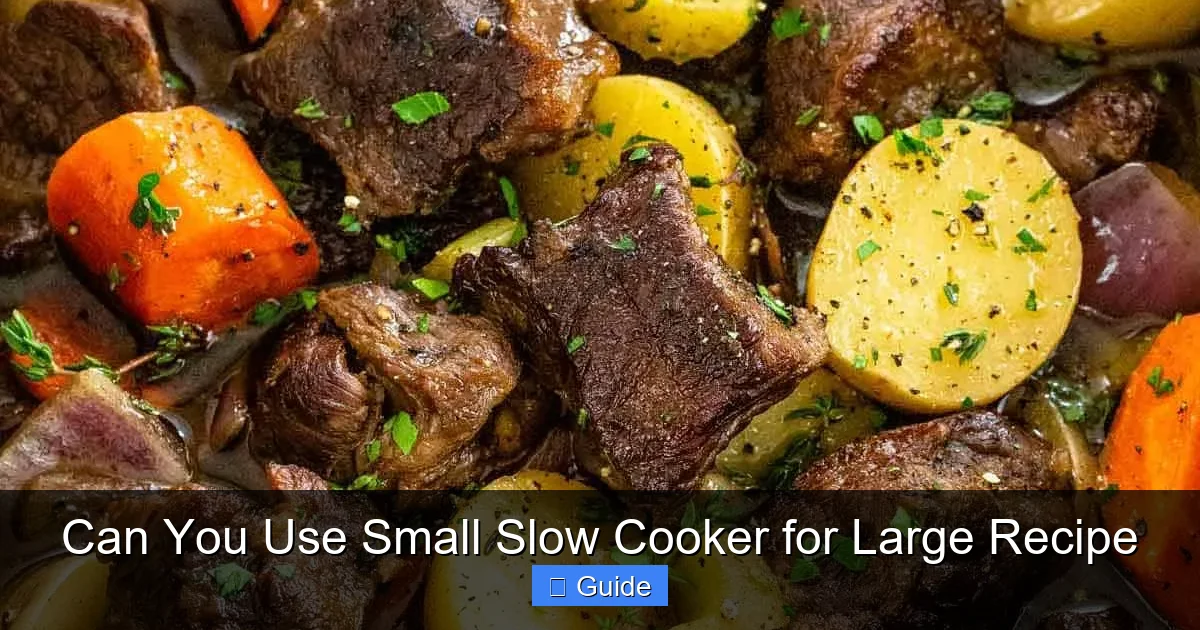
 small slow cooker for large Recipe” style=”max-width: 100%; height: auto; border-radius: 8px; box-shadow: 0 4px 12px rgba(0,0,0,0.15);” />
Visual guide about how to use small slow cooker for large recipe
Image source: m.media-amazon.com
Assess Your Recipe Carefully
The first step in using a small slow cooker for a large recipe is to evaluate the original recipe. Not all recipes are created equal when it comes to downsizing. Some are far more forgiving than others.
- Identify Core Ingredients: What are the absolute essentials? Proteins, key vegetables, and primary flavor components.
- Note Voluminous Ingredients: Ingredients like leafy greens, large chunks of vegetables, or too much broth can take up a lot of space.
- Consider the “Why”: Is it a stew, soup, chili, or a whole roast? Soups and stews are generally easier to scale than a whole chicken or a large cut of beef.
Adjust Ingredient Quantities Smartly
This is where the real magic happens. You need to proportionally reduce most ingredients, but some require more attention than others.
Determine Your Scaling Factor
If your recipe yields 8 servings and your small slow cooker comfortably holds 4 servings, you’ll aim for roughly half of each ingredient. If it’s a 6-serving recipe and your slow cooker holds 3, again, aim for half. Be practical rather than overly precise; “half” or “one-third” is usually sufficient.
Focus on Proteins and Vegetables
These are the primary bulk of most recipes. If a recipe calls for 3 lbs of beef, try 1.5 lbs. If it needs 4 carrots, use 2. Cut proteins and vegetables into smaller, more uniform pieces than you might for a larger slow cooker. This helps them fit better and cook more evenly.
Be Cautious with Liquids
This is perhaps the most critical adjustment when using a small slow cooker for a large recipe. Slow cookers create their own moisture, and liquids don’t evaporate much. Reducing liquids by more than your general scaling factor is often necessary. If you’re halving a recipe, try reducing liquids by 60-75% initially. You can always add more later if it looks too dry, but you can’t easily remove excess liquid.
Seasonings and Spices
Start with a proportional reduction (e.g., half the salt, pepper, herbs, and spices). It’s always easier to add more seasoning towards the end of cooking than to fix an over-seasoned dish. Remember that flavors can concentrate in a smaller volume, so err on the side of caution.
Dairy and Thickeners
If your recipe calls for dairy like cream or sour cream, or thickeners like cornstarch or flour, these are usually added towards the end. Adjust their quantities proportionally, but also consider the overall volume of your scaled-down dish.
Master Layering and Stacking
How you arrange ingredients in your small slow cooker can significantly impact cooking success.
Bottom Layer: Tougher Ingredients
Place denser, longer-cooking ingredients at the bottom, closest to the heating element. This includes root vegetables (potatoes, carrots, parsnips) and larger cuts of meat (even if scaled down). Make sure these are cut into smaller, more uniform pieces to promote even cooking.
Middle Layer: Meats and Aromatics
Next, add your main protein (if not already at the bottom) and aromatics like onions, garlic, and celery. If you’ve pre-seared your meat (highly recommended for flavor!), add it here.
Top Layer: Delicate Items and Liquids
Quicker-cooking vegetables (mushrooms, bell peppers) or ingredients you want to retain some texture should go on top. Pour your carefully measured liquids over everything. Ensure everything is submerged as much as possible without exceeding the 2/3 to 3/4 fill line.
Avoid Over-Packing
Resist the urge to push everything down and over-pack your small slow cooker. Airflow is crucial. If it feels too tight, you’ve likely still got too many ingredients. It’s better to make two smaller batches or choose a different recipe.
Manage Liquids Carefully
We touched on this in ingredient adjustment, but it’s worth reiterating. Liquids are your biggest variable when adapting a large recipe to a small slow cooker.
- Start Small: Always start with less liquid than you think you’ll need, even after scaling down. Many foods release significant amounts of water during slow cooking.
- Monitor During Cooking: After a few hours, lift the lid (briefly!) to check the liquid level. If it looks too dry, you can add a little warm broth or water.
- Consider Concentration: Less liquid means flavors will be more concentrated. Taste and adjust seasonings accordingly.
Monitor Cooking Time and Temperature
While a scaled-down recipe in a small slow cooker might conceptually cook faster because there’s less food, the reality can be more nuanced.
- Don’t Drastically Shorten Time: Slow cooking is about consistent, low heat over time. While the overall volume is less, the principles remain. Don’t cut cooking time by half just because you cut ingredients by half.
- Expect Similar Times: For many recipes, especially stews and braises, the cooking time on LOW will remain relatively similar to the original recipe, maybe an hour or two less at most. The time needed to break down tough fibers doesn’t change much with volume unless the pieces are drastically smaller.
- Use a Thermometer: The only sure way to know if your food is safely cooked and tender is to use a meat thermometer. Different proteins have different safe internal temperatures.
- Avoid Frequent Lid Lifting: Every time you lift the lid, you lose a significant amount of heat, potentially adding 15-30 minutes to your cooking time. Resist the urge to check too often.
The Art of Partial Cooking and Staging
Sometimes, even with careful scaling, a recipe might just be too dense or involve components that cook at different rates. This is where partial cooking and staging come in handy.
Pre-Cook Components
If your recipe has something that takes an exceptionally long time, like certain root vegetables, consider par-boiling them for 10-15 minutes before adding them to the small slow cooker. This gives them a head start.
Staggered Addition
Add delicate or quick-cooking ingredients later in the process. For example, if you’re making a chili with kidney beans and bell peppers, add the peppers for the last hour or two of cooking to prevent them from becoming mushy. Leafy greens like spinach are best stirred in just before serving.
Browning Meats
While not strictly necessary for cooking, browning meat (searing it in a pan before adding it to the slow cooker) adds incredible depth of flavor. In a small slow cooker, where liquid reduction is key, this pre-browning step helps build flavor without relying on excessive liquids.
Food Safety Considerations
When you’re pushing the boundaries of your small slow cooker by adapting a large recipe, food safety becomes even more paramount. A slow cooker must maintain food at safe temperatures throughout the cooking process to prevent bacterial growth.
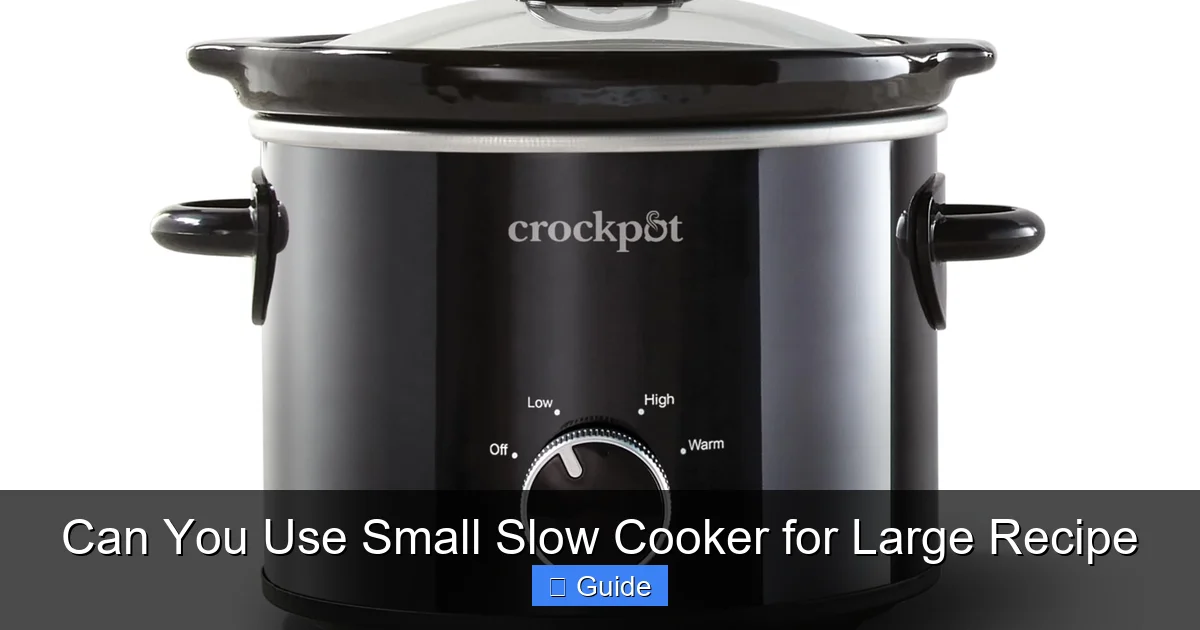
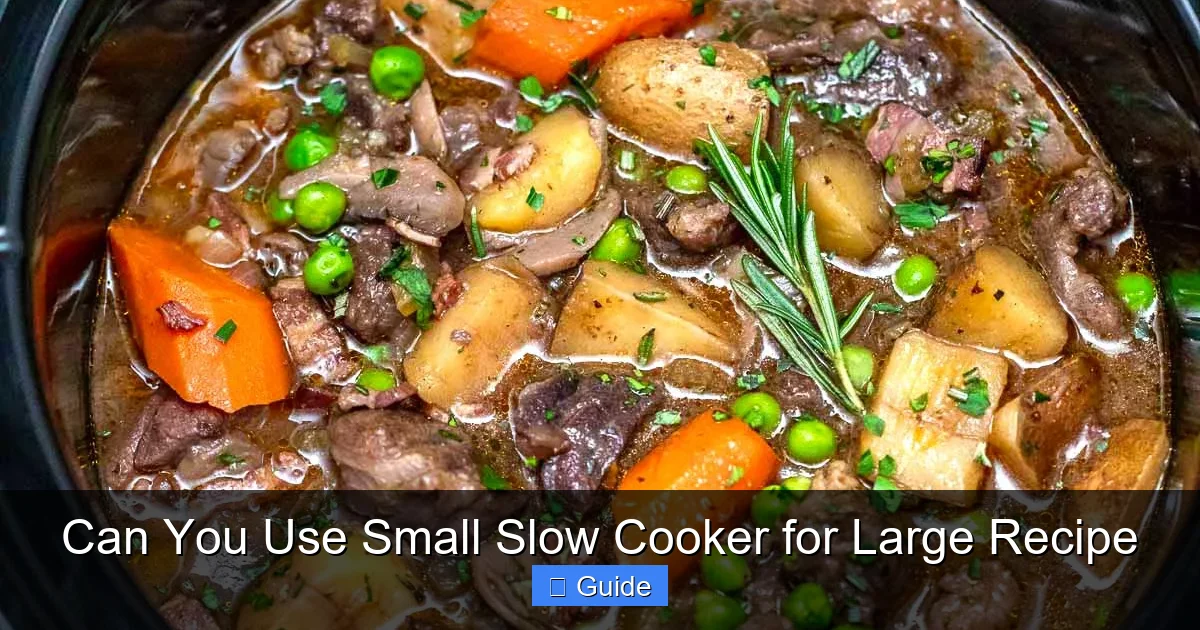 slow cooker for large recipe” style=”max-width: 100%; height: auto; border-radius: 8px; box-shadow: 0 4px 12px rgba(0,0,0,0.15);” />
Visual guide about how to use small slow cooker for large recipe
Image source: sweetandsavorymeals.com
- The “Danger Zone”: Food held between 40°F (4°C) and 140°F (60°C) is in the “danger zone” where bacteria multiply rapidly. Your slow cooker must heat food quickly through this zone and hold it above 140°F (60°C).
- Don’t Overfill: Overfilling a small slow cooker prevents it from heating evenly and efficiently, leaving parts of your food in the danger zone for too long. Stick to the 2/3 to 3/4 rule.
- Thaw Frozen Food: Always thaw meat and poultry completely before putting it into a slow cooker. Adding frozen meat can lower the temperature inside the appliance, keeping food in the danger zone for too long.
- Check Internal Temperature: Always use a food thermometer to ensure meats reach safe internal temperatures (e.g., poultry 165°F/74°C, ground meats 160°F/71°C, beef/pork/lamb roasts 145°F/63°C).
- Refrigerate Promptly: Leftovers should be refrigerated within two hours of cooking. Divide large quantities into smaller, shallow containers to cool quickly.
When Not to Force It: Recognizing Limitations
While a small slow cooker is surprisingly versatile, there are times when trying to adapt a large recipe is just not practical or safe.
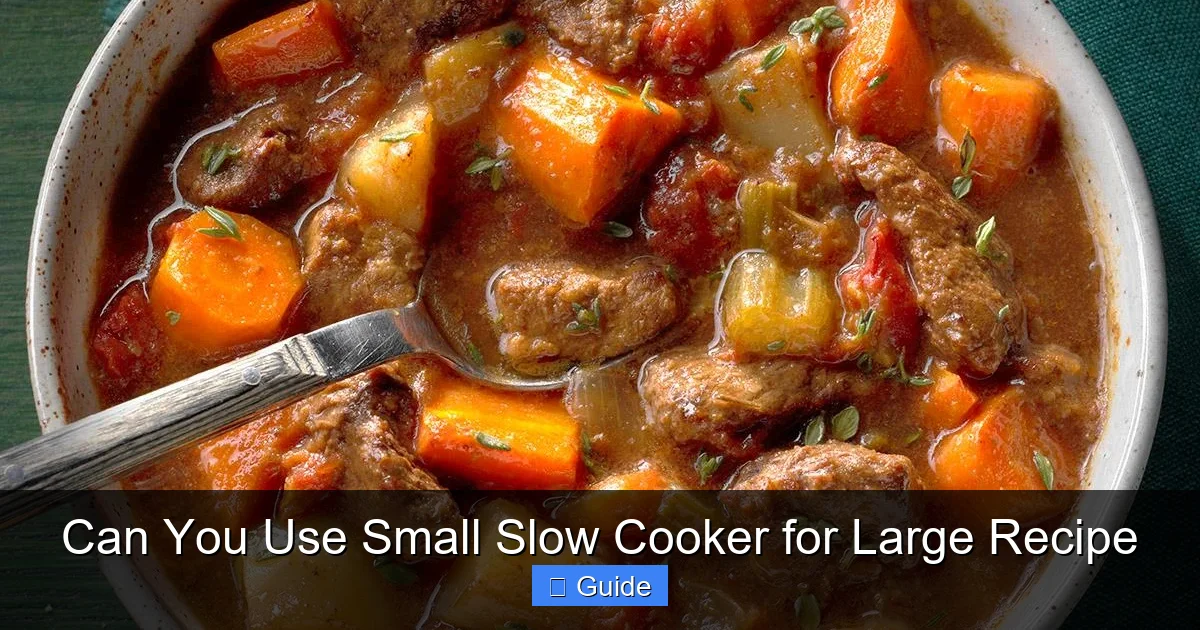
Visual guide about how to use small slow cooker for large recipe
Image source: tmbidigitalassetsazure.blob.core.windows.net
- Whole Roasts: Trying to cook a whole chicken, a large ham, or a sizable beef roast in a small slow cooker is usually a non-starter. You won’t get even cooking, and it’s prone to overfilling. Stick to smaller cuts or a larger appliance.
- Highly Voluminous Ingredients: Recipes heavily reliant on fresh, un-wilted spinach, cabbage, or very large quantities of fluffy pasta (which expands greatly) might not be ideal for extreme downsizing in a small slow cooker.
- Recipes Requiring Specific Shapes/Sizes: If a recipe absolutely depends on ingredients maintaining a certain large shape for presentation or texture (e.g., a specific type of casserole with large, un-cut vegetables), forcing it into a small slow cooker might compromise the final dish.
- If You’re Doubting Safety: If you find yourself constantly battling to fit ingredients, questioning if it will cook through, or worried about heat distribution, it’s better to err on the side of caution. Split the recipe into two batches, use a larger pot on the stove, or save it for a bigger slow cooker.
Troubleshooting Common Issues
Even with the best planning, sometimes things don’t go perfectly when using a small slow cooker for a large recipe. Here are a few common problems and their solutions:
Problem: Food is Undercooked
- Cause: Too many ingredients, not enough liquid, or too frequent lid lifting.
- Solution: Ensure your small slow cooker isn’t overfilled. Add a bit more warm liquid if it seems dry. If safe internal temperature hasn’t been reached, continue cooking on HIGH, checking every 30-60 minutes. Next time, cut ingredients smaller.
Problem: Slow Cooker Overflows
- Cause: Overfilling, too much liquid, or ingredients that expand significantly.
- Solution: Immediately turn off and unplug the slow cooker. Carefully remove the lid and scoop out some of the liquid or solid ingredients into another heat-safe pot. Resume cooking. Next time, be more conservative with your fill line and liquid amounts.
Problem: Food is Dry or Burnt at the Bottom
- Cause: Not enough liquid, uneven heat distribution, or certain ingredients prone to sticking.
- Solution: Stir gently if safe to do so. If it’s salvageable, add warm liquid (broth or water). Next time, ensure adequate liquid, cut ingredients into smaller, uniform pieces, and possibly use a slow cooker liner for easier cleanup and reduced sticking.
Problem: Too Watery or Flavorless
- Cause: Too much liquid, or not enough seasoning.
- Solution: If too watery, remove the lid for the last 30-60 minutes of cooking (on HIGH) to allow some evaporation, or stir in a cornstarch slurry (1 tbsp cornstarch mixed with 1 tbsp cold water) for the last 15-30 minutes. If flavorless, adjust seasonings at the end, adding salt, pepper, herbs, or a splash of an acidic component like vinegar or lemon juice.
Conclusion
Using a small slow cooker for a large recipe isn’t just possible; it’s an excellent way to maximize the utility of your appliance and ensure you still enjoy your favorite dishes, even when cooking for a smaller crowd or if space is a premium. The key lies in understanding your slow cooker’s limitations, carefully scaling ingredients, and employing smart cooking techniques.
By assessing your recipe, meticulously adjusting liquids and solids, mastering the art of layering, and prioritizing food safety, you can confidently adapt a multitude of dishes. Don’t be afraid to experiment, and remember that a little patience and attention to detail will yield incredibly tender, flavorful results. Your small slow cooker is more capable than you think – go forth and slow cook!
Jennifer D. Simon has spent the last 26 years studying and practicing nutrition science. She has used a larger part of this time in improving people’s livelihoods. She has done so by coming up with unquestionable ideas on how to tackle food problems in her community. Read More