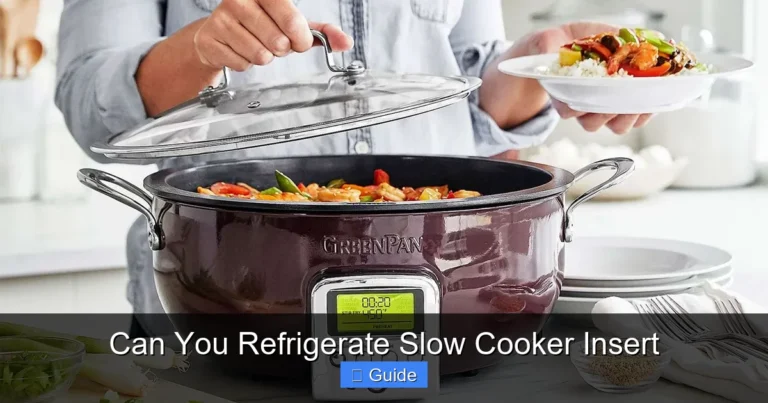
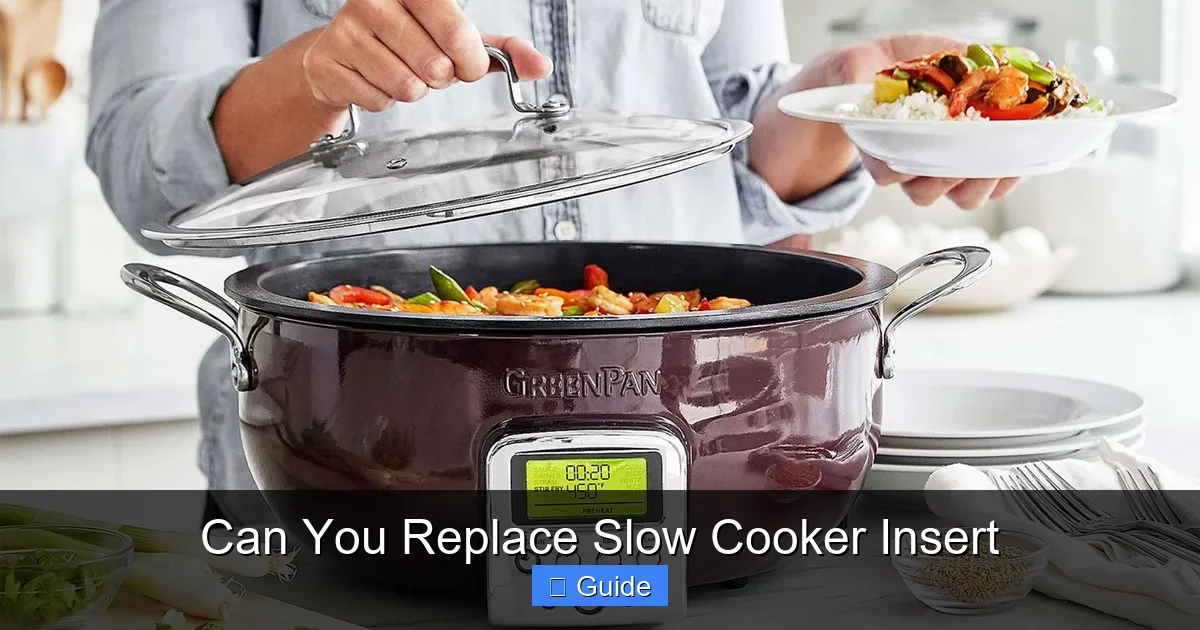
Can You Replace Slow Cooker Insert
Wondering if you can replace a broken or damaged slow cooker insert? The good news is, yes, you often can! This guide will walk you through the essential steps, from identifying your slow cooker’s model and type to finding the exact or compatible replacement pot. We’ll cover everything you need to know to breathe new life into your beloved appliance, ensuring safe and delicious slow-cooked meals for years to come.
Can You Replace Slow Cooker Insert
Have you ever chipped your beloved slow cooker insert? Maybe it’s developed an unsightly crack, or perhaps the non-stick coating has seen better days. It’s a common dilemma. Your trusty slow cooker’s heating element might still be in perfect working order, but the interior pot, where all the magic happens, is no longer fit for duty. This often leads to a pressing question: “Can you replace slow cooker insert?”
The good news is, for many slow cooker models, the answer is a resounding *yes!* You absolutely can replace the slow cooker insert. This guide is dedicated to helping you navigate the process. We’ll cover everything from identifying your specific slow cooker model to finding the perfect replacement slow cooker insert, ensuring you can get back to making your favorite comfort foods without having to buy a whole new appliance. Let’s dive in and save that slow cooker!
Key Takeaways
- Replacement is Possible: Most slow cooker inserts, especially ceramic or stoneware ones, can be replaced if damaged, lost, or just in need of an upgrade.
- Model Number is Crucial: The absolute most important piece of information you need is your slow cooker’s brand and model number to find a direct replacement.
- Measure Carefully: If a direct match isn’t available, precise measurements (diameter, height, capacity) are essential for finding a compatible universal slow cooker insert.
- Manufacturer First: Always check the original manufacturer’s website or customer service as your first step for authentic replacement parts.
- Safety and Compatibility: Never compromise on safety. Ensure any replacement slow cooker insert fits perfectly, is made of a suitable material, and is designed for your specific slow cooker’s heating unit.
- Consider Overall Cost: Weigh the cost of a new slow cooker insert against the price of an entirely new slow cooker, especially if your heating unit is old or showing wear.
Quick Answers to Common Questions
What’s the most important detail when replacing a slow cooker insert?
The absolute most critical piece of information is your slow cooker’s brand and model number. This ensures you find an exact or compatible replacement part for the slow cooker insert.
Can I use any slow cooker insert if it ‘looks’ like it fits?
No, it’s not recommended. Even if a slow cooker insert appears to fit, slight differences in dimensions, material, or heat transfer properties could lead to inefficient cooking, uneven heating, or even a hazardous situation.
My slow cooker insert is cracked. Can I still use it?
Definitely not. A cracked slow cooker insert is a safety hazard. It can leach materials into your food, and the insert could potentially shatter during use. Replace it immediately.
What if the manufacturer no longer sells my slow cooker insert?
If a direct slow cooker insert replacement isn’t available, carefully measure your old insert and search online appliance parts retailers for a universal or compatible slow cooker insert that matches the dimensions and material closely. As a last resort, you might need to consider a new slow cooker.
How can I prevent my new slow cooker insert from cracking?
To prevent cracks, avoid thermal shock. Never place a hot slow cooker insert into cold water or put a frozen insert directly into a hot slow cooker. Always let it cool naturally before cleaning, and use it with room-temperature ingredients whenever possible.
Why Might You Need to Replace Your Slow Cooker Insert?
Before we talk about how to find a new slow cooker insert, let’s briefly discuss why you might be in this situation. Understanding the common issues can also help you prevent them with your next pot.
Cracked or Chipped Stoneware
This is perhaps the most common reason. Ceramic or stoneware slow cooker inserts are durable, but they aren’t indestructible. Thermal shock (sudden temperature changes, like putting a hot insert under cold water) or accidental drops can lead to cracks or chips. A cracked slow cooker insert is a safety hazard as it can leach materials into your food or even break completely during cooking.
Scratched Non-Stick Coating
If your slow cooker insert has a non-stick coating (more common in metal inserts), scratches from metal utensils or abrasive cleaning can render it ineffective or even unsafe. Once the coating is compromised, food will stick, and small pieces of the coating can flake into your food.
Lingering Stains or Odors
Sometimes, despite your best cleaning efforts, stubborn stains or pervasive odors can cling to your slow cooker insert. While not always a safety issue, it can be unpleasant and affect the taste of future meals. A fresh slow cooker insert can solve this.
Lost or Broken Insert
Moving house, an unfortunate accident, or simply misplacing the pot can leave you with a perfectly good heating unit but no insert. In this case, finding a replacement slow cooker insert is your only option besides buying a new appliance.
Desire for a Different Material
Perhaps you’ve realized you prefer a different material for your slow cooker insert. Maybe you want to switch from ceramic to a metal insert for searing capabilities, or vice versa. This is a less common but valid reason for seeking a new pot.
Types of Slow Cooker Inserts and Materials
Slow cooker inserts primarily come in a few key materials, each with its own characteristics. Knowing these can help you choose an appropriate replacement.
Ceramic/Stoneware Inserts
These are by far the most common type of slow cooker insert.
- Pros: Excellent at retaining and distributing heat evenly. They are often oven-safe and aesthetically pleasing. Easy to clean (though prone to staining).
- Cons: Heavy and fragile. Susceptible to thermal shock and chipping/cracking if dropped or mishandled.
Metal Inserts (Non-stick, Aluminum, Stainless Steel)
Increasingly popular, especially in more modern or multi-cooker appliances.
- Pros: Lighter weight and more durable than ceramic. Often designed for stovetop searing before slow cooking, adding versatility. Faster heating and cooling.
- Cons: Non-stick coatings can scratch and degrade over time. May not retain heat as well off the heating unit. Can be more challenging to clean if food sticks.
Glass Inserts
While less common, some vintage or specialized slow cookers might feature a glass slow cooker insert.
- Pros: Allows you to see the food cooking without lifting the lid. Non-reactive.
- Cons: Very fragile and heavy. Less common, so replacement parts are harder to find.
Is Replacing Always the Best Option? Considerations Before You Buy
Before you commit to buying a new slow cooker insert, take a moment to weigh a few factors.
Cost of Replacement vs. New Slow Cooker
Sometimes, particularly with older or less expensive slow cooker models, the cost of a replacement slow cooker insert can be surprisingly close to buying an entirely new appliance. Do a quick price comparison. If your slow cooker heating unit is quite old or showing signs of wear, a new unit might be a better long-term investment.
Age and Condition of the Heating Unit
Even if the insert is damaged, is the heating unit itself still in good shape? Does it heat evenly? Are the controls working properly? If the base unit is also struggling, investing in a new slow cooker insert might be throwing good money after bad.
Availability of Exact Matches
Finding an exact replacement slow cooker insert can sometimes be a challenge, especially for older or discontinued models. If you have to settle for a ‘close enough’ universal insert, ensure it’s truly compatible to avoid safety issues.
Step-by-Step Guide: How to Find the Right Replacement Slow Cooker Insert
You’ve decided a replacement slow cooker insert is the way to go. Excellent! Here’s how to find the perfect match.
Step 1: Gather Information About Your Current Slow Cooker
This is the most critical step. Without accurate information, finding the right slow cooker insert will be a guessing game.
1.1 Find the Brand and Model Number
The brand (e.g., Crock-Pot, Hamilton Beach, Cuisinart, Instant Pot) is obvious, but the model number is crucial. This number identifies your specific appliance. You’ll typically find it:
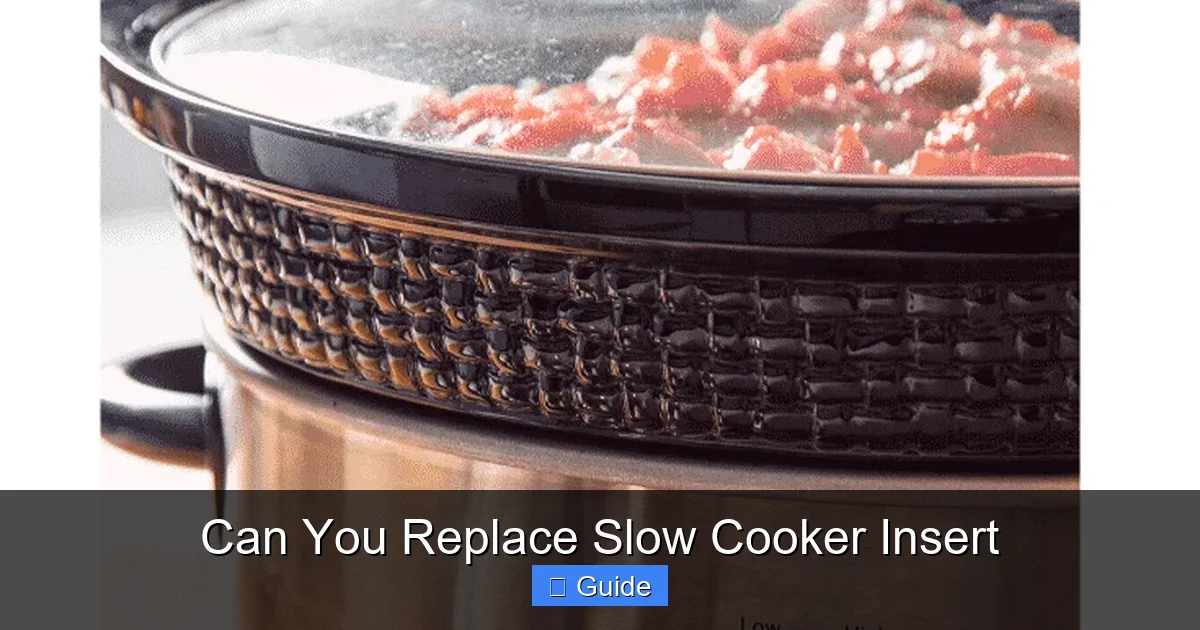
Visual guide about how to replace slow cooker insert
Image source: missvickie.com
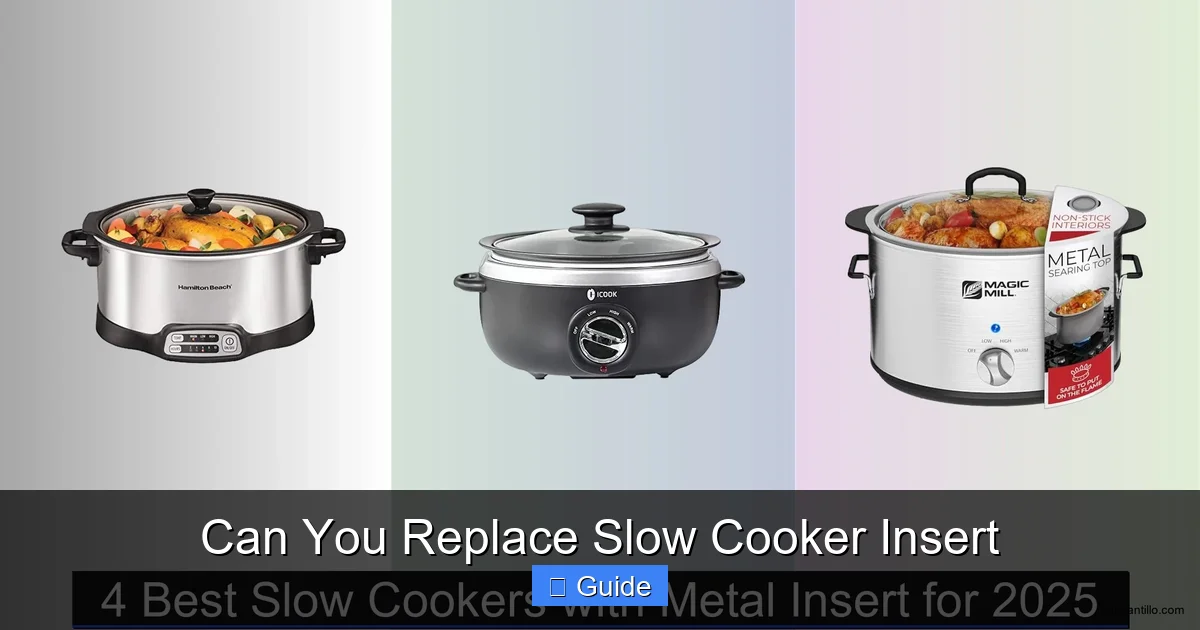
Visual guide about how to replace slow cooker insert
Image source: tonytantillo.com
Visual guide about how to replace slow cooker insert
Image source: images-na.ssl-images-amazon.com
- On the bottom of the slow cooker heating unit itself.
- On a sticker on the back of the unit.
- In the original owner’s manual.
- On the original packaging (if you still have it).
Write down this information precisely. It might look something like “SCV700-SS,” “HBSCD350,” or similar alphanumeric codes. Sometimes there’s also a ‘series’ number.
1.2 Determine the Capacity
Slow cookers are measured by their capacity in quarts or liters (e.g., 6-quart, 3.5-quart). This is important because inserts are designed for specific capacities. This information is usually found near the model number or stamped on the slow cooker insert itself.
1.3 Measure Your Existing Insert (if available)
Even if you have the model number, having measurements provides a valuable backup check, especially if you’re considering a universal replacement slow cooker insert. Use a measuring tape to find:
- Top Diameter: Measure across the widest part of the top rim.
- Bottom Diameter: Measure the diameter of the base.
- Height: Measure from the very bottom to the top rim.
- Depth: Measure the internal depth.
Note whether your slow cooker insert is oval or round, as well as its general shape (e.g., straight sides, tapered).
Step 2: Check the Manufacturer’s Website
Your first and best port of call for a replacement slow cooker insert is the original manufacturer.
2.1 Navigate to the Support or Parts Section
Most reputable brands have a ‘Support,’ ‘Parts,’ or ‘Accessories’ section on their official website. Enter your model number into their search bar. They will often list available replacement parts, including the specific slow cooker insert for your model.
2.2 Contact Customer Service
If you can’t find it online, don’t hesitate to call or email the manufacturer’s customer service. Provide them with your model number, and they should be able to tell you if a replacement slow cooker insert is available for purchase directly from them or through authorized dealers.
Step 3: Explore Online Retailers and Appliance Parts Stores
If the manufacturer doesn’t have the slow cooker insert you need, or if you want to explore other options, these resources are invaluable.
3.1 Major Online Marketplaces
Websites like Amazon, eBay, Walmart.com, and Target.com often carry replacement slow cooker inserts. Search using your brand and model number (e.g., “Crock-Pot SCV700-SS replacement insert”). Be sure to check seller reviews and product descriptions carefully.
3.2 Specialty Appliance Parts Websites
Several websites specialize in replacement parts for all sorts of home appliances. A quick Google search for “slow cooker replacement parts” or “appliance parts store [your city]” should yield results. These sites often have cross-referencing tools to help you find compatible parts.
Step 4: Consider Universal or Compatible Inserts (with Caution)
Sometimes, a direct replacement slow cooker insert isn’t available, especially for older or discontinued models. In these cases, you might look for a universal or compatible insert.
4.1 Match Dimensions Exactly
This is where your careful measurements from Step 1 come into play. Look for a slow cooker insert that matches the top diameter, bottom diameter, and height of your original pot as closely as possible. Even a slight discrepancy can lead to improper fit, inefficient heating, or a wobbly, unsafe setup.
4.2 Material Considerations
Try to stick with the same material as your original slow cooker insert (e.g., ceramic for ceramic, metal for metal). Different materials have different heat transfer properties, and swapping them might affect your slow cooker’s performance or even damage the heating unit over time.
4.3 Read Reviews and Ask Questions
If you find a ‘universal’ slow cooker insert that seems to fit, read reviews carefully. Check if other users have successfully used it with your specific slow cooker model or a similar one. If buying from a specialty store, don’t hesitate to ask their experts for advice.
Step 5: Verify Compatibility Before Purchase
Once you’ve found a potential replacement slow cooker insert, double-check everything before clicking ‘buy.’
5.1 Compare Model Numbers
If it’s an official replacement, ensure the product description explicitly states compatibility with your exact slow cooker model number.
5.2 Review Dimensions
If it’s a universal option, compare the listed dimensions to your own measurements. Pay close attention to the base diameter, as this is crucial for proper contact with the heating element.
5.3 Check Return Policy
It’s a good idea to ensure the seller has a flexible return policy in case the slow cooker insert doesn’t fit perfectly once it arrives.
What to Do If You Can’t Find a Replacement Slow Cooker Insert
Despite your best efforts, there might be times when a suitable replacement slow cooker insert simply isn’t available.
Contact Manufacturer Support Again
Sometimes, a human representative might have access to information or parts not listed online. It’s worth a second call or email.
Consider Upgrading to a New Slow Cooker
If you’ve exhausted all options, it might be time to invest in a new slow cooker. This can be an opportunity to upgrade to a model with new features, a different capacity, or a more durable slow cooker insert.
Repurpose the Heating Unit (with caution)
In rare cases, if the heating unit is still working, you might be able to repurpose it for non-food uses (e.g., a wax warmer, a scent diffuser base), but *never* attempt to use a mismatched or poorly fitting insert for cooking. Safety is paramount.
Tips for Extending the Life of Your New Slow Cooker Insert
Once you have your new slow cooker insert, follow these tips to ensure it lasts for years to come.
Avoid Sudden Temperature Changes (Thermal Shock)
Never place a hot slow cooker insert directly into cold water, and avoid placing a frozen insert into a preheated slow cooker. Let the insert cool down to room temperature before washing, and always add room-temperature or slightly warmed ingredients.
Use Appropriate Utensils
For ceramic or non-stick slow cooker inserts, always use wooden, silicone, or plastic utensils to prevent scratches and chips.
Proper Cleaning Techniques
Avoid abrasive scrubbers or harsh chemical cleaners, especially on non-stick surfaces. A soft sponge with dish soap is usually sufficient. For stubborn, stuck-on food, soak the slow cooker insert with warm, soapy water for a few hours or overnight before gently cleaning.
Safe Storage
Store your slow cooker insert carefully to prevent chips or cracks. Avoid stacking heavy items directly on top of it, or placing it where it might easily fall. If stacking with other pots, place a soft cloth or paper towel between them.
Handle with Care
Always use oven mitts when handling a hot slow cooker insert. Be mindful of where you place it down to prevent drops or bangs.
Troubleshooting Common Issues with Inserts
Even a new slow cooker insert can experience minor issues. Here’s how to troubleshoot them.
Problem: Cracks Appearing
Solution: This is often due to thermal shock. Always allow the slow cooker insert to cool completely before washing. Avoid putting it on very cold surfaces when hot. If a crack appears, replace the insert immediately for safety.
Problem: Stubborn Stains
Solution: For ceramic inserts, a paste of baking soda and a little water can work wonders. Apply, let sit for a few hours, then scrub gently. For tougher stains, a diluted bleach solution (check manufacturer guidelines first) can be used, but always rinse thoroughly. Lemon juice and salt can also help lift stains naturally.
Problem: Food Sticking
Solution: Ensure you are using enough liquid in your recipes. For non-stick inserts, avoid scratching the surface. A light coating of cooking spray or oil before adding ingredients can help. For ceramic, try greasing with butter or oil, or consider using slow cooker liners for ultra-easy cleanup.
Problem: Odor Retention
Solution: After cleaning, if odors persist, fill the slow cooker insert with water and add a few tablespoons of white vinegar or baking soda. Heat on low for a few hours (if safe to do so with the heating unit), then wash and rinse thoroughly. Airing out the insert can also help.
Conclusion
So, can you replace slow cooker insert? Absolutely! While it might require a bit of detective work to find the right part, it’s a very common and worthwhile endeavor. By following the steps outlined in this guide – gathering your slow cooker’s vital information, checking with the manufacturer, and carefully comparing dimensions – you can successfully replace your damaged or lost slow cooker insert. This not only saves you money but also extends the life of a perfectly good appliance, allowing you to continue enjoying delicious, fuss-free meals. Happy slow cooking!

Jennifer D. Simon has spent the last 26 years studying and practicing nutrition science. She has used a larger part of this time in improving people’s livelihoods. She has done so by coming up with unquestionable ideas on how to tackle food problems in her community. Read More